
Swiss and German narrow gauge in H0m, H0e and 0m
BEMO, narrow gauge in mass production
Locomotives, railcars, coaches and wagons of the Swiss mountain railways and German branch lines, in H0m, H0e and 0m: the range of a firm of barely twenty people in Uhingen.
- 533items in the shop
- 1976the first narrow-gauge model
- 1:87 and 1:45H0m, H0e and 0m
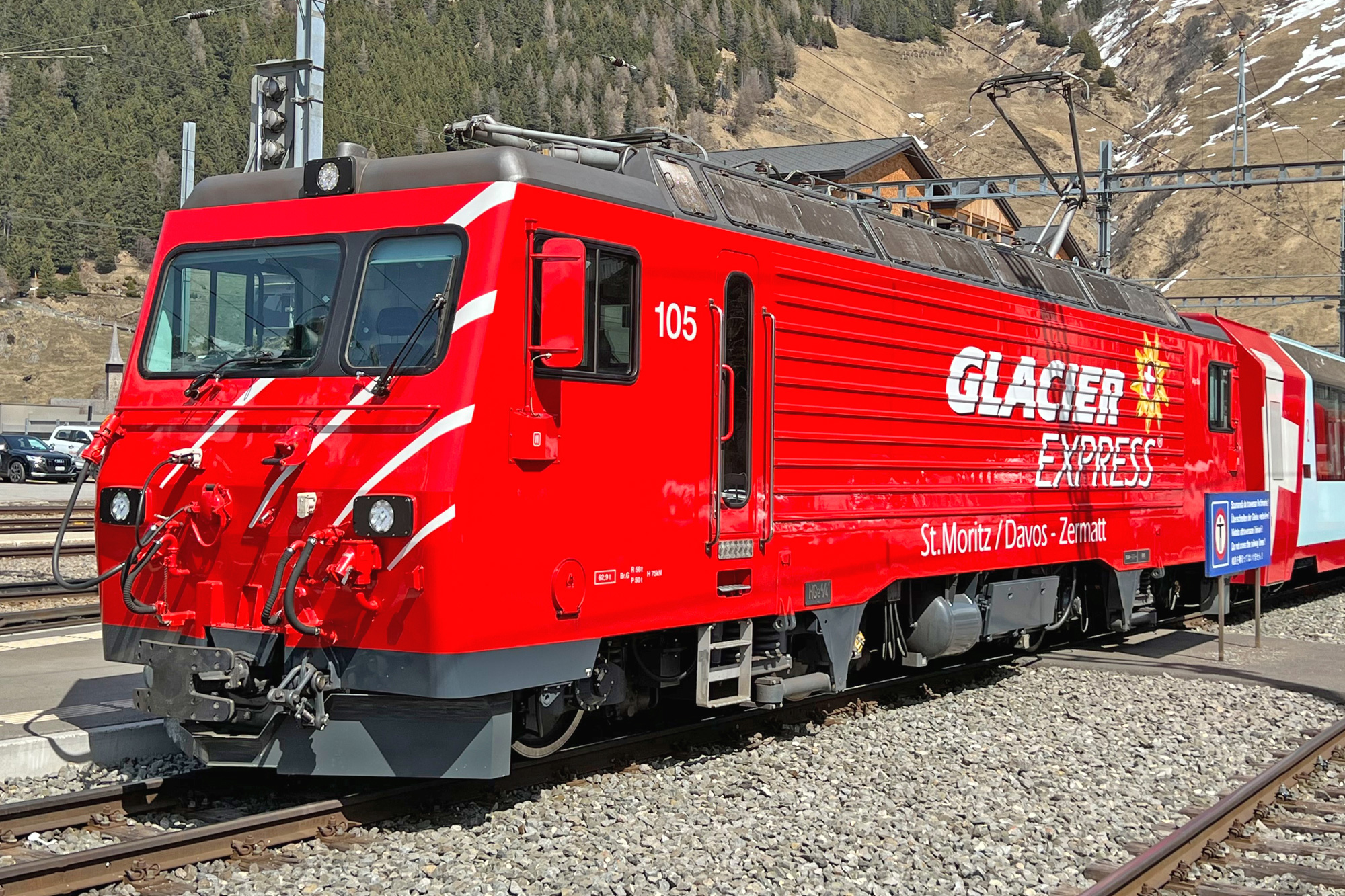
What makes BEMO
- Narrow gauge in mass production: the first narrow-gauge model made with mass-production technology was announced at the Nuremberg Toy Fair in 1976: the V51/V52 bogie diesel locomotive for the Württemberg lines.
- Swiss mountain railways: two years later came the Rhaetian Railway Ge 4/4 I and the EW I standard coaches, followed by other Swiss lines; the motive power comes in analogue and digital versions, more and more with sound.
- One number per vehicle: each model is offered under several running numbers, often all those of the prototype: your trains combine different vehicles, with no duplicates.
- Three gauges: H0m and H0e at 1:87, the Rhaetian Railway at 1:45 in 0m, and coaches of the great Swiss express trains on H0 standard-gauge bogies; the "Metal Collection" gathers Saxon steam locomotives in metal, assembled by hand.
Our favourites

The RhB and the MGB ordered custom-built dual-mode electric/battery locomotives from Stadler for shunting and light freight duties. The seven Geaf 20601-20607 delivered in 2020 are superior to the old shunting locomotives they replace in terms of cost-effectiveness, environmental impact, susceptibility to faults, and noise and exhaust emissions. Radio remote control, the option of fitting an automatic coupling, and a spacious central cab are further features of this new generation of shunting locomotives. The RhB's procurement is based on the MGB's tender, which had previously undertaken the renewal of its vehicle fleet for shunting and railway service. In contrast to the RhB, however, the MGB is procuring various versions as needed, in the form of four plus one diesel locomotives with or without rack drive, as well as the two Tea 2/2 801-802, which are of identical design to the RhB locomotives, as electric/battery locomotives, to be stationed in Brig and Zermatt. Model details Small-series model in white metal and brass Drive and current pick-up via both axles Sound-ready Model variant: digital version with sound decoder LED headlight 3+1 white LED marker and shunting light function (digital model only) LED cab lighting (digital model only) LED step lighting (digital model only) Cannot be converted to H0e!
In stock: 2 on the shelf, shipped within 1-3 days

Advertising locomotive "Badoux Vins" After the two previously released versions of the GDe 4/4 6005 with revised running gear, the third variant follows: the eye-catching advertising locomotive 6006 for the "Badoux Vins" company in Aigle. The locomotive was delivered in 1983 as GDe 4/4 102 to the neighbouring GFM and taken over by the MOB in 2007 together with its already mentioned sister locomotive 101/6005. After the "login" advertising livery, it received the "Aigle les Murailles" design. Prototype The delivery of the four modern electric locomotives GDe 4/4 6001-6004 caused a great stir in 1983 on the Western Swiss metre-gauge railway between Lake Geneva and the Saanenland. They are a further development of the Deh 4/4 II 91-96 luggage railcars of the Furka-Oberalp-Bahn. Hauling the "Panoramic Express" trains as well as growing goods traffic made enlarging and modernising the motive power fleet unavoidable. Until the Ge 4/4 8001-8004 entered service twelve years later in 1995, these 100 km/h machines shaped the image of the MOB's premium express trains; they were also part of the "Crystal Panoramic Express", created in 1993 with new panoramic coaching stock, a GDe 6000 in the middle of the train and two driving trailers. In 2007 the MOB took over the two locomotives, also built in 1983 by SLM and BBC for the neighbouring GFM, and gave them the running numbers 6005 and 6006. To this day they have carried various liveries, including advertising wraps. The introduction of the Stadler double railcars Be 4/4 9201-9204 + ABe 4/4 9301-9304 has largely displaced the 6000-series from premium service. In the long term, only three of these machines are to be retained for railway (infrastructure) service. Model details Die-cast chassis Drive and current pick-up on all four axles Model variant: digital version with sound decoder 3+1 LED headlights Brake hoses, heating couplings and handrails included for self-assembly can be converted to H0e (exchange wheelsets optionally available)
- Sound
In stock: 1 on the shelf, shipped within 1-3 days

The RhB railcars ABe 4/4 30 and 34 are among the legendary vehicles of the Rhätische Bahn. With their striking yellow livery, they recall the early days of electric railway operation and are today a popular symbol of nostalgia. Both railcars have been modernised several times over the decades. In their yellow version, they are today often used for historic special excursions and tourist purposes. In doing so, they offer passengers a journey into the past and a unique railway experience in the alpine world of Graubünden. With the technical overhaul of the Bernina line veterans ABe 4/4 30-38, we are upgrading the two yellow heritage railcars with LED headlights and the Next18 digital interface. The digital version is now also equipped with sound.
In stock: 1 on the shelf, shipped within 1-3 days

For its 75th anniversary in 1976, the MOB realised the As 110, a prototype panoramic coach based on existing underframes, thereby laying the foundation for the "Panoramic Express", which first ran in 1979 with the As 111 and Bs 220 and 221 – long before the first panoramic coach train ran on the RhB/FO/BVZ network. The tourist success was so great that from 1982 thirteen further coaches followed, and in 1986 the "Superpanoramic Express" was finally created with a panoramic driving trailer. Spare parts 5001 000 wheelsets H0e (10 pcs) 5201 000 wheelsets H0m (10 pcs) 5300 200 standard coupling AMA (10 pcs) 5400 215 close coupling adapter (10 pcs) 4795 300 1 detail parts
In stock: 1 on the shelf, shipped within 1-3 days

In spring 2025, the Märklin company decorated a sliding-wall wagon of the Haik-v 5121-5135 series with posters depicting its various scales H0, 1 and Z, as well as, on the other side of the wagon, its brands LGB, Trix and Minitrix. Spare parts 5001 000 Wheelset H0e (10 pcs) 5201 000 Wheelset H0m (10 pcs) 5300 190 Standard coupling AKA (10 pcs) 5400 190 Close coupling adapter (10 pcs) 5300 210 Standard coupling AOA (10 pcs) for platform side 5400 210 Close coupling adapter (10 pcs) for platform side 4688 000 1 Detail parts – grey brake shoes, brake hoses, levers on the frame only Coloured handwheels, grips and levers are available on request.
In stock: 1 on the shelf, shipped within 1-3 days

Standard design coaches Type I of the Rhaetian Railway The EW I A 1223-1243, AB 1519-1534 and B 2341-2373, procured between 1962 and 1966 for the main network, form the largest coach series in the RhB passenger fleet to date. The coach bodies were painted green on delivery; later, like all the other modern passenger coaches, they were given a red livery. The railway's markings were changed several times: from lettering to the logo, and then to the multilingual logo. For the Arosa line, the B 2315-2319 followed in 1969 with a slightly different window layout. They later received automatic door-closing systems and, as a distinguishing feature, initially yellow brake corners; the door handles and handrails were removed in the process. For the new NEVA Retica train concept, all the AB coaches were converted into A or B coaches in 1998/99 and adapted in terms of braking technology. During their service life, which was drawing to a close, they carried various brake corners and diamonds in different colours. In August 2018, the Bärenland park opened in Arosa. For this occasion, the RhB redesigned the three standard design coaches EW I B 2317-2319 as Bärenland coaches, inside and out. Later, the B 2315 followed as the fourth vehicle of this series still remaining in service. Spare parts 5001 000 Wheelset H0e (10 pcs) 5201 000 Wheelset H0m (10 pcs) 5300 180 Standard coupling AIA (10 pcs) 5400 180 Close coupling adapter (10 pcs) 4750 000 1 Detail parts
In stock: 3 on the shelf, shipped within 1-3 days
The BEMO families
Swiss railways in H0m
 36 itemsH0m locomotivesRhB and BVZ "Crocodiles", RhB Ge 4/4 II and Ge 4/4 III, MGB HGe 4/4 II, MOB Ge 4/4 and GDe 4/4.See the items
 22 itemsRailcars and multiple unitsRhB Capricorn ABe 4/16, Bernina ABe 4/4 railcars, FO baggage railcars and the Wismar railbus.See the items95 itemsH0m passenger coachesRhB EW I to EW IV standard coaches, including the "Bernina Express" ones, MOB "GoldenPass" panoramic coaches and historic coaches.See the items
 74 itemsH0m freight wagonsCoop container wagons, tank and cement wagons, ballast wagons and Vereina spoil wagons.See the items
Other gauges
 65 itemsGerman narrow gauge H0eSaxon I K and IV K steam locomotives, 99.73-76 standard locomotives, L45H diesels, Württemberg coaches and wagons.See the items
 41 itemsRhaetian Railway at 1:45 (0m)Ge 4/4 II and Ge 2/4, RhB standard coaches and wagons at 1:45, with 0m track and turnouts.See the items
 23 itemsExpress trains in H0 standard gauge"Bernina Express", "GoldenPass" and "Glacier Express" coaches and the Capricorn on H0 standard gauge, two-rail or three-rail.See the items
Track and parts

All BEMO items

As an ideal complement to the 99 1781-6 standard locomotive or the 251 901 diesel locomotive, we offer a new series of five passenger coaches in the current livery of the Rügensche BäderBahn (RüBB), finely detailed, to scale and featuring the current logo. They allow you to recreate RüBB operations in the current era on your narrow-gauge layout or to form trains in your display cabinet at home. Spare parts: 5008 000 Wheelset H0e (10 pcs) – cannot be converted to H0m! 5320 300 Standard coupling (10 pcs) 4720 850 1 Detail parts
On order, shipped within 10-21 days

As an ideal addition to the standard-design locomotive 99 1781-6 or the diesel locomotive 251 901, we offer a new series of 5 passenger coaches in the current lettering of the Rügensche BäderBahn (RüBB), with fine detailing, scale-accurate design and the current logo. They allow you to recreate RüBB's current-era operations on your narrow-gauge layout or train formations in your display case at home. Spare parts: 5008 000 H0e wheelset (10 pcs) – cannot be converted to H0m! 5320 300 Standard coupling (10 pcs) 4720 850 1 Detail parts
On order, shipped within 10-21 days

SDG Lössnitzgrundbahn Since May 2023, the Sächsische Dampfeisenbahngesellschaft (SDG) has introduced play coaches into its trains on the Fichtelbergbahn, the Weisseritztalbahn and in the Lössnitzgrund. The play areas are built into the tables, and play figures are kept in containers at the coach entrance. They appeal mainly to families and give children freedom of movement during the journey. Only on the Lössnitzgrundbahn were modernisation coaches used for this purpose. Spare parts: 5008 000 H0e wheelset (10 pcs) – cannot be regauged to H0m! 5320 300 standard coupling (10 pcs) 4720 000 1 detail parts
On order, lead time to be confirmed

At the request of many customers, the museum coach Schönheide 970-473 returns to our range. This coach will also be available in a new printing variant, which represents an earlier version of the vehicle: it was last used in Mügeln as a workforce coach before being transferred to Schönheide.
On order, shipped within 10-21 days

Döllnitzbahn The Döllnitzbahn operates both steam trains with the IV K and school trains with the two diesel locomotives 199 030/031 (ex 2091) taken over from Austria, between Oschatz and Mügeln or Kemmlitz. The coach fleet includes, among others, the 4 modernised coaches 970-263, -266, -275 and -282, which we already produced in 2011 in the design with two diagonal stripes and municipal coat of arms. In the meantime, the fleet has been expanded with the two 970-268 and -570 from Zittau. Also present is the 970-473, lettered with the DR logo. School traffic is now handled by a railcar likewise taken over from Austria, the 137-515 (ex ÖBB 5090). We are releasing 5 modernised coaches used on the Döllnitzbahn in their current livery with the new railway logo. Spare parts: 5008 000 H0e wheelset (10 pcs) – cannot be converted to H0m! 5320 300 Standard coupling (10 pcs) 4720 000 1 Detail parts
On order, lead time to be confirmed

Döllnitzbahn Between Oschatz and Mügeln or Kemmlitz, the Döllnitzbahn operates steam trains with the IV K as well as school trains with the two diesel locomotives 199 030/031 (ex 2091) taken over from Austria. The coach fleet includes, among others, the four modernisation coaches 970-263, -266, -275 and -282, which we already produced in 2011 in the design with two diagonal stripes and the municipal coat of arms. The fleet has since been joined by the two coaches 970-268 and -570 from Zittau. There is also the coach 970-473 lettered with the DR logo. School services are now operated by a railcar likewise taken over from Austria, the 137-515 (ex ÖBB 5090). We are producing five modernisation coaches used on the Döllnitzbahn in their current livery with the new railway logo. Spare parts: 5008 000 H0e wheelset (10 pcs) – cannot be regauged to H0m! 5320 300 standard coupling (10 pcs) 4720 000 1 detail parts
On order, lead time to be confirmed

Döllnitzbahn Between Oschatz and Mügeln or Kemmlitz, the Döllnitzbahn runs steam trains with the IV K as well as school trains with the two diesel locomotives 199 030/031 (ex 2091) taken over from Austria. The coach fleet includes, among others, the four modernised coaches 970-263, -266, -275 and -282, which we already produced in 2011 in the livery with two diagonal stripes and municipal coat of arms. In the meantime, the fleet has been joined by the two coaches 970-268 and -570 from Zittau. There is also the coach 970-473, lettered with the DR logo. School traffic is now handled by a railcar likewise taken over from Austria, the 137-515 (ex ÖBB 5090). We are introducing five modernised coaches used on the Döllnitzbahn in their current livery with the new railway logo. Spare parts: 5008 000 Wheelset H0e (10 pcs) – cannot be converted to H0m! 5320 300 Standard coupling (10 pcs) 4720 000 1 Detail parts
On order, lead time to be confirmed

Döllnitzbahn The Döllnitzbahn operates both steam trains with the IV K and school trains with the two diesel locomotives 199 030/031 (ex 2091) taken over from Austria, between Oschatz and Mügeln or Kemmlitz. The coach fleet includes, among others, the 4 modernised coaches 970-263, -266, -275 and -282, which we already produced in 2011 in the design with two diagonal stripes and municipal coat of arms. In the meantime, the fleet has been expanded with the two 970-268 and -570 from Zittau. Also present is the 970-473, lettered with the DR logo. School traffic is now handled by a railcar likewise taken over from Austria, the 137-515 (ex ÖBB 5090). We are releasing 5 modernised coaches used on the Döllnitzbahn in their current livery with the new railway logo. Spare parts: 5008 000 H0e wheelset (10 pcs) – cannot be converted to H0m! 5320 300 Standard coupling (10 pcs) 4720 000 1 Detail parts
On order, lead time to be confirmed

On the numerous narrow-gauge railways of the former GDR, the fleet of coaches was in a very poor state during the first years after the Second World War; the vehicles still dated from the turn of the century. Gradually, extensive maintenance work was carried out on some Saxon load-carrying wagons, passenger coaches and luggage vans. The wooden panelling was replaced with sheet metal, the wooden window frames were made of metal, and the interiors were modernised, among other things with new seats. In the longer term, however, these measures were not sufficient. As these railways could not yet be dispensed with in the mid-1960s, and their tourist value was gradually being recognised, it was decided to rebuild the coaches in a similar way to the standard-gauge Reko coaches. We are updating our range and replacing the sold-out coach models, or those only available in small numbers, 3020 810 (970-588) and 3021 810+811 (970-324 and -416), with vehicles bearing new running numbers to match Era IV. Spare parts: 5008 000 Wheelset H0e (10 pcs) – cannot be converted to H0m! 5320 300 Standard coupling (10 pcs) 4720 000 1 Detail parts
On order, shipped within 10-21 days

In the early years after the Second World War, on the numerous narrow-gauge railways of the former GDR, the coach fleet was in a very poor state; the coaches still dated from the turn of the century. Gradually, extensive maintenance work was carried out on some Saxon luggage, passenger and baggage coaches. The wooden panelling was replaced with sheet metal, the wooden window frames were made of metal, and the interior fittings were modernised, including new seats, among other things. In the long run, however, these measures were not sufficient. When, in the mid-1960s, these railways could not yet be dispensed with and the tourist value of such railways was gradually being recognised, it was decided to rebuild the coaches in a similar way to the standard-gauge Reko coaches. We are updating our range and replacing the sold-out coach models 3020 810 (970-588) and 3021 810+811 (970-324 and -416), which are only available in small quantities, with vehicles bearing new running numbers to match Era IV. Spare parts: 5008 000 Wheelset H0e (10 pieces) – cannot be converted to H0m! 5320 300 Standard coupling (10 pieces) 4720 000 1 Detail parts
On order, shipped within 10-21 days

As an ideal complement to the standard-design locomotive 99 1781-6 or the diesel locomotive 251 901, we are offering a new series of five passenger coaches with current lettering of the Rügensche Bäderbahn (RüBB), featuring fine detailing, true-to-scale design and the current logo. With them, you can recreate the RüBB's operations in the current era on your narrow-gauge layout or in train formations in your display case at home. Incidentally, coach 970-757 was presented in March 1977 as the first vehicle of the Perleberg workshop's modernisation programme, with a new body shell and upholstered seats. Spare parts: 5008 000 Wheelset H0e (10 pieces) – cannot be converted to H0m! 5320 300 Standard coupling (10 pieces) 4720 850 1 Detail parts
On order, shipped within 10-21 days

As an ideal complement to the standard-design locomotive 99 1781-6 or the diesel locomotive 251 901, we are offering a new series of five passenger coaches with current lettering of the Rügensche Bäderbahn (RüBB), featuring fine detailing, true-to-scale design and the current logo. With them, you can recreate the RüBB's operations in the current era on your narrow-gauge layout or in train formations in your display case at home. Spare parts: 5008 000 Wheelset H0e (10 pieces) – cannot be converted to H0m! 5320 300 Standard coupling (10 pieces) 4720 850 1 Detail parts
On order, shipped within 10-21 days

As an ideal complement to the 99 1781-6 standard locomotive or the 251 901 diesel locomotive, we offer a new series of five passenger coaches in the current livery of the Rügensche BäderBahn (RüBB), finely detailed, to scale and featuring the current logo. They allow you to recreate RüBB operations in the current era on your narrow-gauge layout or to form trains in your display cabinet at home. Spare parts: 5008 000 Wheelset H0e (10 pcs) – cannot be converted to H0m! 5320 300 Standard coupling (10 pcs) 4720 850 1 Detail parts
On order, shipped within 10-21 days

SDG Lössnitzgrundbahn Since May 2023, the Sächsische Dampfeisenbahngesellschaft SDG has been running play coaches in its trains on the Fichtelbergbahn, the Weisseritztalbahn and in the Lössnitzgrund. The playing boards are integrated into the tables, and the toy figures are kept ready in containers at the coach entrance. They are aimed mainly at families and give children freedom of movement during the journey. Only on the Lössnitzgrundbahn were modernised coaches used for this purpose. Spare parts: 5008 000 Wheelsets H0e (10 pieces) – cannot be converted to H0m! 5320 300 Standard coupling (10 pieces) 4720 000 1 detail parts
On order, lead time to be confirmed

Type 711 passenger coach – new tooling Between 1907 and 1911, the K.Sächs.Sts.E.B. put a total of 66 bogie coaches into service, in the number groups 345 K – 346 K and 366 K – 429 K. These coaches, known under the running number 711, had an overall length of 13,360 mm and a bogie spacing of 8,100 mm. The frame's longitudinal members, reinforced by truss rods, extended only over the length of the body, while the gangway fittings were attached separately. The body consisted of a panelled timber construction and was fitted with a roof without the clerestory lights usual at the time. The coaches were originally supplied with Heberlein brakes, but were later frequently converted to Körting brakes. As the first Saxon passenger coaches, they were fitted with toilets. From the 1930s onwards, the DRG began modernising some coaches with sheet-metal panelling. Most of these coaches were withdrawn from service between 1967 and 1972. Eight coaches underwent modernisation in 1977. Today, coach 970-318 still exists in Schönheide, as does 970-343 in Freital-Hainsberg with sheet-metal panelling. In Rittersgrün, 970-328 has been preserved. The model is reproduced to full-scale length with either a timber or a sheet-metal body. In the first edition, we are producing only Era III vehicles.
Pre-order, release expected in Q4 2026

Type 711 passenger coach – new tooling Between 1907 and 1911, the K.Sächs.Sts.E.B. put a total of 66 bogie coaches into service, in the number groups 345 K – 346 K and 366 K – 429 K. These coaches, known under the running number 711, had an overall length of 13,360 mm and a bogie centre distance of 8,100 mm. The frame's longitudinal members, supported by truss rods, extended only over the length of the body; the gangway fittings were attached. The body was designed as a boarded timber construction, with a roof without the clerestory lights customary at the time. They were delivered with the Heberlein brake, many of which were later converted to the Körting brake. They were the first Saxon passenger coaches to receive toilets. From the 1930s, the DRG began converting the first coaches to sheet-metal cladding. Most coaches were taken out of service between 1967 and 1972. Eight coaches were modernised in 1977. Of these, the coach 970-318 still survives today in Schönheide and 970-343 in Freital-Hainsberg with sheet-metal cladding, and 970-328 in Rittersgrün. The model is reproduced to full scale length, with either a timber or a sheet-metal body. In the first edition, we are producing only Era III vehicles.
Pre-order, release expected in Q4 2026

Passenger coach type 711 – new tooling Between 1907 and 1911, the K.Sächs.Sts.E.B. placed into service a total of 66 bogie coaches of the number groups 345 K – 346 K and 366 K – 429 K. These coaches, known under the running number 711, had an overall length of 13,360 mm and a bogie centre distance of 8,100 mm. The frame side members, supported by truss rods, extended only over the length of the body; the gangway fittings were attached separately. The body was designed as a panelled wooden construction, with a roof without the clerestory lights usual at the time. They were delivered with the Heberlein brake, and many were later converted to the Körting brake. They were the first Saxon passenger coaches to be fitted with toilets. From the 1930s, the DRG began converting the first coaches to sheet-metal cladding. Most coaches were taken out of service between 1967 and 1972. Eight coaches were modernised in 1977. Of these, coach 970-318 still exists today in Schönheide, coach 970-343 in Freital-Hainsberg with sheet-metal cladding, and coach 970-328 in Rittersgrün. The model is reproduced to full-scale length, with both wooden and sheet-metal bodies. In the first edition, we are producing only Era III vehicles.
Pre-order, release expected in Q4 2026

With the line extensions Reichenau-Ilanz and Thusis-Engadin, the RhB ordered further two-axle passenger coaches, which were delivered in 1903. Two of these coaches are today part of the RhB's historic steam train: the A 1102 was created as early as 1972 from the B 2124 (ex A9). In October 2002, the Club 1889 was able to put into service, with the saloon coach B 2138 "Filisurer Stübli", a further operational vehicle built in 1903 (ex AB 119, then converted in 1967 into the crew coach BM 6 Xk 9064). Spare parts 5001 000 Solid-wheel wheelset H0e (10 pieces) 5004 000 Spoked-wheel wheelset H0e (10 pieces) 5201 000 Solid-wheel wheelset H0m (10 pieces) 5204 000 Spoked-wheel wheelset H0m (10 pieces) 5363 200 Standard coupling, grey (10 pieces) 5301 200 Standard coupling, black (10 pieces) 5400 222 Close coupling adapter (10 pieces) 4732 000 1 Detail parts
On order, shipped within 10-21 days

Historic two-axle coach Since March 2007, the BC 110 "Mesolcines", expertly restored by the "Club 1889", has complemented the historic fleet of the yellow Bernina train. Prototype In 1908/09, the Bernina Railway procured from SIG the ten six-window two-axle coaches BC 101-110, with a wheelbase of 5.2 m. Between 1926 and 1943, three coaches were converted into pure third-class coaches C 2085-2087 (from 1956 B 2085-2087). The remaining ones were classified from 1943 as BC, and from 1956 as AB 1411-1412, 1414-1416 and 1418-1419. Some coaches of the AB 1411-1419 series have a reworked body with fully rounded windows. During this conversion, the roof decoration above the entrances was removed. At the end of their service life, they were downgraded to pure second-class coaches B. Spare parts 5004 000 spoked wheelset H0e (10 pcs) 5204 000 spoked wheelset H0m (10 pcs) 5363 200 standard coupling grey (10 pcs) 5301 200 standard coupling black (10 pcs) 5400 222 close coupling adaptor (10 pcs) 4733 000 1 detail parts grey 4733 160 1 detail parts black
On order, shipped within 10-21 days

Historic two-axle coach The former B2 1415, converted in 1975 into the service wagon Xk 9087, arrived in France in 2007 via the detour of the now-disused Bellinzona-Mesocco railway, joining the "Velay Express". This heritage railway runs on a remaining section of the once-extensive Vivarais narrow-gauge network, with steam trains and Billard diesel railcars. The coach, lovingly restored in the style of the BC 110, was completed in early summer 2018. Unlike the prototype, the platform railings modified in France are reproduced as on the RhB coaches! Prototype In 1908/09, the Bernina Railway acquired from SIG the ten six-window two-axle coaches BC 101-110, with a wheelbase of 5.2 m. Between 1926 and 1943, three coaches were converted into pure third-class coaches C 2085-2087 (B 2085-2087 from 1956). The others were designated BC from 1943, and AB 1411-1412, 1414-1416 and 1418-1419 from 1956. Some coaches of the AB 1411-1419 series have a reworked body with completely rounded windows. The roof decoration above the entrances was removed during this conversion. At the end of their service life, they were downgraded to pure second-class coaches B. Spare parts 5004 000 Spoked wheelset H0e (10 pcs) 5204 000 Spoked wheelset H0m (10 pcs) 5363 200 Standard coupling grey (10 pcs) 5400 222 Close coupling adapter (10 pcs) 4733 000 1 Detail parts grey
On order, shipped within 10-21 days

The three bogie platform coaches B 2245-2247 are now part of many RhB heritage trains, whether hauled by steam locomotives or one of the rod-driven electric locomotives. The four-axle coaches, designated B 2245-2249 from 1956, were put into service in 1928 for the Arosa line as C4 51-54. In 1985, three of the coaches underwent modernisation. In the process, the roof-rod coupling, needed only for the Arosa line, was also removed. In addition to their use in heritage trains, they were initially also used during the winter high season for the Bergün-Preda sledge trains. Version of the coach models without gangway bellows. Spare parts 5001 000 wheelset H0e (10 pcs) 5201 000 wheelset H0m (10 pcs) 5300 205 standard coupling ANA (10 pcs) 5400 215 close coupling adaptor (10 pcs) 4735 000 1 detail parts
On order, shipped within 10-21 days

The three bogie platform coaches B 2245-2247 are today part of many RhB heritage trains, whether hauled by steam locomotives or by one of the rod-coupled electric locomotives. The four-axle coaches, designated B 2245-2249 from 1956, were placed into service in 1928 for the Arosa line as C4 51-54. In 1985, three of the coaches underwent modernisation. In the process, the roof rod coupling needed only for the Arosa line was also removed. Besides their use in heritage trains, they were initially also used in the high winter season for the Bergün-Preda sledge trains. Version of the coach models without gangway bellows. Spare parts 5001 000 Wheelset H0e (10 pcs) 5201 000 Wheelset H0m (10 pcs) 5300 205 Standard coupling ANA (10 pcs) 5400 215 Close coupling adapter (10 pcs) 4735 000 1 Detail parts
On order, shipped within 10-21 days