
Swiss and German narrow gauge in H0m, H0e and 0m
BEMO, narrow gauge in mass production
Locomotives, railcars, coaches and wagons of the Swiss mountain railways and German branch lines, in H0m, H0e and 0m: the range of a firm of barely twenty people in Uhingen.
- 533items in the shop
- 1976the first narrow-gauge model
- 1:87 and 1:45H0m, H0e and 0m
What makes BEMO
- Narrow gauge in mass production: the first narrow-gauge model made with mass-production technology was announced at the Nuremberg Toy Fair in 1976: the V51/V52 bogie diesel locomotive for the Württemberg lines.
- Swiss mountain railways: two years later came the Rhaetian Railway Ge 4/4 I and the EW I standard coaches, followed by other Swiss lines; the motive power comes in analogue and digital versions, more and more with sound.
- One number per vehicle: each model is offered under several running numbers, often all those of the prototype: your trains combine different vehicles, with no duplicates.
- Three gauges: H0m and H0e at 1:87, the Rhaetian Railway at 1:45 in 0m, and coaches of the great Swiss express trains on H0 standard-gauge bogies; the "Metal Collection" gathers Saxon steam locomotives in metal, assembled by hand.
Our favourites

The RhB and the MGB ordered custom-built dual-mode electric/battery locomotives from Stadler for shunting and light freight duties. The seven Geaf 20601-20607 delivered in 2020 are superior to the old shunting locomotives they replace in terms of cost-effectiveness, environmental impact, susceptibility to faults, and noise and exhaust emissions. Radio remote control, the option of fitting an automatic coupling, and a spacious central cab are further features of this new generation of shunting locomotives. The RhB's procurement is based on the MGB's tender, which had previously undertaken the renewal of its vehicle fleet for shunting and railway service. In contrast to the RhB, however, the MGB is procuring various versions as needed, in the form of four plus one diesel locomotives with or without rack drive, as well as the two Tea 2/2 801-802, which are of identical design to the RhB locomotives, as electric/battery locomotives, to be stationed in Brig and Zermatt. Model details Small-series model in white metal and brass Drive and current pick-up via both axles Sound-ready Model variant: digital version with sound decoder LED headlight 3+1 white LED marker and shunting light function (digital model only) LED cab lighting (digital model only) LED step lighting (digital model only) Cannot be converted to H0e!
In stock: 2 on the shelf, shipped within 1-3 days

Advertising locomotive "Badoux Vins" After the two previously released versions of the GDe 4/4 6005 with revised running gear, the third variant follows: the eye-catching advertising locomotive 6006 for the "Badoux Vins" company in Aigle. The locomotive was delivered in 1983 as GDe 4/4 102 to the neighbouring GFM and taken over by the MOB in 2007 together with its already mentioned sister locomotive 101/6005. After the "login" advertising livery, it received the "Aigle les Murailles" design. Prototype The delivery of the four modern electric locomotives GDe 4/4 6001-6004 caused a great stir in 1983 on the Western Swiss metre-gauge railway between Lake Geneva and the Saanenland. They are a further development of the Deh 4/4 II 91-96 luggage railcars of the Furka-Oberalp-Bahn. Hauling the "Panoramic Express" trains as well as growing goods traffic made enlarging and modernising the motive power fleet unavoidable. Until the Ge 4/4 8001-8004 entered service twelve years later in 1995, these 100 km/h machines shaped the image of the MOB's premium express trains; they were also part of the "Crystal Panoramic Express", created in 1993 with new panoramic coaching stock, a GDe 6000 in the middle of the train and two driving trailers. In 2007 the MOB took over the two locomotives, also built in 1983 by SLM and BBC for the neighbouring GFM, and gave them the running numbers 6005 and 6006. To this day they have carried various liveries, including advertising wraps. The introduction of the Stadler double railcars Be 4/4 9201-9204 + ABe 4/4 9301-9304 has largely displaced the 6000-series from premium service. In the long term, only three of these machines are to be retained for railway (infrastructure) service. Model details Die-cast chassis Drive and current pick-up on all four axles Model variant: digital version with sound decoder 3+1 LED headlights Brake hoses, heating couplings and handrails included for self-assembly can be converted to H0e (exchange wheelsets optionally available)
- Sound
In stock: 1 on the shelf, shipped within 1-3 days

The RhB railcars ABe 4/4 30 and 34 are among the legendary vehicles of the Rhätische Bahn. With their striking yellow livery, they recall the early days of electric railway operation and are today a popular symbol of nostalgia. Both railcars have been modernised several times over the decades. In their yellow version, they are today often used for historic special excursions and tourist purposes. In doing so, they offer passengers a journey into the past and a unique railway experience in the alpine world of Graubünden. With the technical overhaul of the Bernina line veterans ABe 4/4 30-38, we are upgrading the two yellow heritage railcars with LED headlights and the Next18 digital interface. The digital version is now also equipped with sound.
In stock: 1 on the shelf, shipped within 1-3 days

For its 75th anniversary in 1976, the MOB realised the As 110, a prototype panoramic coach based on existing underframes, thereby laying the foundation for the "Panoramic Express", which first ran in 1979 with the As 111 and Bs 220 and 221 – long before the first panoramic coach train ran on the RhB/FO/BVZ network. The tourist success was so great that from 1982 thirteen further coaches followed, and in 1986 the "Superpanoramic Express" was finally created with a panoramic driving trailer. Spare parts 5001 000 wheelsets H0e (10 pcs) 5201 000 wheelsets H0m (10 pcs) 5300 200 standard coupling AMA (10 pcs) 5400 215 close coupling adapter (10 pcs) 4795 300 1 detail parts
In stock: 1 on the shelf, shipped within 1-3 days

In spring 2025, the Märklin company decorated a sliding-wall wagon of the Haik-v 5121-5135 series with posters depicting its various scales H0, 1 and Z, as well as, on the other side of the wagon, its brands LGB, Trix and Minitrix. Spare parts 5001 000 Wheelset H0e (10 pcs) 5201 000 Wheelset H0m (10 pcs) 5300 190 Standard coupling AKA (10 pcs) 5400 190 Close coupling adapter (10 pcs) 5300 210 Standard coupling AOA (10 pcs) for platform side 5400 210 Close coupling adapter (10 pcs) for platform side 4688 000 1 Detail parts – grey brake shoes, brake hoses, levers on the frame only Coloured handwheels, grips and levers are available on request.
In stock: 1 on the shelf, shipped within 1-3 days

Standard design coaches Type I of the Rhaetian Railway The EW I A 1223-1243, AB 1519-1534 and B 2341-2373, procured between 1962 and 1966 for the main network, form the largest coach series in the RhB passenger fleet to date. The coach bodies were painted green on delivery; later, like all the other modern passenger coaches, they were given a red livery. The railway's markings were changed several times: from lettering to the logo, and then to the multilingual logo. For the Arosa line, the B 2315-2319 followed in 1969 with a slightly different window layout. They later received automatic door-closing systems and, as a distinguishing feature, initially yellow brake corners; the door handles and handrails were removed in the process. For the new NEVA Retica train concept, all the AB coaches were converted into A or B coaches in 1998/99 and adapted in terms of braking technology. During their service life, which was drawing to a close, they carried various brake corners and diamonds in different colours. In August 2018, the Bärenland park opened in Arosa. For this occasion, the RhB redesigned the three standard design coaches EW I B 2317-2319 as Bärenland coaches, inside and out. Later, the B 2315 followed as the fourth vehicle of this series still remaining in service. Spare parts 5001 000 Wheelset H0e (10 pcs) 5201 000 Wheelset H0m (10 pcs) 5300 180 Standard coupling AIA (10 pcs) 5400 180 Close coupling adapter (10 pcs) 4750 000 1 Detail parts
In stock: 3 on the shelf, shipped within 1-3 days
The BEMO families
Swiss railways in H0m
 36 itemsH0m locomotivesRhB and BVZ "Crocodiles", RhB Ge 4/4 II and Ge 4/4 III, MGB HGe 4/4 II, MOB Ge 4/4 and GDe 4/4.See the items
 22 itemsRailcars and multiple unitsRhB Capricorn ABe 4/16, Bernina ABe 4/4 railcars, FO baggage railcars and the Wismar railbus.See the items95 itemsH0m passenger coachesRhB EW I to EW IV standard coaches, including the "Bernina Express" ones, MOB "GoldenPass" panoramic coaches and historic coaches.See the items
 74 itemsH0m freight wagonsCoop container wagons, tank and cement wagons, ballast wagons and Vereina spoil wagons.See the items
Other gauges
 65 itemsGerman narrow gauge H0eSaxon I K and IV K steam locomotives, 99.73-76 standard locomotives, L45H diesels, Württemberg coaches and wagons.See the items
 41 itemsRhaetian Railway at 1:45 (0m)Ge 4/4 II and Ge 2/4, RhB standard coaches and wagons at 1:45, with 0m track and turnouts.See the items
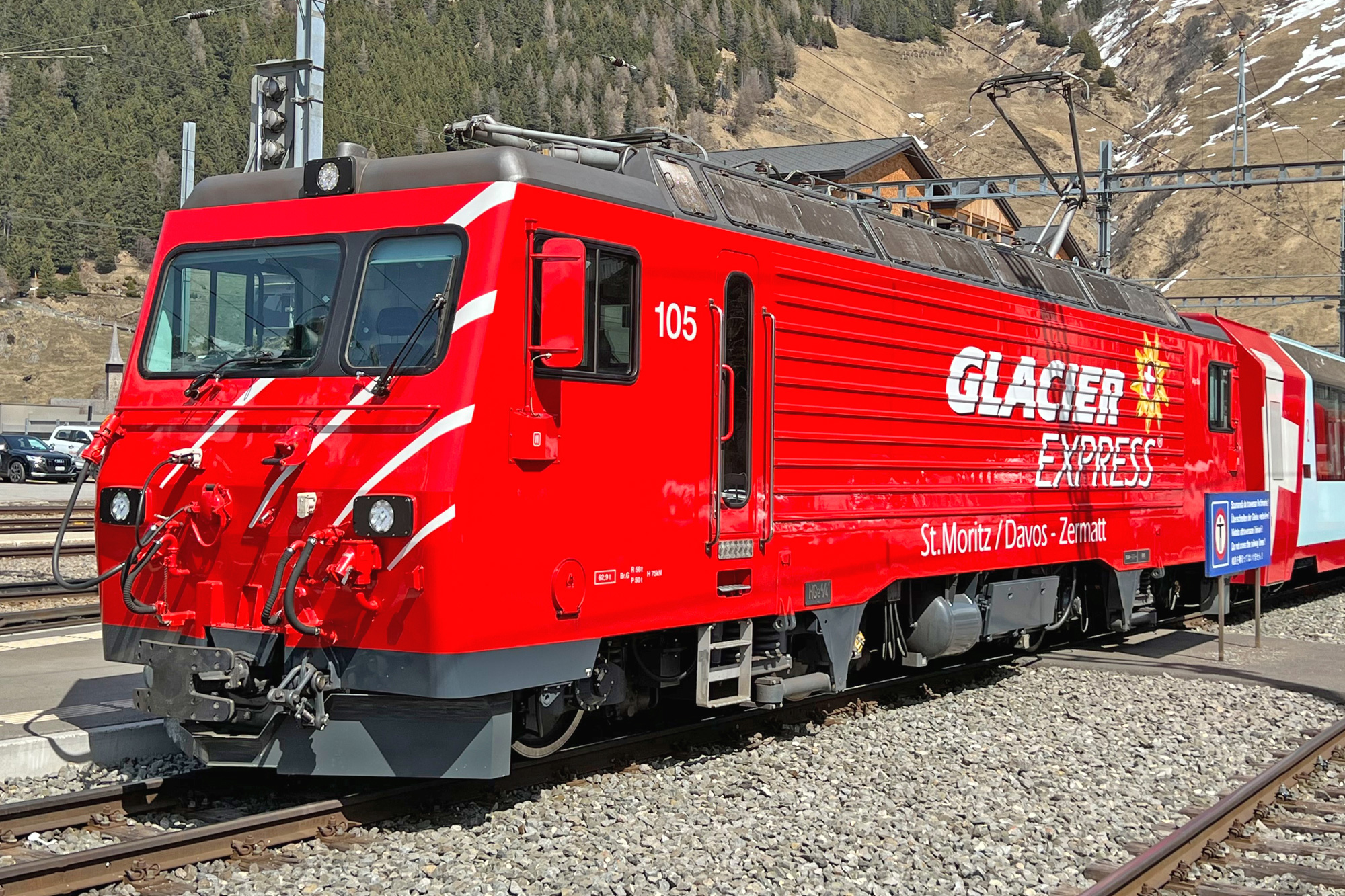
 23 itemsExpress trains in H0 standard gauge"Bernina Express", "GoldenPass" and "Glacier Express" coaches and the Capricorn on H0 standard gauge, two-rail or three-rail.See the items
Track and parts

All BEMO items

Kit for a transfer installation used to load standard gauge wagons onto transporter bogies.
In stock: 1 on the shelf, shipped within 1-3 days

On metre-gauge track from Nagold to Altensteig, the first narrow-gauge train of the Royal Württemberg State Railways (K.W.St.E.) ran under steam in 1891. In the years that followed, the K.W.St.E. opened the Bottwar Valley Railway Marbach–Heilbronn Süd, the Zabergäu Railway Lauffen–Leonbronn, and the two Upper Swabian lines Schussenried–Riedlingen and Biberach–Ochsenhausen – all with a gauge of 750 mm. Initially, the K.W.St.E. relied on various steam locomotive designs with Klose valve gear. From 1898 to 1913 came the Mallet locomotives Tssd, also supplied by Maschinenfabrik Esslingen. These, along with some sä. VI K locomotives taken over from Saxony or rebuilt by the DRG, shaped the scene for a long time. Even the five V51/V52 diesel locomotives supplied by Gmeinder in 1964 for 750 mm and metre gauge respectively could not prevent the decline of the romantic railways in Upper Swabia, the Neckar valley and the Black Forest: from the mid to late 1960s, the end came for the five Württemberg DB narrow-gauge railways; only freight traffic on the "Öchsle" continued until 1983. On what was once the last DB narrow-gauge railway on the mainland, an attractive heritage railway operation was established.
On order, shipped within 10-21 days

Last year, the Rügensche BäderBahn (RüBB) repainted its V51 901, originally built for lines in Württemberg, and gave it DB lettering from Era IV. We present the model as a new announcement for 2025, accompanied by matching modernised coaches with the RüBB logo. In addition, the Metal Collection standard-design locomotive 99 1781-6, item no. 1017896, is a highlight enriching our RüBB range. These combinations make it possible to faithfully recreate both modern and "nostalgic" railway operation on your layout.
On order, shipped within 10-21 days
In 2026, we are producing the standard-design locomotive, class 99.73-76, again, in the version with riveted water tanks, after a pause of more than 20 years. The locomotives built by Hartmann or Schwartzkopff respectively were delivered with electric lighting, or converted to it by the early 1930s. The models are made in early Era III condition: with the original fittings and without a gas tank on the tender. Typical features are the feedwater heater, the air-operated corner valves on the cylinder, and the large turbogenerator. Locomotive 742 has a makeshift smoke box door. Model version Small-series hand-built model in white metal and brass construction Bell-armature motor with flywheel Die-cast gearbox Drive and current pick-up via all driving and coupled axles Couplings are included for fitting
On order, shipped within 10-21 days

In 2026, we are once again producing the standard locomotive 99.73-76 in the version with riveted water tanks, after a break of more than 20 years. The locomotives built by Hartmann or Schwartzkopff were delivered with electric lighting or converted by the early 1930s. The models are made in early Era III condition: with original fittings and without a gas tank on the tender. Typical features are the feedwater heater, the air-operated angle valves on the cylinder and the large turbo generator. Locomotive 742 has a makeshift smoke box door. Model version Small-batch hand-built model in white metal and brass construction Bell-armature motor with flywheel Die-cast gearbox Drive and current pick-up via all driving and coupled axles Couplings included for fitting
On order, shipped within 10-21 days

In 1881, the Royal Saxon State Railway (K.Sä.Sts.B.) opened the first of a total of 30 narrow gauge railways. When building this network, totalling 561 km in length, a gauge of 750 mm was chosen for the majority of the lines. The steep and winding routes soon became a challenge for many locomotive builders: the double locomotive II K imported from England, the III K with the Klose mechanism, the articulated locomotive IV K of the Meyer type, or the V K with Klien-Lindner hollow axles, all had running gear designs that were costly to maintain. It was not until the VI K, procured in 1918 for the former military field railways, that powerful 750 mm locomotives of simple construction arrived – thanks to laterally shifting wheelsets of the Gölsdorf system. Signs of wear forced the DR to modernise and re-boiler some locomotives from 1963 onwards. Nevertheless, the VI K disappeared from service in 1975, not least due to their high axle loads. Model version Small-series hand-built model in white metal and brass construction Bell-armature motor with flywheel Gearbox made of die-cast metal Drive and current pick-up via all driving and coupled axles Couplings included for assembly
On order, shipped within 10-21 days

In the 1930s, the Wismar wagon factory developed a railbus of the "Hannover" type – designed primarily for financially weak light railways with low traffic volumes. A total of 57 railbuses were built for use on standard and narrow-gauge railways with various wheelbases. While running, only the motor positioned at the front in the direction of travel, with an output of 40-50 hp, could be used; the other was switched off.
On order, shipped within 10-21 days

H0e new tooling: sä. I K The fifth sä. I K locomotive with a rounded cab was delivered on 6 July 1883. Unlike the previous locomotives, this machine had no casing over its running gear. More striking, however, was its greater length over the buffers, which also made the cab almost 30 cm longer. From No. 6 onwards, the I K locomotives also carried different amounts of water and coal on each side. It was withdrawn from service in 1923. Model features Small-series hand-built model in white metal and brass Bell-armature motor with flywheel Drive and current pick-up through all driving and coupled axles Couplings included for fitting
Pre-order, release expected in Q4 2026

In 1881, the Königlich Sächsische Staatsbahn (K.Sä.Sts.B.) opened the first of a total of 30 narrow-gauge railways. For the construction of the network, which totalled 561 km, a gauge of 750 mm was chosen for the most part. The lines, rich in gradients and curves, soon became a challenge for many locomotive builders: the double locomotive II K imported from England, the III K with the Klose valve gear, the articulated locomotive IV K of the Meyer type, or the V K with Klien-Lindner hollow axles, all had drive mechanisms that were costly to maintain. It was not until the VI K, procured in 1918 for the former military field railways, that powerful 750 mm locomotives of simple construction appeared, fitted with laterally displaceable wheelsets of the Gölsdorf system. Wear phenomena that occurred forced the DR to modernise and fit new boilers to some locomotives from 1963 onwards. Nevertheless, the VI K disappeared from service in 1975, not least because of their high axle loads. Model version Small-series hand-built model in white metal and brass construction Bell-armature motor with flywheel Gearbox in plastic technology Drive and current pick-up via all driving and coupled axles Couplings included for fitting
On order, shipped within 10-21 days

In 1881, the Königlich Sächsische Staatsbahn (K.Sä.Sts.B.) opened the first of a total of 30 narrow gauge lines. For the construction of this 561 km network, a gauge of 750 mm was chosen for the most part. The lines, rich in gradients and curves, soon became a challenge for many locomotive builders: the double locomotive II K imported from England, the III K with the Klose valve gear, the articulated locomotive IV K of the Meyer type, or the V K with Klien-Lindner hollow axles all had maintenance-intensive running gear designs. It was only with the VI K, procured in 1918 for the former Heeresfeldbahnen (military field railways), that powerful and – thanks to laterally displaceable wheelsets of the Gölsdorf system – simply constructed 750 mm machines arrived. Wear phenomena forced the DR to modernise and re-boiler some locomotives from 1963 onwards. Nevertheless, the VI K disappeared from service in 1975, not least because of their high axle loads. Model version Hand-built limited-series model in whitemetal and brass construction Bell-armature motor with flywheel Gearbox in plastic technology Drive and current pick-up via all driving and coupled axles Couplings included for fitting
On order, shipped within 10-21 days

Built in large numbers between 1967 and 1985 by the vehicle and machine manufacturer FAUR in Bucharest (Romania), the diesel-hydraulic bogie locomotive L45H ran on many Eastern European railways and was also used by industrial and works railways. Today, some examples of these 450 hp, 10.25 m long narrow gauge locomotives for 750-1000 mm gauge are still in service in their original areas of operation in Romania (class 87), Poland (Lxd2), Slovakia, Serbia and Hungary (Mk45). Some have in the meantime also become popular railway service locomotives, reaching Germany in Saxony at the SDG, Austria on the Ybbstalbahn mountain section of the ÖGLB, or even, among other places, the Mediterranean island of Corsica, where they were partly re-engined for track work. After their service there ended, the machines used there found further new areas of operation, for example as track-building locomotives in Italy/France or at the Baie de Somme heritage railway. Model version Die-cast chassis Drive and current pick-up via all four axles Prepared for sound LED headlights that change over with the direction of travel Separately applied handrails Separately applied wind deflectors Separately applied windscreen wipers Etched steps and fan cover Can be converted to H0m gauge (replacement wheelsets available as an option)
On order, shipped within 10-21 days

The Wassertalbahn was completed in 1932 as an industrial railway for hauling timber to a sawmill in Viseu de Sus, in the border region between Romania and Ukraine. Operation on this 760 mm narrow-gauge forest railway in the Carpathians is shared between diesel-hauled production trains and tourist trains mostly headed by steam locomotives. Among other locomotives, the railway uses four bogie diesel locomotives of the L45H type built by the Faur company, in yellow, red, blue and green. After the production of the yellow 87 0036-1 and the opal green 87-0033-8, the next model is the blue locomotive 87-0032-0. A few years ago, the four L45H locomotives received a black livery matching that of the steam locomotives. As a splash of colour, the decorative stripe running around the body was kept in the locomotive's previous body colour, namely yellow, red, blue or green. Model features Die-cast metal chassis Drive and current pick-up through all four axles Sound-prepared LED headlight that changes over with the direction of travel Fitted handrails Fitted wind deflectors Fitted windscreen wipers Etched steps and fan cover Can be regauged to H0m (replacement wheelsets available separately)
On order, shipped within 10-21 days

The diesel-hydraulic bogie locomotive L45H, built in large numbers between 1967 and 1985 by the vehicle and machine manufacturer FAUR in Bucharest (Romania), ran on many Eastern European railways and was also used by industrial and works railways. Today, some examples of these 450 hp, 10.25 m long narrow-gauge locomotives for a gauge of 750-1000 mm are still in service on their original lines in Romania (class 87), Poland (Lxd2), Slovakia, Serbia and Hungary (Mk45). Some have meanwhile become popular service locomotives in Germany or Austria. In 2004, the Chemins de Fer de la Corse acquired nine Romanian L45H diesel locomotives through the Metricrail consortium for track renewal on the Mediterranean island. These machines, numbered 60001-60009, were converted to metre gauge and, after initial problems, eventually fitted with Caterpillar engines. Further modifications allowed multiple-unit operation; externally, other differing details can be found, such as the characteristic double lamps. Due to the delay, an intermediary supplied three refurbished locomotives, 45001-45003, so that a total of 12 locomotives could be used in engineering train service on the island. After the end of their deployment there, the machines used there found further new fields of application, for example as track construction locomotives in Italy/France or at the Baie de Somme heritage railway. This locomotive model is also available in H0m under item number 1220 926! Model version Die-cast chassis Drive and current pick-up on all four axles Sound-prepared LED headlights, changing with the direction of travel Separately applied handrails Separately applied wind deflectors Separately applied windscreen wipers Etched steps and fan cover Can be converted to H0e gauge (replacement wheelsets optionally available)
On order, shipped within 10-21 days

The bogie diesel-hydraulic locomotive L45H, built in large numbers by the vehicle and machine manufacturer FAUR in Bucharest (Romania) between 1967 and 1985, ran on many Eastern European railways and was also used on industrial and works railways. Today some examples of these 450 hp, 10.25 m long narrow-gauge locomotives for 750-1000 mm gauge are still in service in their original operating areas in Romania (class 87), Poland (Lxd2), Slovakia, Serbia and Hungary (Mk45). Some have since become popular service locomotives in Germany, in Saxony with the SDG, but also even on the Mediterranean island of Corsica, where they were partly re-engined for track work. After their service there ended, the machines employed there moved on to further new areas of operation, for example as track construction locomotives in Italy/France or at the Baie de Somme heritage railway. Two of these locomotives are preserved operational in Austria today: one on the mountain section of the Ybbstalbahn run by the ÖGLB; in western Styria, the municipality of Stainz took over the closed Preding-Wieselsdorf – Stainz line from the Steiermärkische Landesbahnen and operates it as the "Stainzer Flascherlzug" heritage railway. Trains hauled by both steam and diesel locomotives are used. In 2023 the previously purple Faur diesel locomotive L45H-070 received an attractive new red livery. Model features Die-cast metal chassis Drive and current pick-up through all four axles Sound-prepared LED headlight that changes over with the direction of travel Fitted handrails Fitted wind deflectors Fitted windscreen wipers Etched steps and fan cover Can be regauged to H0m (replacement wheelsets available separately)
On order, shipped within 10-21 days

New tooling for 2026: diesel locomotive of the Steiermärkische Landesbahnen In 1968, the company Duro Dakovic delivered to the Yugoslav state railway JZ the first prototype, 740-001, of a newly developed bogie diesel locomotive for testing on the Bosnian Eastern Railway. The aim was to rationalise freight traffic and replace steam operation on the narrow-gauge network with 760 mm gauge, which in the 1960s still covered around 3000 km. By 1972, a total of 40 units had been delivered with locomotives 740-001 to 025 without heating equipment and 740-101 to 115 with a heating boiler; as in many other countries, however, they could no longer halt the decline of the narrow-gauge railways, so that some of them found new tasks with industrial companies, track-laying firms or in other countries. After the closure of the Thörlerbahn, the VL 23 also came to the Feistritztalbahn. From 1999 to 2003, the orange locomotive was loaned to the Zillertalbahn for timber transport using transporter wagons. In 2015, it left the Feistritztal for the Murtal. Ahead of the resumption of timber traffic on the Zillertalbahn, it was given a livery in the new white/dark blue colours of the Steiermarkbahn StB at Murau, as well as LED headlights. Since April 2021, it has been the regular locomotive for the timber trains on behalf of Binderholz in Fügen. Model version prior to the repainting in white/dark blue, as also used as a loan locomotive in the Zillertal. A locomotive model in its current appearance will be released at a later date. You will find matching Zillertalbahn transporter wagons in the ROCO range. Model version Die-cast chassis Drive and current pick-up via all four axles Sound-prepared White/red LED headlights, changing with the direction of travel Digital model with cab lighting Prototype-accurate, differing bodies, buffer beams, access steps and add-on parts Separately applied handrails With bow coupling and Bosna coupling
Pre-order, release expected in Q4 2026

New tooling for 2026: diesel locomotive of the Steiermärkische Landesbahnen In 1968, the company Duro Dakovic delivered to the Yugoslav State Railways (JZ) the first prototype 740-001 of a newly developed bogie diesel locomotive, for trials on the Bosnian Eastern Railway. The aim was to rationalise freight traffic and to replace steam operation on the narrow-gauge network with 760 mm gauge, which still covered around 3000 km in the 1960s. By 1972, a total of 40 units had been delivered with locomotives 740-001 to 025 without heating equipment and 740-101 to 115 with a heating boiler; as in many other countries, however, they could no longer halt the decline of the narrow-gauge railways, so that some of them found new tasks with industrial companies, track construction firms or in other countries. In 1980, the Steiermärkische Landesbahnen (StLB) took over the two locomotives 740-023 and 024 for freight traffic on the Thörlerbahn and the Feistritztalbahn. The two VL 22 and 23 received new MTU engines. After the Thörlerbahn closed in 1995, the VL 22 received a more powerful MTU engine and the StLB's new red livery. When the Feistritztalbahn also lost its freight traffic in 2014, it moved to the Murtal. There it hauls the occasional freight and works trains. The model depicts the condition up to around 2023, before a switch and fire extinguisher box was fitted to the short hood. Model version Die-cast chassis Drive and current pick-up via all four axles Sound preparation White/red LED headlights that change with the direction of travel Digital model with cab lighting Prototypically different bodies, buffer beams, access steps and add-on parts Applied handrails With bow coupling and Bosna coupling
Pre-order, release expected in Q4 2026