
H0 and N rolling stock, lighting and cable cars
Brawa, model railways made with care
Locomotives, coaches and wagons in H0 and N, plus street lights, cable cars, bulbs and wiring: the world of a family firm from Waiblingen.
- 1375items in the shop
- H0 and Nthe scales in the range
- 1948the year of the founding
What makes Brawa
- A family firm since 1948: founded by Artur Braun in Waiblingen, in southern Germany, Brawa is run today by the third generation of the family.
- Love of detail: individually fitted handrails, sprung buffers, crisp printing: every model starts from measurements and photographs of the original and a study of the construction drawings.
- Sturdy locomotives: most are largely die-cast zinc, for weight and robustness, for DC or AC, with sound and, on steam locomotives, smoke.
- Cable cars and lighting: H0 cable cars are a house speciality, starting with the Nebelhorn cableway in Oberstdorf; lamps and signals follow, with load-bearing parts made of brass or etched sheet.
Our favourites

Prototype Even before World War I, plans were being made in Prussia to electrify several mountain railways in Silesia, including the so-called “Zackenbahn” (named after the Zacken River) between Hirschberg and Polaun. Given the difficult topographical conditions, this new form of traction promised considerable savings and more cost-effective operation. However, the outbreak of World War I prevented the work from being completed quickly, and it was not until 1923 that continuous operation began. Since operating trains pulled by locomotives was very cumbersome due to fluctuating traffic volumes, considerations were made early on to switch to railcars. The suitability of the ET 88, originally procured for suburban transport in Berlin, prompted the DRG to procure additional four-axle electric railcars. In 1926-1927, LHW Breslau and WUMAG in Görlitz, in collaboration with SSW-Werke, delivered a total of 11 railcars that were to become the symbol of electric train transport in Silesia. The distinctive vehicles with their open entrance platforms were christened “Rübezahl” by the local population, a name that actually refers to a moody mountain spirit from the Giant Mountains. The railcars, which were initially painted green and designated “Breslau 511-521,” were always used in pairs with up to eight light standard branch line cars as trailers. Due to low demand, a single railcar operated between Josephinenhütte and Grünthal. The greatest rush of passengers was on weekends when the weather was nice and during the winter sports season. Up to three railcars with twelve trailers then operated as a train. At the beginning of the 1930s, the railcars were given the new designation elt 1011-1019 and a two-tone paint scheme. In 1941, the four-axle railcars were given their final numbers and became ET 89 01-11. With the exception of ET 89 11, which had to be taken out of service in 1943 due to an accident, all of them survived the war and the end of electric train transport in Silesia. Four railcars were transferred to PKP, but were not used there. The exact whereabouts of three others are unknown. ET 89 01, 04, and 07 ended up in the western occupation zones and thus became part of the DB fleet, which was founded in 1949. Only ET 89 04 was refurbished and served at the Munich Central Station depot. Initially still listed as 2nd and 3rd class cars, later photos show it as a pure 3rd class vehicle, which then exclusively carried 2nd class passengers after the class reform in 1956. On September 2, 1959, its final hour arrived – ET 89 04 was the last of its kind to be taken out of service and dismantled shortly thereafter, leaving only a few photos to remind us of these unique railcars. Model Illuminated upper carriage lanterns and tail lights Separately switchable interior lighting Separately switchable third headlight New motor New sound
In stock: 1 on the shelf, shipped within 1-3 days

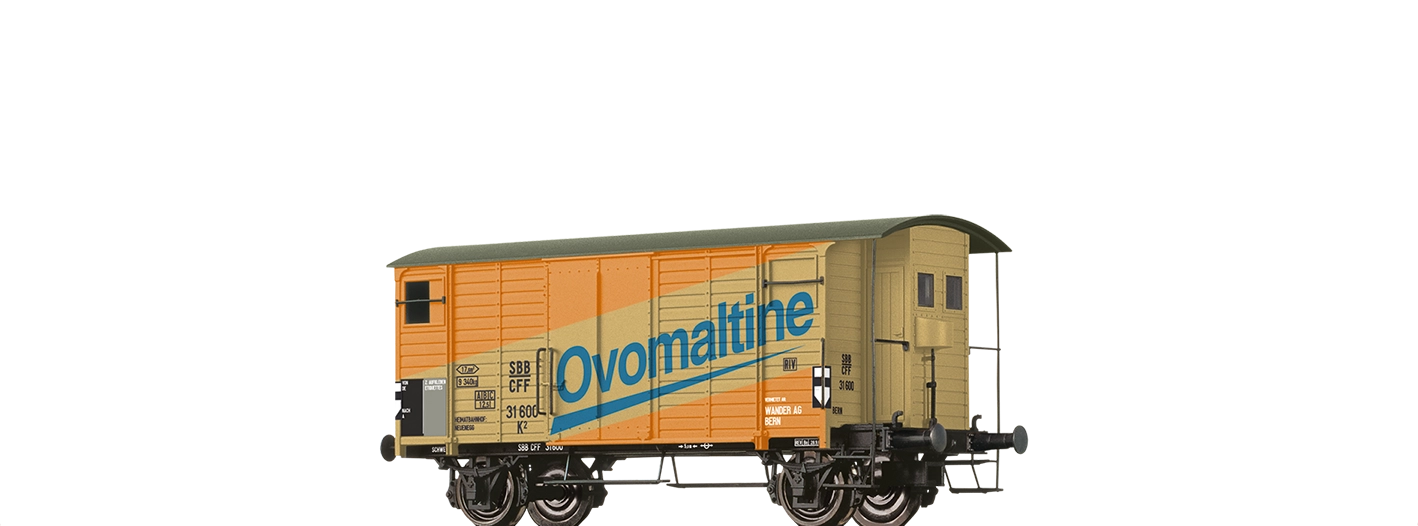
Prototype The Swiss began standardising some types of goods wagons at an early stage. They were then also procured by all private railways in order to improve repairs and spare part stock-keeping. They included closed goods wagons with a 4.5 m wheel base and a frame length of 7.10 m. Later, the wheel base was increased to 5 m in order to improve the running characteristics. In this form, high numbers of the wagons that were given the K2 designation were procured by SBB. Model Precise replica of board joints Finely engraved fan grill Precise paintwork and painting NEM-standard short-coupling Metal wheels True to original frame construction
In stock: 1 on the shelf, shipped within 1-3 days

1 x Wooden-mast Light, Pin-Socket (LED) Height 88 mm Simple handling Time-consuming cable connections between the lamp and the socket are not necessary The lamp can be tilted in the socket up to 10° to compensate for uneven terrain Can be separated electrically Compatible to each other Load-carrying parts made from brass Filigree lattice work Multi-part lampheads Intricately handpainted
In stock, shipped within 1-3 days

1 x Platform Light, Pin-Socket (LED) Height 70 mm Simple handling Time-consuming cable connections between the lamp and the socket are not necessary The lamp can be tilted in the socket up to 10° to compensate for uneven terrain Can be separated electrically Compatible to each other Load-carrying parts made from brass Filigree lattice work Multi-part lampheads Intricately handpainted
In stock: 5 on the shelf, shipped within 1-3 days

1 x Street Light, Pin-Socket (LED) Height 58 mm Simple handling Time-consuming cable connections between the lamp and the socket are not necessary The lamp can be tilted in the socket up to 10° to compensate for uneven terrain Can be separated electrically Compatible to each other Load-carrying parts made from brass Filigree lattice work Multi-part lampheads Intricately handpainted
In stock: 5 on the shelf, shipped within 1-3 days

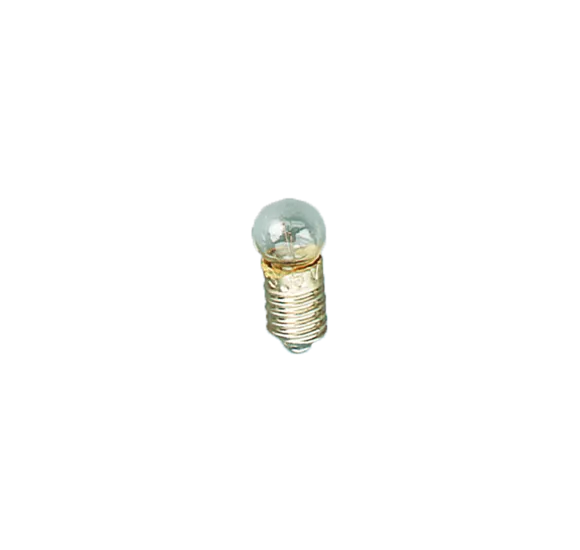
1 x Telephone Box Swisscom Height 33 mm With lighting Spare bulb 3268
In stock: 1 on the shelf, shipped within 1-3 days
The Brawa families
Rolling stock
 210 itemsLocomotivesLocomotives in H0 and N, from the DB AG TRAXX BR 147 to the DR BR 132.See the items
 56 itemsRailcars and multiple unitsTWINDEXX Vario double-deck trains in N, DRG VT 137 diesel railcar in H0.See the items
 360 itemsPassenger coachesDB express coaches, SBB coaches and complete trains in H0 and N.See the items
 448 itemsFreight wagonsCovered wagons, container wagons and luggage vans, including the SBB K2 "Ovomaltine".See the items
Scenery and cable cars
 117 itemsLighting and scenery accessoriesWooden-mast lights, park lanterns and LED wall lights, clocks and telephone boxes.See the items
 12 itemsCable carsNebelhorn, Hahnenkamm, Kanzelwand, Titlis and chairlift, in H0 and N.See the items
Bulbs and wiring
All Brawa items

LED light New electronics e.g. energy storage (Version Digital EXTRA) Digital coupling (Version Digital EXTRA) D&H sound (Version Digital EXTRA) Drivers cab interior fittings New motor
On order, shipped within 10-15 days

LED light New electronics e.g. energy storage (Version Digital EXTRA) Digital coupling (Version Digital EXTRA) D&H sound (Version Digital EXTRA) Drivers cab interior fittings New motor
On order, shipped within 10-15 days

LED light New electronics e.g. energy storage (Version Digital EXTRA) Digital coupling (Version Digital EXTRA) D&H sound (Version Digital EXTRA) Drivers cab interior fittings New motor
On order, shipped within 10-15 days

LED light New electronics e.g. energy storage (Version Digital EXTRA) Digital coupling (Version Digital EXTRA) D&H sound (Version Digital EXTRA) Drivers cab interior fittings New motor
On order, shipped within 10-15 days

Available for direct and alternating current Etched radiator grille Free-standing handles and handrails Clear view through the driver cabin Lights equipped with maintenance-free LEDs Three-point support Finely detailed chassis Fine paintwork and painting Reproduction of the brake linkage Metal frame and wheels, structure made of plastic NEM-standard short coupling Light change Equipment Digital Version EXTRA (DC + AC) Filigree electronic coupling (interchangeable thanks to NEM standard) Incl. energy storage (buffers sound, motor and light) Comprehensive light functions, flicker-free light provided by a separate capacitor Range-specific original sound with the latest sound technology Optimal motor and load control for perfect running characteristics Compatible with all common digital systems Driver cabin light
On order, shipped within 10-15 days

Prototype The great demand for manoeuvring locomotives combined with the commencing structural changes led the German Federal Railway to develop the V60 range. Over the next eight years, the first prototype from in 1955 was followed by 941 more locomotives. Their reliability and robustness helped the last newly developed rod diesel locomotive of Deutsche Bahn to achieve a real cult status and made them indispensable at many railway stations or in the field of freight services, even to this present day. Model Available for direct and alternating current Etched radiator grille Free-standing handles and handrails Clear view through the driver cabin Lights equipped with maintenance-free LEDs Three-point support Finely detailed chassis Fine paintwork and painting Reproduction of the brake linkage Metal frame and wheels, structure made of plastic NEM-standard short coupling Light change Equipment Digital Version EXTRA (DC + AC) Filigree electronic coupling (interchangeable thanks to NEM standard) Incl. energystorage (buffers sound, motor and light) Comprehensive light functions, flicker-free light provided by a separate capacitor Range-specific original sound with the latest sound technology Optimal motor and load control for perfect running characteristics Compatible with all common digital systems Driver cabin light
On order, shipped within 10-15 days

Prototype After a short development time, Voith Turbo Lokomotivtechnik presented the first sample of the Gravita® family at InnoTrans 2008. Five different performance classes are projected, from the four-axle Gravita® 20BB to the "chicks", which go by the name Gravita® 5BB and which have only two axles. Although the vehicle had only existed as a prototype and was not yet widely tested, DB Schenker decided on more than 130 locomotives for the Gravita® 10BB in its 2007 bid invitation. By now, the units of the Gravita® 10BB are in use on German rail tracks. The designated DB machines are produced and in use nationwide under the series designation BR 260. Apart from Northrail, another 5 locomotives went to Switzerland. Continuing this success, the larger sister in this series, the Gravita® 15D, was shown in Berlin in 2010. Although only 1.2 m longer than the Gravita® 10BB, it produces up to 1,800kW, making it as suitable for line service as it is for shunting. All locomotives built by Voith Turbo Lokomotivtechnik are also suited for multi-led traction with each other. Model Separately mounted handrails Finely detailed, three-dimensional bogie Fine paintwork and painting True-to-scale fangrill True-to-scale engravings and details All axles driven LED lighting Driver's cab light and red tail lights can be switched on and off
On order, shipped within 10-15 days

Prototype In April 2011, Deutsche Bahn AG and Bombardier Transportation signed a framework contract stipulating the delivery of up to 200 units of new TRAXX P160 DE ME locomotives. The locomotives, a reclassification of the 245 series, are intended to replace the large diesel locomotives from the 218 series that had become aged. The diesel-electric locomotives are equipped with four diesel engines (ME – Multi Engine) that drive four generators to create power that, in turn, supply the traction motors via the converters. The diesel motors switch on or off automatically depending upon the required output of the locomotives. Hidden behind this is a reduction in the idling time of the motors, which has a positive effect upon fuel consumption. Therefore, this concept is ideally suited to the new ecological and sustainable environmental concept of Deutsche Bahn AG. Thanks to the derivation from the TRAXX family, approximately 70 % of all utilised components are compatible with the existing TRAXX locomotives. The 245 series is assembled and constructed in the former Henschel & Sohn plant in Kassel, Germany, that today belongs to Bombardier. Large components such as locomotive bodies and chassis are supplied from the Wroclaw and Siegen plants, amongst others. The supply of the first batch of 20 locomotive for DB Regio was requested directly upon the signing of the contract. The new locomotive series was officially presented at InnoTrans 2012 in the shape of the 245 003-9. The first models of the 245 series will be based at DB Regio in Kempten and Frankfurt am Main and have already successfully completed initial trial runs. Model Attached grip rails (head end) Top-quality printing and paintwork Driver's cab lighting Prepared for sound, or with sound installed Etched treadplates Incl. snowplough LED lighting Windscreen wipers attached individually Different design of the train compartments PluX22 interface Driver's cab lighting switchable like the original Long-distance headlights raise like the original Smooth, steady setting off even at speed level 1 Setting off and braking delay like the original Optimal power consumption Chassis with free view and details true to the original Simple, cable-free dismantling of the housing possible as well as non-twist locking lugs Metal frame
On order, shipped within 10-15 days

Prototype At the end of the 1920s, it became clear that Deutsche Reichsbahn Gesellschaft (DRG) would have to acquire new electric locomotives, among other things, to accelerate its goods traffic. The need to increase maximum speeds to at least 80 km/h could not be met with the most recently purchased E77 and E75 series since the standard drive technology by means of bars and additional trailing wheelsets did notallow for higher speeds. The good experiences from abroad and with the two Bavarian EG 1 with the Bo'Bo' two-bogie locomotives convinced the DRG to deviate from single-frame construction as well. The arrival of the world economic crisis in 1929, however, put a halt to this plan by interrupting the cost-intensive electrical expansion of the lines, thus eliminating the need for electric locomotives. The locomotive industry in Germany, however, feared falling behind current developments due to this pause in procurement. They therefore began developing a cheaper design at their own costs. Thus a prototype with the designation E44 70 was created at the Siemens-Schuckert Works (SSW) under the general management of Walter Reichel. This prototype later became the E44 001. SSW was able to integrate its experience with electric arcwelding from its production of components for electric generators into locomotive manufacturing, which led to significant savings in materials and manufacturing costs. The prototype's positive test results convinced DRG to further develop the new locomotive type into a universal locomotive. The result was Germany's first two-bogie electric locomotive produced in series, which can safely be categorised as the prototype forthe subsequently developed standard electric locomotive of Deutsche Bundesbahn (DB). Due to the war the delivery of the locomotives, which were registered for 90 km/h, stretched from 1933 into the postwar period, and Henschel only handed over the last one, a E44 187G, to DB on 29 November 1954. The predominant distribution to central and southern Germany led to the fact that approximately 100 locomotives remained in West Germany and around 50 in East Germany after the war. The most conspicuous design changes at DB were the lengthening of the roof shield for accident prevention and the Indusi (inductive traincontrol system) equipment. The last locomotives, however, remained in service until 1985. Of the original 187 locomotives, only 21 still exist today, partially as museum locomotives and as spare parts donors. Model Extra mounted handrails in low-material thickness Three-point support True-to-epoch lightning Finely detailed chassis Free-standing roof lines Illuminated driver's cab (Version Digital EXTRA) Functioning metal pantographs (mechanical) Prepared for sound or with built-in sound (Version BASIC+) LED lighting NEM-standard close-coupling Illuminated machine room (Version Digital EXTRA) Metal wheels and frame Many extra mounted parts Prototypical multipart roof-fittings Reproduction of the different pantograph and main switch types
On order, shipped within 10-15 days

Extra mounted handrails in low-material thickness Three-point support True-to-epoch lightning Finely detailed chassis Free-standing roof lines Illuminated driver's cab (Version Digital EXTRA) Functioning metal pantographs (mechanical) Prepared for sound or with built-in sound (Version BASIC+) LED lighting NEM-standard close-coupling Illuminated machine room (Version Digital EXTRA) Metal wheels and frame Many extra mounted parts Prototypical multipart roof-fittings Reproduction of the different pantograph and main switch types
On order, lead time to be confirmed

Prototype The product designation TRAXX 3 from Bombardier Transportation reflects the continued development of the well-known TRAXX 2 locomotives of the 146 and 185 series. The new vehicles include the 147 series, for passenger and long-distance traffic, and the 187 series for goods traffic. In addition to the changed appearance of the front, which now consists largely of GRP parts, customers can order a last-mile module for the TRAXX 3 platform if desired. This allows these vehicles, which are designed as electric locomotives, to run on short sections of track or perform shunting work independently with a diesel engine or under battery power. The first test drives with the new TRAXX 3 locomotives took place shortly after their unveiling in 2011. Thanks to many smaller and some large orders, including a framework agreement for 450 units with DB AG, well over 200 locomotives of the TRAXX 3 platform have been delivered to customers to date and are currently in service throughout Europe. Model New case with ribbed side panels New front Illuminated train destination display Etched treadplates LED lighting Windscreen wipers attached individually Traction tyres Driver's cab lighting switchable like the original Long-distance headlights raise like the original Smooth, steady setting off even at speed level 1 Simple, cable-free dismantling of the housing possible as well as non-twist locking lugs True-to-original rest position of the pantographs Setting off and braking delay like the original Metal frame Many attached grip rails Chassis with free view
On order, shipped within 10-15 days