
H0 and N rolling stock, lighting and cable cars
Brawa, model railways made with care
Locomotives, coaches and wagons in H0 and N, plus street lights, cable cars, bulbs and wiring: the world of a family firm from Waiblingen.
- 1375items in the shop
- H0 and Nthe scales in the range
- 1948the year of the founding
What makes Brawa
- A family firm since 1948: founded by Artur Braun in Waiblingen, in southern Germany, Brawa is run today by the third generation of the family.
- Love of detail: individually fitted handrails, sprung buffers, crisp printing: every model starts from measurements and photographs of the original and a study of the construction drawings.
- Sturdy locomotives: most are largely die-cast zinc, for weight and robustness, for DC or AC, with sound and, on steam locomotives, smoke.
- Cable cars and lighting: H0 cable cars are a house speciality, starting with the Nebelhorn cableway in Oberstdorf; lamps and signals follow, with load-bearing parts made of brass or etched sheet.
Our favourites

Prototype Even before World War I, plans were being made in Prussia to electrify several mountain railways in Silesia, including the so-called “Zackenbahn” (named after the Zacken River) between Hirschberg and Polaun. Given the difficult topographical conditions, this new form of traction promised considerable savings and more cost-effective operation. However, the outbreak of World War I prevented the work from being completed quickly, and it was not until 1923 that continuous operation began. Since operating trains pulled by locomotives was very cumbersome due to fluctuating traffic volumes, considerations were made early on to switch to railcars. The suitability of the ET 88, originally procured for suburban transport in Berlin, prompted the DRG to procure additional four-axle electric railcars. In 1926-1927, LHW Breslau and WUMAG in Görlitz, in collaboration with SSW-Werke, delivered a total of 11 railcars that were to become the symbol of electric train transport in Silesia. The distinctive vehicles with their open entrance platforms were christened “Rübezahl” by the local population, a name that actually refers to a moody mountain spirit from the Giant Mountains. The railcars, which were initially painted green and designated “Breslau 511-521,” were always used in pairs with up to eight light standard branch line cars as trailers. Due to low demand, a single railcar operated between Josephinenhütte and Grünthal. The greatest rush of passengers was on weekends when the weather was nice and during the winter sports season. Up to three railcars with twelve trailers then operated as a train. At the beginning of the 1930s, the railcars were given the new designation elt 1011-1019 and a two-tone paint scheme. In 1941, the four-axle railcars were given their final numbers and became ET 89 01-11. With the exception of ET 89 11, which had to be taken out of service in 1943 due to an accident, all of them survived the war and the end of electric train transport in Silesia. Four railcars were transferred to PKP, but were not used there. The exact whereabouts of three others are unknown. ET 89 01, 04, and 07 ended up in the western occupation zones and thus became part of the DB fleet, which was founded in 1949. Only ET 89 04 was refurbished and served at the Munich Central Station depot. Initially still listed as 2nd and 3rd class cars, later photos show it as a pure 3rd class vehicle, which then exclusively carried 2nd class passengers after the class reform in 1956. On September 2, 1959, its final hour arrived – ET 89 04 was the last of its kind to be taken out of service and dismantled shortly thereafter, leaving only a few photos to remind us of these unique railcars. Model Illuminated upper carriage lanterns and tail lights Separately switchable interior lighting Separately switchable third headlight New motor New sound
In stock: 1 on the shelf, shipped within 1-3 days

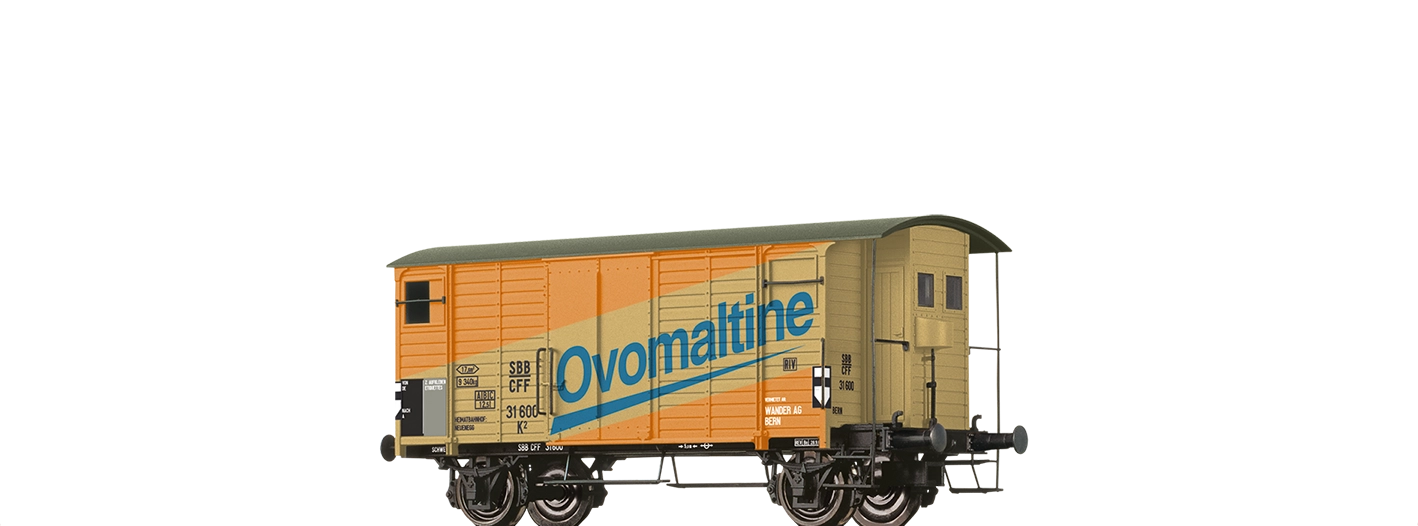
Prototype The Swiss began standardising some types of goods wagons at an early stage. They were then also procured by all private railways in order to improve repairs and spare part stock-keeping. They included closed goods wagons with a 4.5 m wheel base and a frame length of 7.10 m. Later, the wheel base was increased to 5 m in order to improve the running characteristics. In this form, high numbers of the wagons that were given the K2 designation were procured by SBB. Model Precise replica of board joints Finely engraved fan grill Precise paintwork and painting NEM-standard short-coupling Metal wheels True to original frame construction
In stock: 1 on the shelf, shipped within 1-3 days

1 x Wooden-mast Light, Pin-Socket (LED) Height 88 mm Simple handling Time-consuming cable connections between the lamp and the socket are not necessary The lamp can be tilted in the socket up to 10° to compensate for uneven terrain Can be separated electrically Compatible to each other Load-carrying parts made from brass Filigree lattice work Multi-part lampheads Intricately handpainted
In stock, shipped within 1-3 days

1 x Platform Light, Pin-Socket (LED) Height 70 mm Simple handling Time-consuming cable connections between the lamp and the socket are not necessary The lamp can be tilted in the socket up to 10° to compensate for uneven terrain Can be separated electrically Compatible to each other Load-carrying parts made from brass Filigree lattice work Multi-part lampheads Intricately handpainted
In stock: 5 on the shelf, shipped within 1-3 days

1 x Street Light, Pin-Socket (LED) Height 58 mm Simple handling Time-consuming cable connections between the lamp and the socket are not necessary The lamp can be tilted in the socket up to 10° to compensate for uneven terrain Can be separated electrically Compatible to each other Load-carrying parts made from brass Filigree lattice work Multi-part lampheads Intricately handpainted
In stock: 5 on the shelf, shipped within 1-3 days

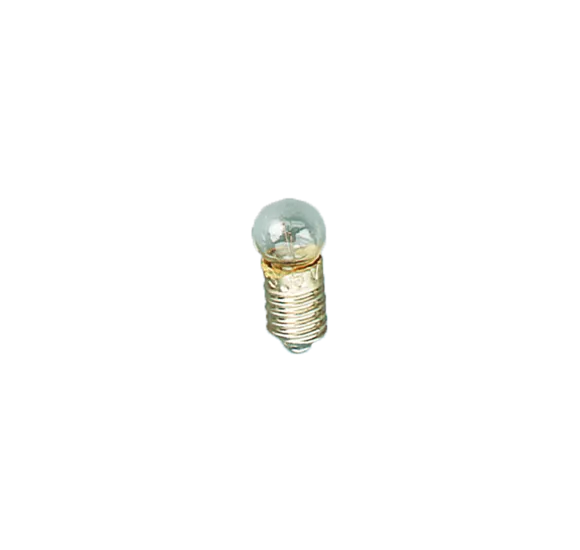
1 x Telephone Box Swisscom Height 33 mm With lighting Spare bulb 3268
In stock: 1 on the shelf, shipped within 1-3 days
The Brawa families
Rolling stock
 210 itemsLocomotivesLocomotives in H0 and N, from the DB AG TRAXX BR 147 to the DR BR 132.See the items
 56 itemsRailcars and multiple unitsTWINDEXX Vario double-deck trains in N, DRG VT 137 diesel railcar in H0.See the items
 360 itemsPassenger coachesDB express coaches, SBB coaches and complete trains in H0 and N.See the items
 448 itemsFreight wagonsCovered wagons, container wagons and luggage vans, including the SBB K2 "Ovomaltine".See the items
Scenery and cable cars
 117 itemsLighting and scenery accessoriesWooden-mast lights, park lanterns and LED wall lights, clocks and telephone boxes.See the items
 12 itemsCable carsNebelhorn, Hahnenkamm, Kanzelwand, Titlis and chairlift, in H0 and N.See the items
Bulbs and wiring
All Brawa items

Prototype For many years now, double-decker trains have successfully formed the backbone of regional traffic. Double-decker trains are the ideal solution, especially on routes with low platform lengths and a high volume of passengers. The tried-and-tested single-wagon concept of the TWINDEXX Vario double-decker fleet is now being supplemented with an electrical railcar. Bombardier Transportation will supply 16 Bombardier TWINDEXX Vario railcars with regional train equipment to Deutsche Bahn AG. The new four-part railcars from the "Do 2010" generation consist of 2 railcars and 2 middle wagons respectively. With the newly-developed driven TWINDEXX Vario railcar, it is now possible to utilise the trains as pure double-decker multiple unit trains. As a result, it is also possible to use this vehicle as an electric multiple unit train alongside the classic push-pull operation with an electric or diesel locomotive. This railcar can be combined with middle wagons and control cars depending upon the application and desired capacity. The central buffer coupling enables operation with double traction and, as a result, the implementation of a wing-train concept. The trains with a combined upper and lower entrance are comfortably equipped with generous seat spacing and plenty of storage space. Furthermore, the double-decker individual wagons permit the extension and shortening of the block train and, consequently, an adjustment to fluctuating demand or future development. As a result, they can be utilised for the most diverse of operational applications in both regional and long-distance traffic. Model Exactly scale 1:87 True-to-original length over Scharfenbeck coupling Structure made of high-quality, impact-resistant plastic Metal bottom plate Printed window frames In-plane assembled windows Illuminated destination indicator (digital) Lighting with warm white LEDs Illuminated driver's cab True-to-scale details Extra mounted windscreen wiper Perfectly replicated three-dimensional front Multipart bogies Fine paintwork and painting With interior fittings, incl. driver's cab NEM-standard close coupling Light change white/red, in the direction of travel Metal bearing ZugBus: automatic detection of the first and last model in the train; controlling and programming of all functions; detection of brake sections ZugBUS-Functions are only available in digital mode
On order, shipped within 10-15 days

Prototype For many years now, double-decker trains have successfully formed the backbone of regional traffic. Double-decker trains are the ideal solution, especially on routes with low platform lengths and a high volume of passengers. The tried-and-tested single-wagon concept of the TWINDEXX Vario double-decker fleet is now being supplemented with an electrical railcar. Bombardier Transportation will supply 16 Bombardier TWINDEXX Vario railcars with regional train equipment to Deutsche Bahn AG. The new four-part railcars from the "Do 2010" generation consist of 2 railcars and 2 middle wagons respectively. With the newly-developed driven TWINDEXX Vario railcar, it is now possible to utilise the trains as pure double-decker multiple unit trains. As a result, it is also possible to use this vehicle as an electric multiple unit train alongside the classic push-pull operation with an electric or diesel locomotive. This railcar can be combined with middle wagons and control cars depending upon the application and desired capacity. The central buffer coupling enables operation with double traction and, as a result, the implementation of a wing-train concept. The trains with a combined upper and lower entrance are comfortably equipped with generous seat spacing and plenty of storage space. Furthermore, the double-decker individual wagons permit the extension and shortening of the block train and, consequently, an adjustment to fluctuating demand or future development. As a result, they can be utilised for the most diverse of operational applications in both regional and long-distance traffic. Model Content: 2 railcars 2nd class, 1 middle wagon 2nd class Exactly scale 1:87 True-to-original length over Scharfenbeck coupling Structure made of high-quality, impact-resistant plastic Metal bottom plate Printed window frames In-plane assembled windows Illuminated destination indicator (digital) Lighting with warm white LEDs Illuminated driver's cab True-to-scale details Extra mounted windscreen wiper Perfectly replicated three-dimensional front Multipart bogies Fine paintwork and painting With interior fittings, incl. driver's cab NEM-standard close coupling Light change white/red, in the direction of travel Metal bearing ZugBus: automatic detection of the first and last model in the train; controlling and programming of all functions; detection of brake sections ZugBUS-Functions are only available in digital mode
On order, shipped within 10-15 days

Prototype For many years now, double-decker trains have successfully formed the backbone of regional traffic. Double-decker trains are the ideal solution, especially on routes with low platform lengths and a high volume of passengers. The tried-and-tested single-wagon concept of the TWINDEXX Vario double-decker fleet is now being supplemented with an electrical railcar. Bombardier Transportation will supply 16 Bombardier TWINDEXX Vario railcars with regional train equipment to Deutsche Bahn AG. The new four-part railcars from the "Do 2010" generation consist of 2 railcars and 2 middle wagons respectively. With the newly-developed driven TWINDEXX Vario railcar, it is now possible to utilise the trains as pure double-decker multiple unit trains. As a result, it is also possible to use this vehicle as an electric multiple unit train alongside the classic push-pull operation with an electric or diesel locomotive. This railcar can be combined with middle wagons and control cars depending upon the application and desired capacity. The central buffer coupling enables operation with double traction and, as a result, the implementation of a wing-train concept. The trains with a combined upper and lower entrance are comfortably equipped with generous seat spacing and plenty of storage space. Furthermore, the double-decker individual wagons permit the extension and shortening of the block train and, consequently, an adjustment to fluctuating demand or future development. As a result, they can be utilised for the most diverse of operational applications in both regional and long-distance traffic. Model Exactly scale 1:87 True-to-original length over Scharfenbeck coupling Structure made of high-quality, impact-resistant plastic Metal bottom plate Printed window frames In-plane assembled windows Illuminated destination indicator (digital) Lighting with warm white LEDs Illuminated driver's cab True-to-scale details Extra mounted windscreen wiper Perfectly replicated three-dimensional front Multipart bogies Fine paintwork and painting With interior fittings, incl. driver's cab NEM-standard close coupling Light change white/red, in the direction of travel Metal bearing ZugBus: automatic detection of the first and last model in the train; controlling and programming of all functions; detection of brake sections ZugBUS-Functions are only available in digital mode
On order, shipped within 10-15 days

Prototype For use in regional traffic, DB AG procured numerous new vehicles that were primarily designed as railcars at the end of the 1990s. Consequently, 249 units of a four-part electric railcar which was given the BR 425 designation were also procured from the Siemens/ Adtranz/ Bombardier/ DWA consortium between 1999 and 2008. An identical two-part version for less-frequented routes was also created and given the BR 426 designation. The car bodies are manufactured from aluminum extruded profiles and the windows are bonded flush. The car bodies support each other via Jacobs bogies and the end bogies are respectively driven by two three phase engines. The wagon is fully accessible from the inside and has room for 206 seated and 228 standing passengers. The wagon also boasts 30 folding seats with a further 24 normal seats in the first class cabin. The 425 was and continues to be utilized by DB Regio NRW; Baden-Württemberg; Südwest; Bayern; Südost; Nord; Schleswig-Holstein and Berlin; no private railway companies procured these railcars. Tasks entrusted to this railcar included service in various suburban rail networks such as those in the Ludwigshafen – Mannheim – Heidelberg area of the Rhine-Neckar transport association as well as an RE service on long-distance routes. This includes routes such as Mannheim – Saarbrücken – Trier or Magdeburg – Stendal – Wittenberge – Salzwedel. Model Perfectly replicated three-dimensional front Extra mounted air conditioning installation and high voltage equipment Finely detailed pantograph Fine engravings In-plane assembled windows Functional and illuminated destination indicator LED lighting Precise replica of the bogies, incl. consideration of all frame differences for the Electric Railcars BR 425 and BR 426 Windscreen wipers individually mounted Destination indicator at the font sides behind the pane True-to-original rest position of the pantographs Prepared for sound or with built-in sound With interior lighting Optimal power input NEM-standard short-coupling, for double taction Interior fittings
On order, shipped within 10-15 days

Perfectly replicated three-dimensional front Extra mounted air conditioning installation and high voltage equipment Finely detailed pantograph Fine engravings In-plane assembled windows Functional and illuminated destination indicator LED lighting Windscreen wipers individually mounted Destination indicator at the font sides behind the pane True-to-original rest position of the pantographs Prepared for sound or with built-in sound With interior lighting Optimal power input NEM-standard short-coupling, for double taction Interior fittings
On order, shipped within 10-15 days

Prototype For use in regional traffic, DB AG procured numerous new vehicles that were primarily designed as railcars at the end of the 1990s. Consequently, 249 units of a four-part electric railcar which was given the BR 425 designation were also procured from the Siemens/ Adtranz/ Bombardier/ DWA consortium between 1999 and 2008. An identical two-part version for less-frequented routes was also created and given the BR 426 designation. The car bodies are manufactured from aluminum extruded profiles and the windows are bonded flush. The car bodies support each other via Jacobs bogies and the end bogies are respectively driven by two three phase engines. The wagon is fully accessible from the inside and has room for 206 seated and 228 standing passengers. The wagon also boasts 30 folding seats with a further 24 normal seats in the first class cabin. The 425 was and continues to be utilized by DB Regio NRW; Baden-Württemberg; Südwest; Bayern; Südost; Nord; Schleswig-Holstein and Berlin; no private railway companies procured these railcars. Tasks entrusted to this railcar included service in various suburban rail networks such as those in the Ludwigshafen – Mannheim – Heidelberg area of the Rhine-Neckar transport association as well as an RE service on long-distance routes. This includes routes such as Mannheim – Saarbrücken – Trier or Magdeburg – Stendal – Wittenberge – Salzwedel. Model Perfectly replicated three-dimensional front Extra mounted air conditioning installation and high voltage equipment Finely detailed pantograph Fine engravings In-plane assembled windows Functional and illuminated destination indicator LED lighting Precise replica of the bogies, incl. consideration of all frame differences for the Electric Railcars BR 425 and BR 426 Windscreen wipers individually mounted Destination indicator at the font sides behind the pane True-to-original rest position of the pantographs Prepared for sound or with built-in sound With interior lighting Optimal power input NEM-standard short-coupling, for double taction Interior fittings Pick-up shoe switched by driving direction
On order, shipped within 10-15 days

Prototype Going back to a proposed development from the Westwaggon Company who, together with Waggon- und Maschinenfabrik A.G. and Düsseldorfer Waggonfabrik, was responsible for the manufacture of the new VT 137 347 - 366 and 137 377 - 396 secondary railway railcars, the industry launched the last large-scale range of the typically light railcars on to the tracks in 1939 and 1940. Basis for this was the German National Railway (DR) procurement programme from 1936 which, until this point, ensured the continuous further development of railcars. Typically for this era, the striking basket arch shape with the large buffers characterised the front of the vehicle and allowed the staff to move to the adjacent vehicle via a respective passage located on the front sides during the journey. Model Drive on two axles Free standing steps True to original bogies Sharp engravings Die-cast zinc drive unit Multi-part interior fittings True to original corrugated wheel discs True to era lighting Passenger compartment lighting
On order, shipped within 10-15 days

Drive to two axles Extra mounted and free-standing metal handrails and steps True-to-epoch lighting Finely detailed bogies Fine rivets Illuminated driver´s cab Prepared for sound or with built-in sound Metal drive unit Interior lighting Short coupling kinematics Multipart interior fittings True to original corrugated wheel disks
On order, shipped within 10-15 days

Prototype After the railcars were assumed by the recently-founded German Federal Railway (DB), several design changes were made in the 1950s in order to retrofit the vehicles that now bore the designation VT60.5 for the upcoming service period. At the Friedrichshafen repair centre, the engines were replaced with 330 HP MAN machines that were already used in small locomotives from service group III. The upholstering of the 3rd class which was upgraded to become 2nd class also increased passenger comfort. Furthermore, many railcars were equipped with modern DB lights during the 1960s in order to improve the view of the track and the conspicuous railcar lights from the National Railway era were removed. Colour changes were also made as the uniform purple for DB diesel vehicles replaced the old DR colour scheme. In contrast to the initial settlement, DB distributed their 31 VT60.5 vehicles to many more operating locations. Consequently, the Rheine, Darmstadt, Stuttgart, Kassel, Frankfurt-Griesheim, Heilbronn, Nuremberg and Friedrichshafen railway depots became primary application locations. In doing so, six railcars were leased to the American occupying forces until 1960. As the vehicles aged, the inventory of the VT60.5 shrunk by the mid-1960s and the Rheine railway depot became the de facto discontinuation railway depot for the remaining railcars of the old design belonging to DB. With a fleet of six vehicles, the inventory was the highest here at the start of the 1970s. Four more vehicles were stationed in Nuremberg and two further vehicles were also in service; one in Heilbronn and one in Kassel. These 12 vehicles, which were issued with the EDP-compliant 660 designation, were all removed from regular service by 1972. Converted to radio measurement wagons, the former 660 506 and 660 531 remained in service until 1979. Only the VT 60 531 exists today. Only three railcars - the 137 348, 137 366 and the 137 387 - remained in the Soviet occupation zone following the war. They were utilised from the Aschersleben railway depot. However, all of the railcars were removed from service by 1969 as a result of the poor availability of replacement parts. Alongside the 40 railcars, the procurement plan also allowed for suitable VS145 control cars, particularly for the VT137 347 - 366 and 137 377 - 396. The wagons ordered in accordance with the CPost4ivS- 36 sketch boasted 76 spaces in 3rd class, a control compartment at the front end and a post compartment at the rear end. As the control cars were largely delivered at a different time to the VT, the intended combinations did not materialise from the start. In fact, the liberal applicability was utilised to deploy the VS with other VT designs. During the Federal Railway era, a total of 10 VS145 vehicles were documented for 1952 and were primarily used with the VT60.5. In contrast, the vehicles were also deployed with the VT36.5 or V36 in Bremen and Wuppertal. Now bearing the designation 945, the last VT60.5 was discontinued at Rheine in 1972 together with the last VS145. Model Drive on two axles Free standing steps True to original bogies Sharp engravings Die-cast zinc drive unit Multi-part interior fittings True to original corrugated wheel discs True to era lighting Passenger compartment lighting
On order, lead time to be confirmed

Prototype After the railcars were assumed by the recently-founded German Federal Railway (DB), several design changes were made in the 1950s in order to retrofit the vehicles that now bore the designation VT60.5 for the upcoming service period. At the Friedrichshafen repair centre, the engines were replaced with 330 HP MAN machines that were already used in small locomotives from service group III. The upholstering of the 3rd class which was upgraded to become 2nd class also increased passenger comfort. Furthermore, many railcars were equipped with modern DB lights during the 1960s in order to improve the view of the track and the conspicuous railcar lights from the National Railway era were removed. Colour changes were also made as the uniform purple for DB diesel vehicles replaced the old DR colour scheme. In contrast to the initial settlement, DB distributed their 31 VT60.5 vehicles to many more operating locations. Consequently, the Rheine, Darmstadt, Stuttgart, Kassel, Frankfurt-Griesheim, Heilbronn, Nuremberg and Friedrichshafen railway depots became primary application locations. In doing so, six railcars were leased to the American occupying forces until 1960. As the vehicles aged, the inventory of the VT60.5 shrunk by the mid-1960s and the Rheine railway depot became the de facto discontinuation railway depot for the remaining railcars of the old design belonging to DB. With a fleet of six vehicles, the inventory was the highest here at the start of the 1970s. Four more vehicles were stationed in Nuremberg and two further vehicles were also in service; one in Heilbronn and one in Kassel. These 12 vehicles, which were issued with the EDP-compliant 660 designation, were all removed from regular service by 1972. Converted to radio measurement wagons, the former 660 506 and 660 531 remained in service until 1979. Only the VT 60 531 exists today. Only three railcars - the 137 348, 137 366 and the 137 387 - remained in the Soviet occupation zone following the war. They were utilised from the Aschersleben railway depot. However, all of the railcars were removed from service by 1969 as a result of the poor availability of replacement parts. Alongside the 40 railcars, the procurement plan also allowed for suitable VS145 control cars, particularly for the VT137 347 - 366 and 137 377 - 396. The wagons ordered in accordance with the CPost4ivS- 36 sketch boasted 76 spaces in 3rd class, a control compartment at the front end and a post compartment at the rear end. As the control cars were largely delivered at a different time to the VT, the intended combinations did not materialise from the start. In fact, the liberal applicability was utilised to deploy the VS with other VT designs. During the Federal Railway era, a total of 10 VS145 vehicles were documented for 1952 and were primarily used with the VT60.5. In contrast, the vehicles were also deployed with the VT36.5 or V36 in Bremen and Wuppertal. Now bearing the designation 945, the last VT60.5 was discontinued at Rheine in 1972 together with the last VS145. Model Drive on two axles Free standing steps True to original bogies Sharp engravings Die-cast zinc drive unit Multi-part interior fittings True to original corrugated wheel discs True to era lighting Passenger compartment lighting
On order, shipped within 10-15 days

Prototype After the railcars were assumed by the recently-founded German Federal Railway (DB), several design changes were made in the 1950s in order to retrofit the vehicles that now bore the designation VT60.5 for the upcoming service period. At the Friedrichshafen repair centre, the engines were replaced with 330 HP MAN machines that were already used in small locomotives from service group III. The upholstering of the 3rd class which was upgraded to become 2nd class also increased passenger comfort. Furthermore, many railcars were equipped with modern DB lights during the 1960s in order to improve the view of the track and the conspicuous railcar lights from the National Railway era were removed. Colour changes were also made as the uniform purple for DB diesel vehicles replaced the old DR colour scheme. In contrast to the initial settlement, DB distributed their 31 VT60.5 vehicles to many more operating locations. Consequently, the Rheine, Darmstadt, Stuttgart, Kassel, Frankfurt-Griesheim, Heilbronn, Nuremberg and Friedrichshafen railway depots became primary application locations. In doing so, six railcars were leased to the American occupying forces until 1960. As the vehicles aged, the inventory of the VT60.5 shrunk by the mid-1960s and the Rheine railway depot became the de facto discontinuation railway depot for the remaining railcars of the old design belonging to DB. With a fleet of six vehicles, the inventory was the highest here at the start of the 1970s. Four more vehicles were stationed in Nuremberg and two further vehicles were also in service; one in Heilbronn and one in Kassel. These 12 vehicles, which were issued with the EDP-compliant 660 designation, were all removed from regular service by 1972. Converted to radio measurement wagons, the former 660 506 and 660 531 remained in service until 1979. Only the VT 60 531 exists today. Only three railcars - the 137 348, 137 366 and the 137 387 - remained in the Soviet occupation zone following the war. They were utilised from the Aschersleben railway depot. However, all of the railcars were removed from service by 1969 as a result of the poor availability of replacement parts. Alongside the 40 railcars, the procurement plan also allowed for suitable VS145 control cars, particularly for the VT137 347 - 366 and 137 377 - 396. The wagons ordered in accordance with the CPost4ivS- 36 sketch boasted 76 spaces in 3rd class, a control compartment at the front end and a post compartment at the rear end. As the control cars were largely delivered at a different time to the VT, the intended combinations did not materialise from the start. In fact, the liberal applicability was utilised to deploy the VS with other VT designs. During the Federal Railway era, a total of 10 VS145 vehicles were documented for 1952 and were primarily used with the VT60.5. In contrast, the vehicles were also deployed with the VT36.5 or V36 in Bremen and Wuppertal. Now bearing the designation 945, the last VT60.5 was discontinued at Rheine in 1972 together with the last VS145. Model Drive on two axles Free standing steps True to original bogies Sharp engravings Die-cast zinc drive unit Multi-part interior fittings True to original corrugated wheel discs True to era lighting Passenger compartment lighting
On order, shipped within 10-15 days

Drive to two axles Extra mounted and free-standing metal handrails and steps True-to-epoch lighting Finely detailed bogies Fine rivets Illuminated driver´s cab Prepared for sound or with built-in sound Metal drive unit Interior lighting Short coupling kinematics Multipart interior fittings True to original corrugated wheel disks
On order, shipped within 10-15 days