
H0 and N rolling stock, lighting and cable cars
Brawa, model railways made with care
Locomotives, coaches and wagons in H0 and N, plus street lights, cable cars, bulbs and wiring: the world of a family firm from Waiblingen.
- 1375items in the shop
- H0 and Nthe scales in the range
- 1948the year of the founding
What makes Brawa
- A family firm since 1948: founded by Artur Braun in Waiblingen, in southern Germany, Brawa is run today by the third generation of the family.
- Love of detail: individually fitted handrails, sprung buffers, crisp printing: every model starts from measurements and photographs of the original and a study of the construction drawings.
- Sturdy locomotives: most are largely die-cast zinc, for weight and robustness, for DC or AC, with sound and, on steam locomotives, smoke.
- Cable cars and lighting: H0 cable cars are a house speciality, starting with the Nebelhorn cableway in Oberstdorf; lamps and signals follow, with load-bearing parts made of brass or etched sheet.
Our favourites

Prototype Even before World War I, plans were being made in Prussia to electrify several mountain railways in Silesia, including the so-called “Zackenbahn” (named after the Zacken River) between Hirschberg and Polaun. Given the difficult topographical conditions, this new form of traction promised considerable savings and more cost-effective operation. However, the outbreak of World War I prevented the work from being completed quickly, and it was not until 1923 that continuous operation began. Since operating trains pulled by locomotives was very cumbersome due to fluctuating traffic volumes, considerations were made early on to switch to railcars. The suitability of the ET 88, originally procured for suburban transport in Berlin, prompted the DRG to procure additional four-axle electric railcars. In 1926-1927, LHW Breslau and WUMAG in Görlitz, in collaboration with SSW-Werke, delivered a total of 11 railcars that were to become the symbol of electric train transport in Silesia. The distinctive vehicles with their open entrance platforms were christened “Rübezahl” by the local population, a name that actually refers to a moody mountain spirit from the Giant Mountains. The railcars, which were initially painted green and designated “Breslau 511-521,” were always used in pairs with up to eight light standard branch line cars as trailers. Due to low demand, a single railcar operated between Josephinenhütte and Grünthal. The greatest rush of passengers was on weekends when the weather was nice and during the winter sports season. Up to three railcars with twelve trailers then operated as a train. At the beginning of the 1930s, the railcars were given the new designation elt 1011-1019 and a two-tone paint scheme. In 1941, the four-axle railcars were given their final numbers and became ET 89 01-11. With the exception of ET 89 11, which had to be taken out of service in 1943 due to an accident, all of them survived the war and the end of electric train transport in Silesia. Four railcars were transferred to PKP, but were not used there. The exact whereabouts of three others are unknown. ET 89 01, 04, and 07 ended up in the western occupation zones and thus became part of the DB fleet, which was founded in 1949. Only ET 89 04 was refurbished and served at the Munich Central Station depot. Initially still listed as 2nd and 3rd class cars, later photos show it as a pure 3rd class vehicle, which then exclusively carried 2nd class passengers after the class reform in 1956. On September 2, 1959, its final hour arrived – ET 89 04 was the last of its kind to be taken out of service and dismantled shortly thereafter, leaving only a few photos to remind us of these unique railcars. Model Illuminated upper carriage lanterns and tail lights Separately switchable interior lighting Separately switchable third headlight New motor New sound
In stock: 1 on the shelf, shipped within 1-3 days

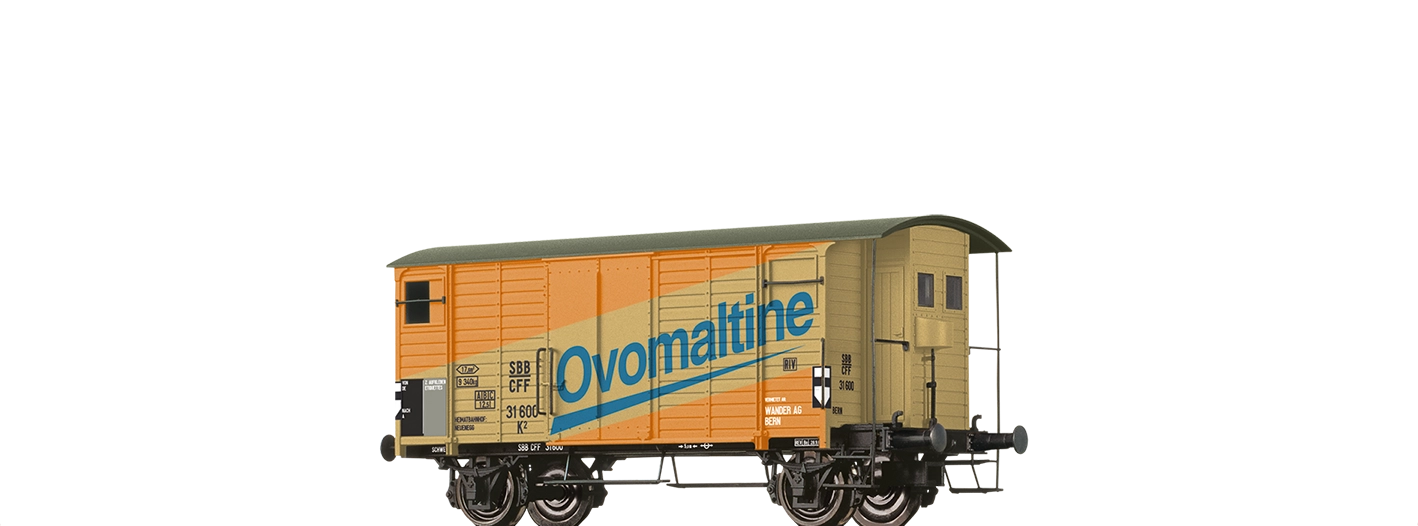
Prototype The Swiss began standardising some types of goods wagons at an early stage. They were then also procured by all private railways in order to improve repairs and spare part stock-keeping. They included closed goods wagons with a 4.5 m wheel base and a frame length of 7.10 m. Later, the wheel base was increased to 5 m in order to improve the running characteristics. In this form, high numbers of the wagons that were given the K2 designation were procured by SBB. Model Precise replica of board joints Finely engraved fan grill Precise paintwork and painting NEM-standard short-coupling Metal wheels True to original frame construction
In stock: 1 on the shelf, shipped within 1-3 days

1 x Wooden-mast Light, Pin-Socket (LED) Height 88 mm Simple handling Time-consuming cable connections between the lamp and the socket are not necessary The lamp can be tilted in the socket up to 10° to compensate for uneven terrain Can be separated electrically Compatible to each other Load-carrying parts made from brass Filigree lattice work Multi-part lampheads Intricately handpainted
In stock, shipped within 1-3 days

1 x Platform Light, Pin-Socket (LED) Height 70 mm Simple handling Time-consuming cable connections between the lamp and the socket are not necessary The lamp can be tilted in the socket up to 10° to compensate for uneven terrain Can be separated electrically Compatible to each other Load-carrying parts made from brass Filigree lattice work Multi-part lampheads Intricately handpainted
In stock: 5 on the shelf, shipped within 1-3 days

1 x Street Light, Pin-Socket (LED) Height 58 mm Simple handling Time-consuming cable connections between the lamp and the socket are not necessary The lamp can be tilted in the socket up to 10° to compensate for uneven terrain Can be separated electrically Compatible to each other Load-carrying parts made from brass Filigree lattice work Multi-part lampheads Intricately handpainted
In stock: 5 on the shelf, shipped within 1-3 days

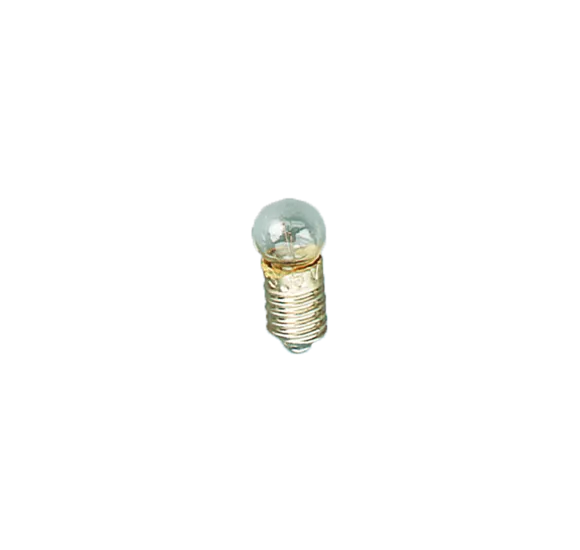
1 x Telephone Box Swisscom Height 33 mm With lighting Spare bulb 3268
In stock: 1 on the shelf, shipped within 1-3 days
The Brawa families
Rolling stock
 210 itemsLocomotivesLocomotives in H0 and N, from the DB AG TRAXX BR 147 to the DR BR 132.See the items
 56 itemsRailcars and multiple unitsTWINDEXX Vario double-deck trains in N, DRG VT 137 diesel railcar in H0.See the items
 360 itemsPassenger coachesDB express coaches, SBB coaches and complete trains in H0 and N.See the items
 448 itemsFreight wagonsCovered wagons, container wagons and luggage vans, including the SBB K2 "Ovomaltine".See the items
Scenery and cable cars
 117 itemsLighting and scenery accessoriesWooden-mast lights, park lanterns and LED wall lights, clocks and telephone boxes.See the items
 12 itemsCable carsNebelhorn, Hahnenkamm, Kanzelwand, Titlis and chairlift, in H0 and N.See the items
Bulbs and wiring
All Brawa items

25 m reel Single-core PVC insolation 1-colour Loads 3 A Cu.-conducter 18 x 0.10 mm Application: for analog layouts
In stock: 2 on the shelf, shipped within 1-3 days

25 m reel Red/blue Double-core For Märklin® PVC isolation Loads 5 A Cu.-conducter 14 x 0.15 mm Connection to track
In stock: 2 on the shelf, shipped within 1-3 days

DC Candle Transparent 19 V/65 mA
In stock: 2 on the shelf, shipped within 1-3 days

DC Clear 6 mm 1.5 V/100 mA
In stock: 2 on the shelf, shipped within 1-3 days

190 mm long 1 piece
In stock: 2 on the shelf, shipped within 1-3 days

1 x Rectangular-head Light, Pin-Socket (LED) Height 112 mm Simple handling Time-consuming cable connections between the lamp and the socket are not necessary The lamp can be tilted in the socket up to 10° to compensate for uneven terrain Can be separated electrically Compatible to each other Load-carrying parts made from brass Filigree lattice work Multi-part lampheads Intricately handpainted
In stock: 2 on the shelf, shipped within 1-3 days

5 x Pin-socket without lamp For bulb and LED Only suitable for LED lamps from production year 214 Simple handling Time-consuming cable connections between the lamp and the socket are not necessary The lamp can be tilted in the socket up to 10° to compensate for uneven terrain Can be separated electrically
In stock: 2 on the shelf, shipped within 1-3 days

1 x Spotlight, Pin-Socket (LED) Height 14 mm, length 10 mm, Ø 6 mm Vertically hinged Simple handling Time-consuming cable connections between the lamp and the socket are not necessary The lamp can be tilted in the socket up to 10° to compensate for uneven terrain Can be separated electrically Compatible to each other Load-carrying parts made from brass Filigree lattice work Multi-part lampheads Intricately handpainted
In stock: 2 on the shelf, shipped within 1-3 days

1 x Station Light, Pin-Socket (LED) Height 125 mm Simple handling Time-consuming cable connections between the lamp and the socket are not necessary The lamp can be tilted in the socket up to 10° to compensate for uneven terrain Can be separated electrically Compatible to each other Load-carrying parts made from brass Filigree lattice work Multi-part lampheads Intricately handpainted
In stock: 2 on the shelf, shipped within 1-3 days

100 m reel Single-core PVC insolation 1-colour Loads 3 A Cu.-conducter 18 x 0.10 mm Application: for analog layouts
In stock: 1 on the shelf, shipped within 1-3 days

25 m reel Single-core PVC insolation 1-colour Loads 3 A Cu.-conducter 18 x 0.10 mm Application: for analog layouts
In stock: 1 on the shelf, shipped within 1-3 days

40 m reel Single-core PVC isolation Loads 12 A Cu.-conducter 16 x 0.20 mm Application: for garden railways, UV-resistant
In stock: 1 on the shelf, shipped within 1-3 days

25 m reel Red/brown Double-core For Märklin® PVC isolation Loads 5 A Cu.-conducter 14 x 0.15 mm Connection to track
In stock: 1 on the shelf, shipped within 1-3 days

72 mm long 1 piece
In stock: 1 on the shelf, shipped within 1-3 days

Prototype The Cologne Reichsbahn directorate did not receive the 01 192 – 198 locomotives for operations along the Rhine until 1936/1937, which was very late indeed. 01 193 was phased out on 21.12.1936 and assigned to the Deutzerfeld railway depot. The area of responsibility for the locomotive included the route of the legendary “Rheingold-Express”, assumed from the BR 18.5. As early as 1930, the Offenburg railway depot operated it with an 01 vehicle along the Upper Rhine to Basel. The 01 193 also survived the war in Cologne and moved to Hamm in 1948. Here, it operated on the East-West axis between Aachen and Hanover with numerous sister locomotives until 1959 and was then transferred to Paderborn. A new high-performance boiler was installed in Nied in 1960. In 1964, it was passed on to Rheine after only five years. As was the case with trains starting in Paderborn, it turned in Kassel and travelled north to Bremen, Emden and Oldenburg. The “Rheiner 01” vehicles were often installed with a 2´2T30 Tender for utilisation in The Netherlands. The increasing allocation of the 01.10 meant that the 01 became expendable, the 001 193-2 was decommissioned as early as 21.06.1968. Gustav Ahrens GmbH dismantled it in Essen-Rellinghausen in September and October 1969. Model Boiler, driver's cab and tender made of high-quality, impact-resistant plastic Perforated underframe and spoked wheels in die-cast zinc Smoke generator and sound decoder, either built in or as a retrofit option Illuminated driver's cab True-to epoch lighting, multipart lamp housing Standard shaft rear with link guide Close coupling between locomotive and tender Perfectly replicated back boilerplate Fine paintwork and painting Lines and extra mounted parts in minimum material thickness Extra mounted steps 1000 mm leading wheels Navigable minimum radius: The models of BR 01 are technically suitable for R 360. For best driving characteristics we recommend the use on R 420.
In stock: 1 on the shelf, shipped within 1-3 days

LED lighting Extra mounted windscreen wiper New true to original gearbox Improved power consumption Etched front steps New with NEM-standard short-coupling Buffer screed & roof in more detail Driver's cab light New motor PluX22 interface D&H sound
In stock: 1 on the shelf, shipped within 1-3 days

Available for direct and alternating current Etched radiator grille Free-standing handles and handrails Clear view through the driver cabin Lights equipped with maintenance-free LEDs Three-point support Finely detailed chassis Fine paintwork and painting Reproduction of the brake linkage Metal frame and wheels, structure made of plastic NEM-standard short coupling Light change Equipment Digital Version EXTRA (DC + AC) Filigree electronic coupling (interchangeable thanks to NEM standard) Incl. energy storage (buffers sound, motor and light) Comprehensive light functions, flicker-free light provided by a separate capacitor Range-specific original sound with the latest sound technology Optimal motor and load control for perfect running characteristics Compatible with all common digital systems Driver cabin light
In stock: 1 on the shelf, shipped within 1-3 days

Prototype New, stricter safety specifications forced Bombardier to increase the crash safety of the TRAXX 1 locomotive body. As a result, the TRAXX 2 locomotives that have been manufactured since 2005 boast a ver tical front section at the bottom as well as altered shunting treads on the fronts. Many components inside the vehicle were also simplified and standardised in order to be able to respond to customer desires in a more flexible manner whilst also reducing in-house production work. For instance, the time for the final assembly of a TRAXX locomotive has been reduced to a maximum of two weeks. In order to also be able to distinguish them in terms of their fleet number, the locomotives have been issued with the subclass numbers 185.2 and 146.2 to 146.5 at Deutsche Bahn AG. In the meantime, Bombardier has globally produced over 1500 units of this highly successful TRAXX family. Model Attached grip rails (head end) Illuminated train destination display Top-quality printing and painting Driver's cab lighting Prepared for sound, or with sound installed Etched treadplates Incl. snowplough LED lighting Windscreen wipers attached individually Different design of the train compartments PluX22 interface Driver's cab lighting switchable like the original Long-distance headlights raise like the original Smooth, steady setting off even at speed level 1 Setting off and braking delay like the original Optimal power consumption Chassis with free view and details true to the original Simple, cable-free dismantling of the housing possible as well as non-twist locking lugs Roof sections true to the different versions with 2 or 4 pantographs True-to-original rest position of the pantographs Metal frame
In stock: 1 on the shelf, shipped within 1-3 days
Prototype Even before World War I, plans were being made in Prussia to electrify several mountain railways in Silesia, including the so-called “Zackenbahn” (named after the Zacken River) between Hirschberg and Polaun. Given the difficult topographical conditions, this new form of traction promised considerable savings and more cost-effective operation. However, the outbreak of World War I prevented the work from being completed quickly, and it was not until 1923 that continuous operation began. Since operating trains pulled by locomotives was very cumbersome due to fluctuating traffic volumes, considerations were made early on to switch to railcars. The suitability of the ET 88, originally procured for suburban transport in Berlin, prompted the DRG to procure additional four-axle electric railcars. In 1926-1927, LHW Breslau and WUMAG in Görlitz, in collaboration with SSW-Werke, delivered a total of 11 railcars that were to become the symbol of electric train transport in Silesia. The distinctive vehicles with their open entrance platforms were christened “Rübezahl” by the local population, a name that actually refers to a moody mountain spirit from the Giant Mountains. The railcars, which were initially painted green and designated “Breslau 511-521,” were always used in pairs with up to eight light standard branch line cars as trailers. Due to low demand, a single railcar operated between Josephinenhütte and Grünthal. The greatest rush of passengers was on weekends when the weather was nice and during the winter sports season. Up to three railcars with twelve trailers then operated as a train. At the beginning of the 1930s, the railcars were given the new designation elt 1011-1019 and a two-tone paint scheme. In 1941, the four-axle railcars were given their final numbers and became ET 89 01-11. With the exception of ET 89 11, which had to be taken out of service in 1943 due to an accident, all of them survived the war and the end of electric train transport in Silesia. Four railcars were transferred to PKP, but were not used there. The exact whereabouts of three others are unknown. ET 89 01, 04, and 07 ended up in the western occupation zones and thus became part of the DB fleet, which was founded in 1949. Only ET 89 04 was refurbished and served at the Munich Central Station depot. Initially still listed as 2nd and 3rd class cars, later photos show it as a pure 3rd class vehicle, which then exclusively carried 2nd class passengers after the class reform in 1956. On September 2, 1959, its final hour arrived – ET 89 04 was the last of its kind to be taken out of service and dismantled shortly thereafter, leaving only a few photos to remind us of these unique railcars. Model Illuminated upper carriage lanterns and tail lights Separately switchable interior lighting Separately switchable third headlight New motor New sound
In stock: 1 on the shelf, shipped within 1-3 days

Prototype 30m³ lightweight tank wagon in Uerdinger design – thanks to general technical advances in lightweight construction and welding technology, the management at the National Railway (Reichsbahn) decided to dispense with the actual vehicle frame when designing new tank wagons. Instead, the tensile and impact forces would, as far as possible, be absorbed by the boiler. Through the extensive use of welding technology, the goal was to reduce the raw-material requirements and manufacturing costs while at the same time obtaining more robust vehicles. For this reason, the wagon factory in Uerdingen received an order in 1938 to develop a lightweight tank car with a cargo volume of 30m³. As early as 1939, the three prototypes were handed over to two private goods-wagon rental companies as well as the state’s economic research association (Wirtschaftliche Forschungsgesellschaft (Wifo)) for testing. Following a small intermediate series in 1940, series production of the 30m³ Uerdinger-type lightweight tank wagon began in 1941. The largest customer was the German air force (Luftwaffe) with approx. 2,200 units, followed by the Wifo and many smaller companies, which resulted in a total of around 3,700 cars being built. In the post-war period, the wagons acquired by the Wifo and Luftwaffe were redistributed to other wagon operators in both German states. In the following decades, the wagons were primarily used by larger companies in the mineral oil industry, and also by smaller private companies as well as DB and DR themselves. Some of the wagons also remained abroad, where they were operated by new owners. In 2016 one of these wagons was still in use in internal interfactory traffic at Haltermann in Hamburg. Model Bogie with three-point support Individually mounted axle box cover Individually mounted wheelchocks Individually mounted brake systems Finely engraved bogies Brake blocks in wheel plane Individually mounted axle brake rod Free standing handle bars
In stock: 1 on the shelf, shipped within 1-3 days

Prototype Tariff conditions on the one hand and technical conditions on the other resulted in all State railway administrations developing box cars with almost identical dimensions and payloads. These cars had a 4.5 m wheelbase, a length over buffers of 9.3 m for unbraked cars, a payload of 15 t, later 17 t and a floor area of approx. 21 square metres. This type of freight construction became the most important and most built box car; it originally had the type identifier Gm. The most common of these State railway cars, which numbered 47,533, were built according to the Prussian style sheet IId8. After the founding of the Deutscher Staatsbahn Wagen Verband (German state railway car federation) DWV in 1909, the federation car construction type A2 was developed from this. From 1911 a phenomenal total of 121,770 units were built, making it the most heavily produced box car. It dominated the image of the German goods trains until the early days of the third era. These cars were scattered all over Europe by two world wars, there were no European railway administrations where this type of car was not used at least temporarily. Model True to original frame construction Precise replica of board joints Metal wheels and axles Multi-part brake system Individually mounted signal holder Brake blocks in wheel plane Perforated car body supports Precise paintwork and painting Individually mounted axle box cover
In stock: 1 on the shelf, shipped within 1-3 days