
H0 and N rolling stock, lighting and cable cars
Brawa, model railways made with care
Locomotives, coaches and wagons in H0 and N, plus street lights, cable cars, bulbs and wiring: the world of a family firm from Waiblingen.
- 1375items in the shop
- H0 and Nthe scales in the range
- 1948the year of the founding
What makes Brawa
- A family firm since 1948: founded by Artur Braun in Waiblingen, in southern Germany, Brawa is run today by the third generation of the family.
- Love of detail: individually fitted handrails, sprung buffers, crisp printing: every model starts from measurements and photographs of the original and a study of the construction drawings.
- Sturdy locomotives: most are largely die-cast zinc, for weight and robustness, for DC or AC, with sound and, on steam locomotives, smoke.
- Cable cars and lighting: H0 cable cars are a house speciality, starting with the Nebelhorn cableway in Oberstdorf; lamps and signals follow, with load-bearing parts made of brass or etched sheet.
Our favourites

Prototype Even before World War I, plans were being made in Prussia to electrify several mountain railways in Silesia, including the so-called “Zackenbahn” (named after the Zacken River) between Hirschberg and Polaun. Given the difficult topographical conditions, this new form of traction promised considerable savings and more cost-effective operation. However, the outbreak of World War I prevented the work from being completed quickly, and it was not until 1923 that continuous operation began. Since operating trains pulled by locomotives was very cumbersome due to fluctuating traffic volumes, considerations were made early on to switch to railcars. The suitability of the ET 88, originally procured for suburban transport in Berlin, prompted the DRG to procure additional four-axle electric railcars. In 1926-1927, LHW Breslau and WUMAG in Görlitz, in collaboration with SSW-Werke, delivered a total of 11 railcars that were to become the symbol of electric train transport in Silesia. The distinctive vehicles with their open entrance platforms were christened “Rübezahl” by the local population, a name that actually refers to a moody mountain spirit from the Giant Mountains. The railcars, which were initially painted green and designated “Breslau 511-521,” were always used in pairs with up to eight light standard branch line cars as trailers. Due to low demand, a single railcar operated between Josephinenhütte and Grünthal. The greatest rush of passengers was on weekends when the weather was nice and during the winter sports season. Up to three railcars with twelve trailers then operated as a train. At the beginning of the 1930s, the railcars were given the new designation elt 1011-1019 and a two-tone paint scheme. In 1941, the four-axle railcars were given their final numbers and became ET 89 01-11. With the exception of ET 89 11, which had to be taken out of service in 1943 due to an accident, all of them survived the war and the end of electric train transport in Silesia. Four railcars were transferred to PKP, but were not used there. The exact whereabouts of three others are unknown. ET 89 01, 04, and 07 ended up in the western occupation zones and thus became part of the DB fleet, which was founded in 1949. Only ET 89 04 was refurbished and served at the Munich Central Station depot. Initially still listed as 2nd and 3rd class cars, later photos show it as a pure 3rd class vehicle, which then exclusively carried 2nd class passengers after the class reform in 1956. On September 2, 1959, its final hour arrived – ET 89 04 was the last of its kind to be taken out of service and dismantled shortly thereafter, leaving only a few photos to remind us of these unique railcars. Model Illuminated upper carriage lanterns and tail lights Separately switchable interior lighting Separately switchable third headlight New motor New sound
In stock: 1 on the shelf, shipped within 1-3 days

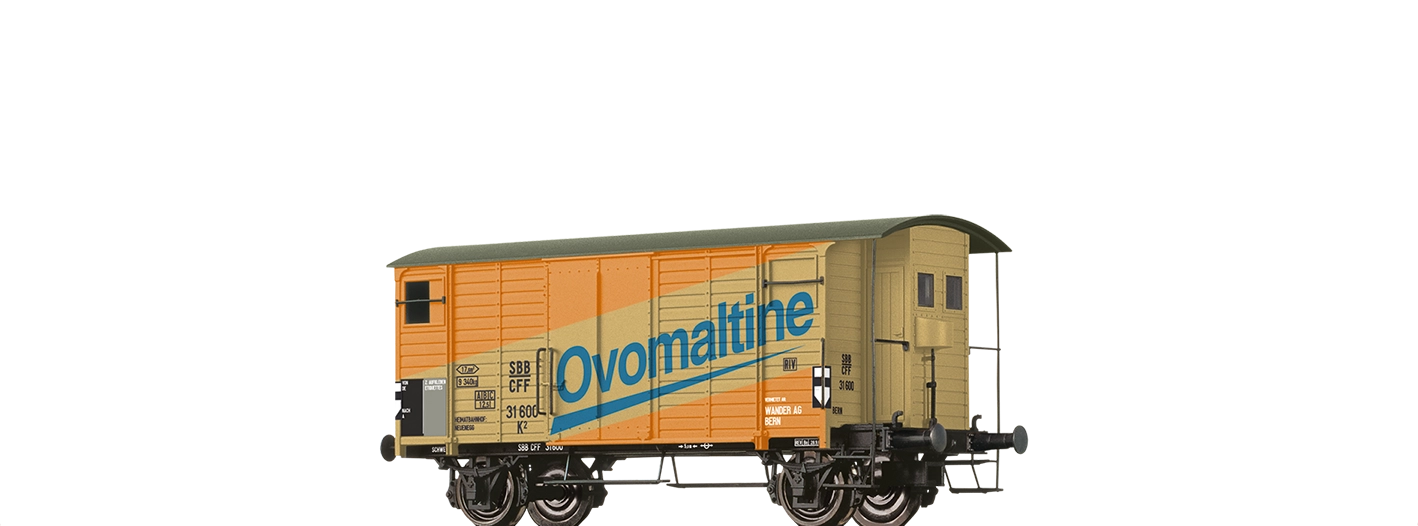
Prototype The Swiss began standardising some types of goods wagons at an early stage. They were then also procured by all private railways in order to improve repairs and spare part stock-keeping. They included closed goods wagons with a 4.5 m wheel base and a frame length of 7.10 m. Later, the wheel base was increased to 5 m in order to improve the running characteristics. In this form, high numbers of the wagons that were given the K2 designation were procured by SBB. Model Precise replica of board joints Finely engraved fan grill Precise paintwork and painting NEM-standard short-coupling Metal wheels True to original frame construction
In stock: 1 on the shelf, shipped within 1-3 days

1 x Wooden-mast Light, Pin-Socket (LED) Height 88 mm Simple handling Time-consuming cable connections between the lamp and the socket are not necessary The lamp can be tilted in the socket up to 10° to compensate for uneven terrain Can be separated electrically Compatible to each other Load-carrying parts made from brass Filigree lattice work Multi-part lampheads Intricately handpainted
In stock, shipped within 1-3 days

1 x Platform Light, Pin-Socket (LED) Height 70 mm Simple handling Time-consuming cable connections between the lamp and the socket are not necessary The lamp can be tilted in the socket up to 10° to compensate for uneven terrain Can be separated electrically Compatible to each other Load-carrying parts made from brass Filigree lattice work Multi-part lampheads Intricately handpainted
In stock: 5 on the shelf, shipped within 1-3 days

1 x Street Light, Pin-Socket (LED) Height 58 mm Simple handling Time-consuming cable connections between the lamp and the socket are not necessary The lamp can be tilted in the socket up to 10° to compensate for uneven terrain Can be separated electrically Compatible to each other Load-carrying parts made from brass Filigree lattice work Multi-part lampheads Intricately handpainted
In stock: 5 on the shelf, shipped within 1-3 days

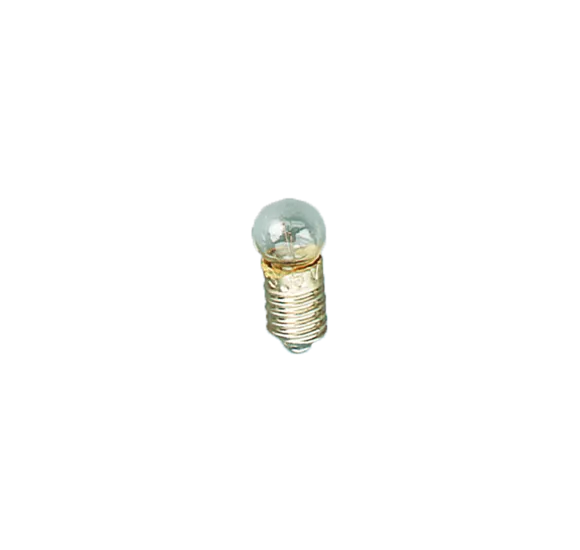
1 x Telephone Box Swisscom Height 33 mm With lighting Spare bulb 3268
In stock: 1 on the shelf, shipped within 1-3 days
The Brawa families
Rolling stock
 210 itemsLocomotivesLocomotives in H0 and N, from the DB AG TRAXX BR 147 to the DR BR 132.See the items
 56 itemsRailcars and multiple unitsTWINDEXX Vario double-deck trains in N, DRG VT 137 diesel railcar in H0.See the items
 360 itemsPassenger coachesDB express coaches, SBB coaches and complete trains in H0 and N.See the items
 448 itemsFreight wagonsCovered wagons, container wagons and luggage vans, including the SBB K2 "Ovomaltine".See the items
Scenery and cable cars
 117 itemsLighting and scenery accessoriesWooden-mast lights, park lanterns and LED wall lights, clocks and telephone boxes.See the items
 12 itemsCable carsNebelhorn, Hahnenkamm, Kanzelwand, Titlis and chairlift, in H0 and N.See the items
Bulbs and wiring
All Brawa items

Prototype One of the primary reasons behind the development of the 360 HP WR 360 C 14 diesel locomotive with fluid transmission was the demand made for the Wehrmacht railway facilities to be “smoke-free”. The reason for this was to eliminate the possibility of locations such as ammunition depots or refineries to be detected from the air as a result of steam plumes generated by a steam locomotive. Thanks to a working partnership that included Berliner Maschinenfabrik AG (previously Louis Schwarzkopf), Orenstein & Koppel as well as Deutz and Voith (only for engine and transmission issues), two prototypes were created within one year which were then comprehensively tested by the German National Railway Locomotive Testing Office during the second half of 1937. The acquired knowledge was then immediately implemented into the further development so that further preliminary locomotives were manufactured as early as 1938. The first of the 245 volume production locomotives entered service at the start of 1939 and were supplied to the army, air force, navy as well as industrial companies. In doing so, the WR 360 C 14 trains were powered by Deutz or MWM engines that were also used in submarines at the time. During the Second World War, the WR 360 C 14 trains made it to many countries throughout Europe and even to North Africa, where some of them also remained. Consequently, several WR 360 C 14 were not only in use on the German Federal and National Railway after 1945; they were also running in countries such as Austria, France and Italy. Now operating under the V36 designation, the locomotives were primarily used in the shunting service and in front of transfer trains in the German Federal Railway. They were also used for suburban passenger transport in the greater Wuppertal, Frankfurt and Nuremberg areas. For this purpose, some locomotives were equipped with a simplified push-pull control or were converted to a one-man control system and equipped with a rooftop cockpit. This ensured that the locomotive staff had an improved view during journeys where the train was pushed. Further noticeable conversions to the Federal Railway locomotives included a larger and more striking cooling water expansion tank on the front end of the engine as well as adjustable radiator shutters. The last of these locomotives, then operating as the 236 range, remained in operation up until 1981. The V36 locomotives operated by the German National Railway were kept in operation for approximately 4 further years. Private railways and industrial companies continued to use some of the locomotives until the end of the 1980s and, even today, it is possible to experience several V36 locomotives in operation on various museum tracks. Model Etched radiator grille (pototypically at models without radiator lamellas) Free standing handles and handrails Clear view through the driver cabin Lights equipped with maintenance-free LEDs Three-point support Finely detailed chassis Fine paintwork and painting Metal frame and wheels, structure made of plastic NEM-standard short-coupling Light change We use digital decoders developed by Brawa in cooperation with Doehler & Haass for models belonging to the BRAWA V36 range. The version Digital EXTRA is equipped with following features: Driver cabin lighting Filigree electronic coupling (interchangeable thanks to NEM-Norm)* Incl. Energy storage (buffers sound, motor and light) Extensive light functions: shunting lights, drivers cabin lighting, tail lights separately switchable Optimized lighting control for drive and shunting mode Flicker-free light, due to stabilized and through a separate capacitor buffered 5 V power supply Original sound Noiseless 16-bit Sound with up to 8 independent channels thanks to newest sound technology and excellent sound characteristics Optimal motor and load control for perfect running characteristics Applicable in all established digital systems (DCC, Motorola, SX1 und SX2) Enclosed Locomotive card in the AC-Version *It is possible to retrospectively convert the Diesel Locomotive V 36 from analogue to digital via a PluX22 interface (only sound functions). Please note that it is not possible to retrospectively convert the digital remote control coupling, the driven fan or the additional light functions.
On order, shipped within 10-15 days

Prototype Originally, the series designation was intended to be 33, however the G10 finally received the designation BR 57.10-35. In total, there were 2,358 engines with this designation. Just like in Prussian times, these engines were used especially on routes with a weaker superstructure but heavy goods traffic. Included here were Rbd (imperial railway directorate) Essen, Wuppertal, Breslau, Erfurt, Hannover and Kassel. The G10 also quickly became established in the Bavarian directorates, with Augsburg, München, Nuremberg, Regensburg, Würzburg and Ludwigshafen together accounting for 156 G 10s by 1924. Model Navigable minimum radius: The models of Steam Locomotive BR 57.10 are technically suitable for R 360. For best driving characteristics we recommend the use on R 420.
On order, shipped within 10-15 days

Prototype After the end of the war, a large number of G 10s were lost. In 1952 there was a remainder of 485 locomotives in the fleet. As in the time of the DRG, the largest stocks were in Essen and Wuppertal. Apart from its deployment on routes with a light superstructure, the BR 57 was often used as a shunting locomotive. For this purpose, several locomotives were equipped with shunting radio. They were used for shunting especially on the extensive tracks of the shunting stations in Basle (Haltingen depot) and the Hagen depot. The depot in Cochem used class 57 locomotives to shunt a large number of trains on the Mosel route. In the early 1950s, these services were also available in Hausach on the Schwarzwaldbahn (Black Forest railway). In many conurbations in the 1950s, the G 10 pulled the local goods trains, while the BR 50 was used for more difficult jobs. Model Navigable minimum radius: The models of Steam Locomotive BR 57.10 are technically suitable for R 360. For best driving characteristics we recommend the use on R 420.
On order, shipped within 10-15 days

Prototype The Cologne Reichsbahn directorate did not receive the 01 192 – 198 locomotives for operations along the Rhine until 1936/1937, which was very late indeed. 01 193 was phased out on 21.12.1936 and assigned to the Deutzerfeld railway depot. The area of responsibility for the locomotive included the route of the legendary “Rheingold-Express”, assumed from the BR 18.5. As early as 1930, the Offenburg railway depot operated it with an 01 vehicle along the Upper Rhine to Basel. The 01 193 also survived the war in Cologne and moved to Hamm in 1948. Here, it operated on the East-West axis between Aachen and Hanover with numerous sister locomotives until 1959 and was then transferred to Paderborn. A new high-performance boiler was installed in Nied in 1960. In 1964, it was passed on to Rheine after only five years. As was the case with trains starting in Paderborn, it turned in Kassel and travelled north to Bremen, Emden and Oldenburg. The “Rheiner 01” vehicles were often installed with a 2´2T30 Tender for utilisation in The Netherlands. The increasing allocation of the 01.10 meant that the 01 became expendable, the 001 193-2 was decommissioned as early as 21.06.1968. Gustav Ahrens GmbH dismantled it in Essen-Rellinghausen in September and October 1969. Model Boiler, driver's cab and tender made of high-quality, impact-resistant plastic Perforated underframe and spoked wheels in die-cast zinc Sound decoder, either built in or as a retrofit option Illuminated driver's cab True-to epoch lighting, multipart lamp housing Standard shaft rear with link guide Close coupling between locomotive and tender Perfectly replicated back boilerplate Extra mounted steps Navigable minimum radius: The models of BR 01 are technically suitable for R 360. For best driving characteristics we recommend the use on R 420.
On order, shipped within 10-15 days

Prototype Before the class BR 01 gained its reputation as “the” German express locomotive, the companies Borsig (01 001-008) and AEG (01 009-010) delivered a total of 10 pre-series locomotives to the Deutsche Reichsbahn Gesellschaft (DRG). The first model was the 01 008, which is still preserved today and was handed over to the DRG on 10 January 1926. However, these locomotives were ahead of their time, as many lines and railway depots were not yet prepared for an axle load of 20 t. As a result, the operating distances remained severely limited in the first few years of use. This in turn made the testing phase for the new locomotives an extremely drawn-out process. The most striking difference to the later series locomotives was the visibly longer cab, which remained a feature of the first ten 01’s. There were also differences in the design of the frame and many other details. Model Boiler, driver's cab and tender made of high-quality, impact-resistant plastic Perforated underframe and spoked wheels in die-cast zinc Sound decoder, either built in or as a retrofit option Illuminated driver's cab True-to epoch lighting, multipart lamp housing Standard shaft rear with link guide Close coupling between locomotive and tender Perfectly replicated back boilerplate Extra mounted steps Navigable minimum radius: The models of BR 01 are technically suitable for R 360. For best driving characteristics we recommend the use on R 420.
On order, shipped within 10-15 days