
H0 and N rolling stock, lighting and cable cars
Brawa, model railways made with care
Locomotives, coaches and wagons in H0 and N, plus street lights, cable cars, bulbs and wiring: the world of a family firm from Waiblingen.
- 1375items in the shop
- H0 and Nthe scales in the range
- 1948the year of the founding
What makes Brawa
- A family firm since 1948: founded by Artur Braun in Waiblingen, in southern Germany, Brawa is run today by the third generation of the family.
- Love of detail: individually fitted handrails, sprung buffers, crisp printing: every model starts from measurements and photographs of the original and a study of the construction drawings.
- Sturdy locomotives: most are largely die-cast zinc, for weight and robustness, for DC or AC, with sound and, on steam locomotives, smoke.
- Cable cars and lighting: H0 cable cars are a house speciality, starting with the Nebelhorn cableway in Oberstdorf; lamps and signals follow, with load-bearing parts made of brass or etched sheet.
Our favourites

Prototype Even before World War I, plans were being made in Prussia to electrify several mountain railways in Silesia, including the so-called “Zackenbahn” (named after the Zacken River) between Hirschberg and Polaun. Given the difficult topographical conditions, this new form of traction promised considerable savings and more cost-effective operation. However, the outbreak of World War I prevented the work from being completed quickly, and it was not until 1923 that continuous operation began. Since operating trains pulled by locomotives was very cumbersome due to fluctuating traffic volumes, considerations were made early on to switch to railcars. The suitability of the ET 88, originally procured for suburban transport in Berlin, prompted the DRG to procure additional four-axle electric railcars. In 1926-1927, LHW Breslau and WUMAG in Görlitz, in collaboration with SSW-Werke, delivered a total of 11 railcars that were to become the symbol of electric train transport in Silesia. The distinctive vehicles with their open entrance platforms were christened “Rübezahl” by the local population, a name that actually refers to a moody mountain spirit from the Giant Mountains. The railcars, which were initially painted green and designated “Breslau 511-521,” were always used in pairs with up to eight light standard branch line cars as trailers. Due to low demand, a single railcar operated between Josephinenhütte and Grünthal. The greatest rush of passengers was on weekends when the weather was nice and during the winter sports season. Up to three railcars with twelve trailers then operated as a train. At the beginning of the 1930s, the railcars were given the new designation elt 1011-1019 and a two-tone paint scheme. In 1941, the four-axle railcars were given their final numbers and became ET 89 01-11. With the exception of ET 89 11, which had to be taken out of service in 1943 due to an accident, all of them survived the war and the end of electric train transport in Silesia. Four railcars were transferred to PKP, but were not used there. The exact whereabouts of three others are unknown. ET 89 01, 04, and 07 ended up in the western occupation zones and thus became part of the DB fleet, which was founded in 1949. Only ET 89 04 was refurbished and served at the Munich Central Station depot. Initially still listed as 2nd and 3rd class cars, later photos show it as a pure 3rd class vehicle, which then exclusively carried 2nd class passengers after the class reform in 1956. On September 2, 1959, its final hour arrived – ET 89 04 was the last of its kind to be taken out of service and dismantled shortly thereafter, leaving only a few photos to remind us of these unique railcars. Model Illuminated upper carriage lanterns and tail lights Separately switchable interior lighting Separately switchable third headlight New motor New sound
In stock: 1 on the shelf, shipped within 1-3 days

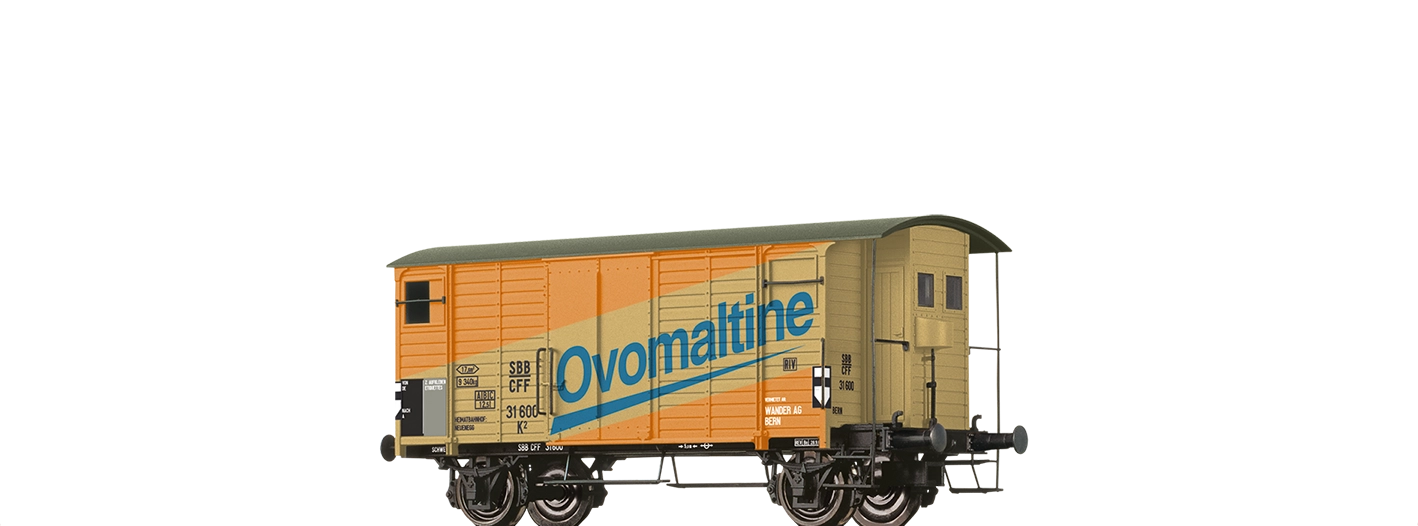
Prototype The Swiss began standardising some types of goods wagons at an early stage. They were then also procured by all private railways in order to improve repairs and spare part stock-keeping. They included closed goods wagons with a 4.5 m wheel base and a frame length of 7.10 m. Later, the wheel base was increased to 5 m in order to improve the running characteristics. In this form, high numbers of the wagons that were given the K2 designation were procured by SBB. Model Precise replica of board joints Finely engraved fan grill Precise paintwork and painting NEM-standard short-coupling Metal wheels True to original frame construction
In stock: 1 on the shelf, shipped within 1-3 days

1 x Wooden-mast Light, Pin-Socket (LED) Height 88 mm Simple handling Time-consuming cable connections between the lamp and the socket are not necessary The lamp can be tilted in the socket up to 10° to compensate for uneven terrain Can be separated electrically Compatible to each other Load-carrying parts made from brass Filigree lattice work Multi-part lampheads Intricately handpainted
In stock, shipped within 1-3 days

1 x Platform Light, Pin-Socket (LED) Height 70 mm Simple handling Time-consuming cable connections between the lamp and the socket are not necessary The lamp can be tilted in the socket up to 10° to compensate for uneven terrain Can be separated electrically Compatible to each other Load-carrying parts made from brass Filigree lattice work Multi-part lampheads Intricately handpainted
In stock: 5 on the shelf, shipped within 1-3 days

1 x Street Light, Pin-Socket (LED) Height 58 mm Simple handling Time-consuming cable connections between the lamp and the socket are not necessary The lamp can be tilted in the socket up to 10° to compensate for uneven terrain Can be separated electrically Compatible to each other Load-carrying parts made from brass Filigree lattice work Multi-part lampheads Intricately handpainted
In stock: 5 on the shelf, shipped within 1-3 days

1 x Telephone Box Swisscom Height 33 mm With lighting Spare bulb 3268
In stock: 1 on the shelf, shipped within 1-3 days
The Brawa families
Rolling stock
 210 itemsLocomotivesLocomotives in H0 and N, from the DB AG TRAXX BR 147 to the DR BR 132.See the items
 56 itemsRailcars and multiple unitsTWINDEXX Vario double-deck trains in N, DRG VT 137 diesel railcar in H0.See the items
 360 itemsPassenger coachesDB express coaches, SBB coaches and complete trains in H0 and N.See the items
 448 itemsFreight wagonsCovered wagons, container wagons and luggage vans, including the SBB K2 "Ovomaltine".See the items
Scenery and cable cars
 117 itemsLighting and scenery accessoriesWooden-mast lights, park lanterns and LED wall lights, clocks and telephone boxes.See the items
 12 itemsCable carsNebelhorn, Hahnenkamm, Kanzelwand, Titlis and chairlift, in H0 and N.See the items
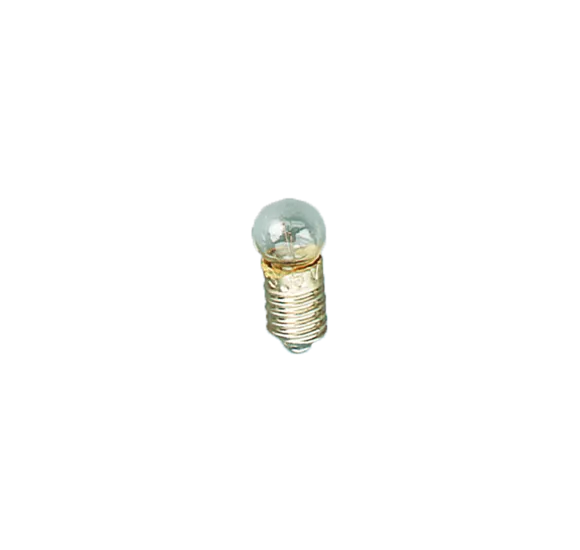
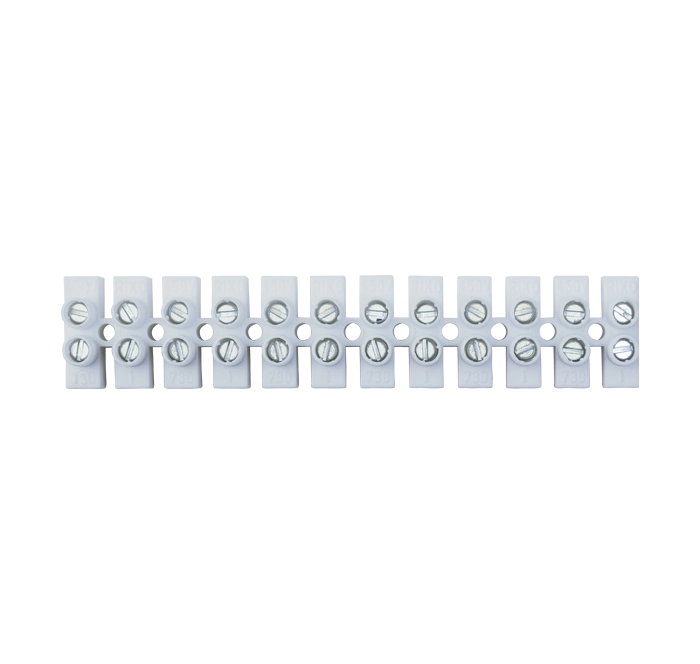
Bulbs and wiring
All Brawa items

Prototype In the mid-20s, DRG began significantly upgrading travel comfort in its Order no. express and passenger train networks. Apart from the newly-acquired two-axle models, it started to use above all four-axle compartment waggons on long-distance lines (e.g. Munich – Berlin express trains). From 1928, the company tried out several four-axle corridor carriages with open transitions for future use in this kind of transport. These test waggons proved a success, and from 1930 the company purchased more than 1,000 B, BC and C4i models in riveted design. Characteristic for these waggons was that the B part always had single-wing doors, while the C part featured double doors. Then, when advances in welding technology could also be applied in wagon building, it was time to upgrade the old construction type. Therefore, in 1935 three BC and three C test waggons were bought, which led to mass production of these types in almost unchanged design. Despite the weight savings, the welded waggons offered fewer seats than their riveted predecessors because DRG designed the passenger compartments more spaciously. Included here were for instance larger windows with 150-mm lower sills, which offered above all the youngest travellers a better view of railway operations not yet dominated by sound protection walls. In six years, more than 1,000 welded C and 145 BC waggons were built before further advances in the form of skirted passenger waggons made more improvements possible. The war scattered express train waggons across half of Europe, with larger stocks outside German railway operators, for instance at ÖBB, SNCF and PKP. These waggons remained invaluable in regional transport for DB and DR up to the late seventies, reaching an age of over forty years. They were also used internationally into the sixties, travelling as far as Scandinavia and the Balkans. There were many conversions, for instance into sleeping, buffet and semi-luggage carriages. On the occasion of the anniversary in 1985, DB put together an entire train from several different types of express wagon. Unfortunately, these waggons are today spread over several locations and hardly any are operable. Model True-to-epoch construction types Precise replica of the Görlitz III bogies with quadruple spring system Precise replica of the frame with many extra mounted parts Prepared for interior lighting Multipart interior fittings in multicolour painting Individual seats Short coupling kinematics Three-point support Wheetsets in toe bearing Replica of the rivets on the roof In-plane assembled windows Metal wheels Precise replica of the brake unit True-to-scale windows
On order, shipped within 10-15 days

Dimensions 12 x 12 mm For Running Depots and Factories Spare bulb 3264 Load-carrying parts made from brass Filigree lattice work Intricately handpainted Multi-part lamp housing
On order, shipped within 10-15 days

Prototype In the mid-20s, DRG began significantly upgrading travel comfort in its Order no. express and passenger train networks. Apart from the newly-acquired two-axle models, it started to use above all four-axle compartment waggons on long-distance lines (e.g. Munich – Berlin express trains). From 1928, the company tried out several four-axle corridor carriages with open transitions for future use in this kind of transport. These test waggons proved a success, and from 1930 the company purchased more than 1,000 B, BC and C4i models in riveted design. Characteristic for these waggons was that the B part always had single-wing doors, while the C part featured double doors. Then, when advances in welding technology could also be applied in wagon building, it was time to upgrade the old construction type. Therefore, in 1935 three BC and three C test waggons were bought, which led to mass production of these types in almost unchanged design. Despite the weight savings, the welded waggons offered fewer seats than their riveted predecessors because DRG designed the passenger compartments more spaciously. Included here were for instance larger windows with 150-mm lower sills, which offered above all the youngest travellers a better view of railway operations not yet dominated by sound protection walls. In six years, more than 1,000 welded C and 145 BC waggons were built before further advances in the form of skirted passenger waggons made more improvements possible. The war scattered express train waggons across half of Europe, with larger stocks outside German railway operators, for instance at ÖBB, SNCF and PKP. These waggons remained invaluable in regional transport for DB and DR up to the late seventies, reaching an age of over forty years. They were also used internationally into the sixties, travelling as far as Scandinavia and the Balkans. There were many conversions, for instance into sleeping, buffet and semi-luggage carriages. On the occasion of the anniversary in 1985, DB put together an entire train from several different types of express wagon. Unfortunately, these waggons are today spread over several locations and hardly any are operable. Model True-to-epoch construction types Precise replica of the Görlitz III bogies with quadruple spring system Precise replica of the frame with many extra mounted parts Prepared for interior lighting Multipart interior fittings in multicolour painting Individual seats Short coupling kinematics Three-point support Wheetsets in toe bearing Replica of the rivets on the roof In-plane assembled windows Metal wheels Precise replica of the brake unit True-to-scale windows
On order, shipped within 10-15 days

Celebrate 100 years of the iconic BR 01 express locomotive with us! To mark this special occasion, we are proud to present a faithful recreation of the legendary E 230 train formation, which carried passengers from Dortmund to Cologne in the latter half of the 1950s. The E 230 was the quintessential example of a post-war express train, composed of six pre-war express train coaches paired with modern “yl” city express coaches. All the passenger coaches came from the inventory of Dortmund Hauptbahnhof, showcasing the diverse fleets operated by the railway companies of that era. The train’s locomotive, by contrast, originated from the Cologne Betriebsbahnhof railway depot. The BR 01 or BR 03 were commonly used on this route, including the renowned 01 100, which has been faithfully recreated in our model. With its powerful build and striking appearance, the BR 01 defined the look of the express train services of its time. On its northern route, the E 230 express train carried passengers through the Ruhr region: Dortmund Hauptbahnhof – Rauxel – Herne – Wanne-Eickel – Gelsenkirchen – Essen-Altenessen – Oberhausen – Duisburg – Düsseldorf. This train reached its final destination in the late afternoon: Cologne Hauptbahnhof. Evoke the spirit of the 1950s with the BRAWA Express Train Locomotive BR 01 and its matching passenger coaches – customisable to your preferences for an authentic and nostalgic addition to your model railway layout!
On order, lead time to be confirmed

Prototype After the war, there was a major lack of luggage wagons for highspeed long-distance trains. However, the young DB decided to use the available money to construct new passenger carriages and to solve the luggage wagon problem through conversions. In order to do so, it used approximately 600 substitute passenger carriages that remained in its inventory. Passengers could not be expected to travel in these wagons due to their interior fittings and their mediocre running properties. Two of these car bodies were connected, equipped with a strut bracing and placed on two American-design bogies. The approximately 290 luggage wagons that were produced in this manner from 1950 onwards were given the MPw4ie-54/55 and MPw4yg-57 designations. Although the first wagons were only equipped with the open entrance platforms from their donor carriages, they were quickly replaced with a “transfer tunnel” in order to offer a transfer to the next wagon whilst also being protected against the elements. This transfer was also then equipped with a rubber bulge in order to connect to modern wagons. DB arranged for numerous medical and auxiliary equipment cars to be built using the same construction principles. To begin with, the wagons were first used in the premium high-speed train service. However, they were then moved to express goods and district services upon the emergence of new wagons. Some wagons were given additional equipment for the transport of freshly-hatched chicks and travelled in express trains between Italy and Germany. Numerous wagons that were given the designations MDyg-986 and -996 from 1966 onwards were further modernised and equipped with panel walls and new rubber-mounted windows. These wagons also remained in use in this design after 1989 and were also used in the DR (German Railway) area for the transport of express goods. The use of these wagons was halted suddenly in 1992 following a tragic train accident. A buffer fell from a track maintenance wagon causing 14 goods wagons to derail with which an approaching express train collided. The cause was material fatigue on the console upon which the buffers were fastened in order to create space for the access platform. Consequently, all wagons equipped with such consoles were removed from service and only those that had to be used were refurbished. This affected the auxiliary equipment cars built on the same principle but did not affect the MDyg. Model Finely engraved bogies True to original brake unit Individually mounted battery box Replicated internal mesh of windows Free standing handle bars True to original frame construction Tip bearing wheelsets Interior fittings in multicolour painting Interior fittings in multicolour painting
On order, shipped within 10-15 days

Height 53 mm Spare bulb 3267 With resistor Load-carrying parts made from brass Filigree lattice work Intricately handpainted Multi-part lamp housing
On order, lead time to be confirmed

Height 90 mm Spare bulb 3267 With resistor Load-carrying parts made from brass Filigree lattice work Intricately handpainted Multi-part lamp housing
On order, shipped within 10-15 days

Length over the buffers: 270 mm Interior details: fitted Interior lighting: prepared for BRAWA item no. 2212 Close coupling mechanism: fitted AC wheelset exchange: possible AC wheelset: BRAWA order no. 2188 AC pickup shoe: BRAWA item no. 2222
On order, lead time to be confirmed

Length over the buffers: 270 mm Interior details: fitted Interior lighting: prepared for BRAWA item no. 2212 Close coupling mechanism: fitted AC wheelset exchange: possible AC wheelset: BRAWA order no. 2188 AC pickup shoe: BRAWA item no. 2222
On order, lead time to be confirmed

Length over the buffers: 270 mm Interior details: fitted Interior lighting: prepared for BRAWA item no. 2212 Close coupling mechanism: fitted AC wheelset exchange: possible AC wheelset: BRAWA order no. 2188 AC pickup shoe: BRAWA item no. 2222
On order, lead time to be confirmed

Height 58 mm Spare bulb 3267 With resistor Load-carrying parts made from brass Filigree lattice work Intricately handpainted Multi-part lamp housing
On order, shipped within 10-15 days

Length over the buffers: 270 mm Interior details: fitted Interior lighting: prepared for BRAWA item no. 2212 Close coupling mechanism: fitted AC wheelset exchange: possible AC wheelset: BRAWA item no. 2188 AC pickup shoe: BRAWA item no. 2222
On order, lead time to be confirmed

Prototype On their way to Switzerland and onwards to Italy countless luxury passengers from Great Britain and The Netherlands used CIWL couchette cars of CIWL through France. DRG was very interested in “redirecting” this wealthy clientele to their routes. For this reason it introduced a luxury day train with the name “Rheingold Express” in 1928 between Hoek van Holland/Amsterdam and Basel SBB. From 1929 the train service was extended in the summer to Lucerne and Zurich. The extent of the competitive pressure can be seen in the fact that CIWL reacted to the DRG offensive as early as 1928 with its own day train “Edelweiss” via Brussels Luxembourg, Strasbourg. When designing the train, DRG took reference to the similar CIWL day trains. The interior included open-plan cars and in some cases partially divided compartments, in first cases even with freestanding benches. Each car had a different decor made of different precious woods or cloth-covered walls and ceilings. The exterior of the train was a dark violet – ebony coloured special paint. Thus 26 cars were produced in four different versions (each in 1st and 2nd class with and without galley), as well as three luggage wagons. A train generally consists of five carriages – one carriage each with and without kitchen in first and second class (one galley served two cars) as well as a luggage wagon. Since at that time the luggage wagon still had to run as a protective wagon behind the locomotive, when changing direction in Mannheim, an additional luggage wagon was needed. For this, DRG repainted two Prussian and Baden-Wurttemberg cars according to the Rheingold colour scheme. In the Netherlands the traction was transferred to the 3700 and 3900 series. On the German section, for many years the BR 184-5 of the Mainz railway depot ran as far as Mannheim. From 1936 the new Deutzerfelder 01 pull the Rheingold Express. Offenburger 183 transport the train on the southern section, having already been replaced by the BR 01 in 1930. From Basel, Ae 4/7 bring the train into the interior of Switzerland in the summer. When the war started in 1939, the luxury train was stopped without a replacement. Model Precise replica of the Görlitz II schwer bogies Different roofs and car bottoms Metal wheels Three-point support in metal axle support Multi-part and multi-colored interior fittings Individually placed table lamps Short coupling kinematics Fine paintwork and painting In-plane assembled windows Precise replica of the brake unit Originally reproduced frame All specific details of the different eras taken into account Digital Version: Entry lighting Roof and table lighting Operating and kitchen sound Content of the set: Express Train Coach SPw4ü-28 DRG (Road no. Köln 105 003) Express Train Coach SA4ü-28 DRG (Road no. Köln 10 504) Express Train Coach SA4üK-28 DRG (Road no. Köln 10 503) Express Train Coach SB4ü-28 DRG (Road no. Köln 10 704) Express Train Coach SB4üK-29 DRG (Road no. Köln 10 703)
On order, shipped within 10-15 days