
H0 and N rolling stock, lighting and cable cars
Brawa, model railways made with care
Locomotives, coaches and wagons in H0 and N, plus street lights, cable cars, bulbs and wiring: the world of a family firm from Waiblingen.
- 1375items in the shop
- H0 and Nthe scales in the range
- 1948the year of the founding
What makes Brawa
- A family firm since 1948: founded by Artur Braun in Waiblingen, in southern Germany, Brawa is run today by the third generation of the family.
- Love of detail: individually fitted handrails, sprung buffers, crisp printing: every model starts from measurements and photographs of the original and a study of the construction drawings.
- Sturdy locomotives: most are largely die-cast zinc, for weight and robustness, for DC or AC, with sound and, on steam locomotives, smoke.
- Cable cars and lighting: H0 cable cars are a house speciality, starting with the Nebelhorn cableway in Oberstdorf; lamps and signals follow, with load-bearing parts made of brass or etched sheet.
Our favourites

Prototype Even before World War I, plans were being made in Prussia to electrify several mountain railways in Silesia, including the so-called “Zackenbahn” (named after the Zacken River) between Hirschberg and Polaun. Given the difficult topographical conditions, this new form of traction promised considerable savings and more cost-effective operation. However, the outbreak of World War I prevented the work from being completed quickly, and it was not until 1923 that continuous operation began. Since operating trains pulled by locomotives was very cumbersome due to fluctuating traffic volumes, considerations were made early on to switch to railcars. The suitability of the ET 88, originally procured for suburban transport in Berlin, prompted the DRG to procure additional four-axle electric railcars. In 1926-1927, LHW Breslau and WUMAG in Görlitz, in collaboration with SSW-Werke, delivered a total of 11 railcars that were to become the symbol of electric train transport in Silesia. The distinctive vehicles with their open entrance platforms were christened “Rübezahl” by the local population, a name that actually refers to a moody mountain spirit from the Giant Mountains. The railcars, which were initially painted green and designated “Breslau 511-521,” were always used in pairs with up to eight light standard branch line cars as trailers. Due to low demand, a single railcar operated between Josephinenhütte and Grünthal. The greatest rush of passengers was on weekends when the weather was nice and during the winter sports season. Up to three railcars with twelve trailers then operated as a train. At the beginning of the 1930s, the railcars were given the new designation elt 1011-1019 and a two-tone paint scheme. In 1941, the four-axle railcars were given their final numbers and became ET 89 01-11. With the exception of ET 89 11, which had to be taken out of service in 1943 due to an accident, all of them survived the war and the end of electric train transport in Silesia. Four railcars were transferred to PKP, but were not used there. The exact whereabouts of three others are unknown. ET 89 01, 04, and 07 ended up in the western occupation zones and thus became part of the DB fleet, which was founded in 1949. Only ET 89 04 was refurbished and served at the Munich Central Station depot. Initially still listed as 2nd and 3rd class cars, later photos show it as a pure 3rd class vehicle, which then exclusively carried 2nd class passengers after the class reform in 1956. On September 2, 1959, its final hour arrived – ET 89 04 was the last of its kind to be taken out of service and dismantled shortly thereafter, leaving only a few photos to remind us of these unique railcars. Model Illuminated upper carriage lanterns and tail lights Separately switchable interior lighting Separately switchable third headlight New motor New sound
In stock: 1 on the shelf, shipped within 1-3 days

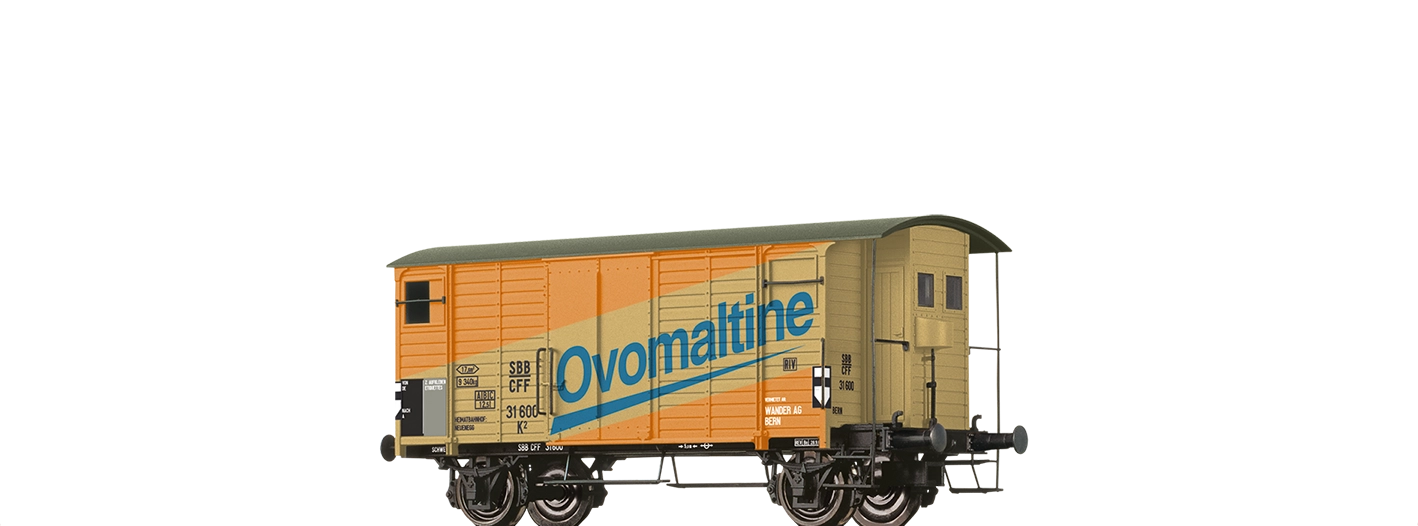
Prototype The Swiss began standardising some types of goods wagons at an early stage. They were then also procured by all private railways in order to improve repairs and spare part stock-keeping. They included closed goods wagons with a 4.5 m wheel base and a frame length of 7.10 m. Later, the wheel base was increased to 5 m in order to improve the running characteristics. In this form, high numbers of the wagons that were given the K2 designation were procured by SBB. Model Precise replica of board joints Finely engraved fan grill Precise paintwork and painting NEM-standard short-coupling Metal wheels True to original frame construction
In stock: 1 on the shelf, shipped within 1-3 days

1 x Wooden-mast Light, Pin-Socket (LED) Height 88 mm Simple handling Time-consuming cable connections between the lamp and the socket are not necessary The lamp can be tilted in the socket up to 10° to compensate for uneven terrain Can be separated electrically Compatible to each other Load-carrying parts made from brass Filigree lattice work Multi-part lampheads Intricately handpainted
In stock, shipped within 1-3 days

1 x Platform Light, Pin-Socket (LED) Height 70 mm Simple handling Time-consuming cable connections between the lamp and the socket are not necessary The lamp can be tilted in the socket up to 10° to compensate for uneven terrain Can be separated electrically Compatible to each other Load-carrying parts made from brass Filigree lattice work Multi-part lampheads Intricately handpainted
In stock: 5 on the shelf, shipped within 1-3 days

1 x Street Light, Pin-Socket (LED) Height 58 mm Simple handling Time-consuming cable connections between the lamp and the socket are not necessary The lamp can be tilted in the socket up to 10° to compensate for uneven terrain Can be separated electrically Compatible to each other Load-carrying parts made from brass Filigree lattice work Multi-part lampheads Intricately handpainted
In stock: 5 on the shelf, shipped within 1-3 days

1 x Telephone Box Swisscom Height 33 mm With lighting Spare bulb 3268
In stock: 1 on the shelf, shipped within 1-3 days
The Brawa families
Rolling stock
 210 itemsLocomotivesLocomotives in H0 and N, from the DB AG TRAXX BR 147 to the DR BR 132.See the items
 56 itemsRailcars and multiple unitsTWINDEXX Vario double-deck trains in N, DRG VT 137 diesel railcar in H0.See the items
 360 itemsPassenger coachesDB express coaches, SBB coaches and complete trains in H0 and N.See the items
 448 itemsFreight wagonsCovered wagons, container wagons and luggage vans, including the SBB K2 "Ovomaltine".See the items
Scenery and cable cars
 117 itemsLighting and scenery accessoriesWooden-mast lights, park lanterns and LED wall lights, clocks and telephone boxes.See the items
 12 itemsCable carsNebelhorn, Hahnenkamm, Kanzelwand, Titlis and chairlift, in H0 and N.See the items
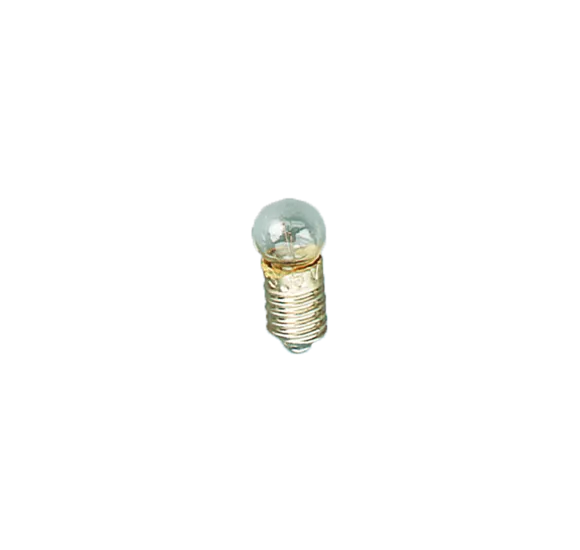
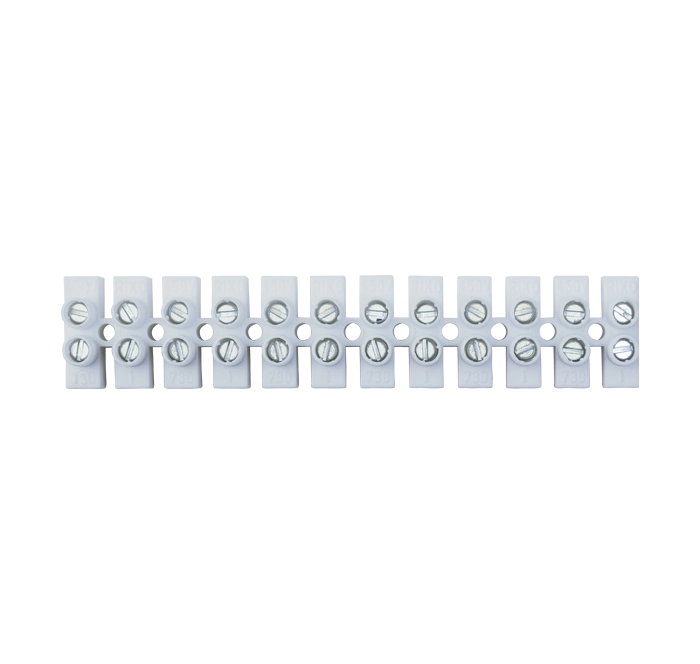
Bulbs and wiring
All Brawa items

Prototype In the early 1950s, the Association of Publicly Owned Enterprises for Locomotive and Wagon Construction in the GDR (VVB LOWA) began updating the GGths Bromberg goods wagon to facilitate the transport of large quantities of grain in closed goods wagons. Following the production of three prototypes in 1952, mass production of the new GGts goods wagons commenced in 1954. These wagons retained many features of the GGths Bromberg, such as loading hatches, roof walkways and unloading chutes integrated into the doors. However, the doors were now designed to be tightly sealed, eliminating the need for additional planks to prevent cargo loss. The door width was reduced to 1.5 metres, as these wagons were primarily intended for grain transport and rarely used for other purposes. To optimise the load volume relative to payload, the wagons were also shorter than the GGths Bromberg. Between 1954 and 1957, LOWA factories produced a total of 1,655 GGrhs15-30 wagons. As is typical with large production runs, there were variations in features such as the arrangement of roof walkways, unloading hatches and braking systems (including parking brakes, handbrakes and brakeman’s cabs) due to manufacturing differences and subsequent modifications. In operation, these new wagons fully met expectations. After four decades of service, the last examples were retired from regular operations in 1994, although some remained in use as railway maintenance cars. Model True to original frame construction Precise replica of board joints Multi-part brake system Individually mounted signal holder Brake blocks in wheel plane Precise paintwork and painting Individually mounted axle box cover Variants with and without handbrakes Different versions of the roof runs
On order, shipped within 10-15 days

Prototype Large and heavy loads require special means of transport or wagons. In 1928, Rheinisch Westfälische Elektrizitätswerk A.-G. Essen (RWE) placed an order with Maschinenfabrik Augsburg Nürnberg (MAN) for the construction of two new heavy-transport vehicles. This was the only way to transport the constantly growing transformers for the electricity substations. These were added to Sketch 125 in the directory of wagons for exceptional transports in the Deutsche Reichsbahn’s rolling stock. The maximum load capacity of the wagons was 168 tons, distributed over 18 axles. One four-axle and one five-axle bogie each carried a bridge, on which a support frame was mounted. The support frames featured the characteristic riveted truss construction. Unloaded, the two support frames were coupled with bolts, so that even when empty the heavy-transport wagons reached a length of 27.525 m over buffers. The wagon’s dead weight was 97.2 t. For loading, the two halves were pulled apart and a self-supporting transformer or an 8.40 m-long lattice framework was suspended between the support frames. As private vehicles ([P]-cars), the carriages were initially employed by the German Imperial Railway (Company) and later by the Federal Railway, and were initially home-based at Cologne Kendenich railway station operated by the K.B.E. Two additional SSt 125s were also built by MAN in 1940 and belonged to PreussenElektra Hanover and Elektrowerke A.-G. Berlin. The latter remained with the National Railway in the Soviet zone after the war and later joined the East-German Deutsche Reichsbahn. Due to the dimensions of the special cargo, which often exceeded the perimeter of the vehicle, the wagons were only permitted to travel at a maximum speed of 40 km/h when loaded as exceptional transports. And on narrow bridges, this was further reduced to walking speed while under observation. For this reason, such journeys were mainly carried out in the early morning or late evening. Unloaded, the wagons could be transported by regular goods trains, albeit only at 65 km/h, which was the standard maximum speed for regular goods trains at that time. At DB, the maximum speed was increased to 80 km/h when roller bearings were installed. The carriage 84 80 995 8 001-3, last based at Dortmund central railway station, was handed over by RWE Rhein-Ruhr Netzservice GmbH to Bahnwelt Darmstadt Kranichstein as a museum exhibit in 2011. The BRAWA models show the epoch-relevant differences in construction details of the heavy duty freight cars and has many attached details. Numerous details such as e.g. replica of the truss support frame as multi-part construction ensure that the reproduction is true to original. Model New transformer True to original construction differences Can be used with or without a transformer Four bogies with 18 axes Multi-part replica of the truss support frame NEM-standard short-coupling The trafo swings out very strongly in curves Navigable minimum radius: we recommend the use on R=420 Detailed railing Metal wheels Individually mounted brake systems Detailed chassis
On order, shipped within 10-15 days

Prototype The Glmehs 50 was developed by Deutsche Bundesbahn as a longer variant of the first UIC standard type. Despite its larger dimensions, the maximum permissible load capacity remained unchanged at 20 tonnes, as it utilised identical components to the Gmhs 53. A distinctive feature of the Glmehs 50 was its factory-fitted 2.0-metre-wide loading doors. Another notable characteristic was the U-shaped box profiles made of steel, which, in the earliest production series, were mounted vertically along the sides. As was typical for the time, the wagons of the first Glmehs 50 production series featured side panels made from wooden planks, which were later replaced with film-coated plywood panels. All 280 wagons from the first series were equipped with both steam and electric heating pipes, making them suitable for transporting parcel freight in fast and express trains. Model Fine board joints Brake blocks in wheel plane Individually mounted axle brake rod Individually mounted brake systems True to scale narrow frame Metal axle holders Wheelsets with inside contours Precise paintwork and painting
On order, shipped within 10-15 days

Prototype To speed up the transport of large volumes of parcel freight, Deutsche Reichsbahn introduced purpose-built light goods trains, referred to as “Leig” trains. These trains featured two large-capacity goods wagons, coupled closely together and connected by a wide gangway and a guard’s compartment. This design allowed onboard personnel to sort parcel freight while the train was in motion. In the 1950s, Deutsche Bundesbahn revived this concept for the development of new goods wagons and began planning the construction of modern Leig units. Based on the Glmehs 50, ninety-eight Leig units of the Gllm(e)hs 52 type were built. Initially, they were distinguished by the prominent “Stückgut-Schnellverkehr” (“Express Parcel Service”) lettering painted across their wooden side walls. Each Leig unit was assigned to a specific home station, from which they operated on regular rotations. From the late 1970s, Deutsche Bundesbahn began modernising some of these Leig units, replacing their wooden walls with panel sections and rotating their U-shaped box profiles. In this modernised configuration, the last Leig units remained in operation until 1991, before being fully replaced by lorries for parcel freight transport. Model Fine board joints Brake blocks in wheel plane Individually mounted axle brake rod Individually mounted brake systems True to scale narrow frame Metal axle holders Wheelsets with inside contours Precise paintwork and painting
On order, shipped within 10-15 days

Prototype The East-German National Railway (Deutsche Reichsbahn) was constantlystriving to expand and upgrade its vehicle fleet. The Gm(h)s Bremen can thus be seen as the successor to the Gms Oppeln design. Representing the state of the art, the Gm(h)s Bremen wagons were manufactured from 1943 onwards in a welded design and had an extremely long wheelbase of seven metres to ensure the required smooth running. In addition, 260 mm-high solebars were used for the first time, which were lighter and reduced costs by around 25% compared to the predecessor design, the Gms Oppeln. The exact number of wagons delivered by the end of the war is unknown. Based on the existing inventories, however, it can be assumed that at least 7,230 units were acquired by various state railways. In 1949, with growing transport volumes creating an urgent need to replace the large numbers of goods wagons lost during the war, the head office of the Reichsbahn in the British/US zone placed new orders that prompted the resumption of production of the Gm(h)s 35. In terms of the design, there were only minor changes compared to the original version. Without doubt, the most striking of these were the new vertical strut on the loading door and the omission of the front diagonals. The Deutsche Bundesbahn’s (DB) inventory was thus expanded by an additional 5,925 Gm(h)s wagons by the end of 1950. In the Soviet zone, the Deutsche Reichsbahn resumed production at the end of 1945 and classified these wagons as Gmhs 11. The Reichsbahn accumulated a total stock of about 800 wagons of this type, of which a large number were modernised at the Reichsbahn repair shed Magdeburg from 1967 onwards. The upgrades included UIC sliding loading doors and ventilation hatches as well as cladding on the upper third of the side panels. The wagons were also fitted with metal roofs and converted to wheel sets with roller bearings. Model Metal axle bearing Different design of the car bodies True to original frame construction Individually mounted axle box cover Brake blocks in wheel plane Individually mounted handrails, steps and brake systems Individually mounted axle brake rod Perforated car body supports
On order, shipped within 10-15 days

Prototype When it first became evident that iron express train cars carriages were going to be a success, the Preußische Staatsbahn purchased additional four-axle luggage cars in the "iron construction type". The principal dimensions of the existing wooden cars were retained, though the construction design was modified for the use of iron profiles. One external modification was the replacement of doors fitted in niches at the end of the cars with a slanted design for the entire rear end. Other features included rivets like the ones found on the side walls of passenger cars and the omission of the truss rods. This is the design used for express train cars with concertina walls and for express trains that had compartment passenger cars without connecting gangways until the late nineteen twenties. Prussian-type luggage cars were typical features of express trains until the nineteen fifties. Many of them passed on to the DB and DR. Model True to original bogies True to scale side frames Tip bearing wheelsets True to original bellows Multi-part brake systems Brake blocks in wheel plane
On order, shipped within 10-15 days

Prototype Celebrate 100 years of the iconic BR 01 express locomotive with us! To mark this special occasion, we are proud to present a faithful recreation of the legendary E 230 train formation, which carried passengers from Dortmund to Cologne in the latter half of the 1950s. The E 230 was the quintessential example of a post-war express train, composed of six pre-war express train coaches paired with modern “yl” city express coaches. All the passenger coaches came from the inventory of Dortmund Hauptbahnhof, showcasing the diverse fleets operated by the railway companies of that era. The train’s locomotive, by contrast, originated from the Cologne Betriebsbahnhof railway depot. The BR 01 or BR 03 were commonly used on this route, including the renowned 01 100, which has been faithfully recreated in our model. With its powerful build and striking appearance, the BR 01 defined the look of the express train services of its time. On its northern route, the E 230 express train carried passengers through the Ruhr region: Dortmund Hauptbahnhof – Rauxel – Herne – Wanne-Eickel – Gelsenkirchen – Essen-Altenessen – Oberhausen – Duisburg – Düsseldorf. This train reached its final destination in the late afternoon: Cologne Hauptbahnhof. Evoke the spirit of the 1950s with the BRAWA Express Train Locomotive BR 01 and its matching passenger coaches – customisable to your preferences for an authentic and nostalgic addition to your model railway layout! Model True to original bogies True to scale side frames Tip bearing wheelsets True to original bellows Multi-part brake systems Brake blocks in wheel plane
On order, lead time to be confirmed