
H0 and N rolling stock, lighting and cable cars
Brawa, model railways made with care
Locomotives, coaches and wagons in H0 and N, plus street lights, cable cars, bulbs and wiring: the world of a family firm from Waiblingen.
- 1375items in the shop
- H0 and Nthe scales in the range
- 1948the year of the founding
What makes Brawa
- A family firm since 1948: founded by Artur Braun in Waiblingen, in southern Germany, Brawa is run today by the third generation of the family.
- Love of detail: individually fitted handrails, sprung buffers, crisp printing: every model starts from measurements and photographs of the original and a study of the construction drawings.
- Sturdy locomotives: most are largely die-cast zinc, for weight and robustness, for DC or AC, with sound and, on steam locomotives, smoke.
- Cable cars and lighting: H0 cable cars are a house speciality, starting with the Nebelhorn cableway in Oberstdorf; lamps and signals follow, with load-bearing parts made of brass or etched sheet.
Our favourites

Prototype Even before World War I, plans were being made in Prussia to electrify several mountain railways in Silesia, including the so-called “Zackenbahn” (named after the Zacken River) between Hirschberg and Polaun. Given the difficult topographical conditions, this new form of traction promised considerable savings and more cost-effective operation. However, the outbreak of World War I prevented the work from being completed quickly, and it was not until 1923 that continuous operation began. Since operating trains pulled by locomotives was very cumbersome due to fluctuating traffic volumes, considerations were made early on to switch to railcars. The suitability of the ET 88, originally procured for suburban transport in Berlin, prompted the DRG to procure additional four-axle electric railcars. In 1926-1927, LHW Breslau and WUMAG in Görlitz, in collaboration with SSW-Werke, delivered a total of 11 railcars that were to become the symbol of electric train transport in Silesia. The distinctive vehicles with their open entrance platforms were christened “Rübezahl” by the local population, a name that actually refers to a moody mountain spirit from the Giant Mountains. The railcars, which were initially painted green and designated “Breslau 511-521,” were always used in pairs with up to eight light standard branch line cars as trailers. Due to low demand, a single railcar operated between Josephinenhütte and Grünthal. The greatest rush of passengers was on weekends when the weather was nice and during the winter sports season. Up to three railcars with twelve trailers then operated as a train. At the beginning of the 1930s, the railcars were given the new designation elt 1011-1019 and a two-tone paint scheme. In 1941, the four-axle railcars were given their final numbers and became ET 89 01-11. With the exception of ET 89 11, which had to be taken out of service in 1943 due to an accident, all of them survived the war and the end of electric train transport in Silesia. Four railcars were transferred to PKP, but were not used there. The exact whereabouts of three others are unknown. ET 89 01, 04, and 07 ended up in the western occupation zones and thus became part of the DB fleet, which was founded in 1949. Only ET 89 04 was refurbished and served at the Munich Central Station depot. Initially still listed as 2nd and 3rd class cars, later photos show it as a pure 3rd class vehicle, which then exclusively carried 2nd class passengers after the class reform in 1956. On September 2, 1959, its final hour arrived – ET 89 04 was the last of its kind to be taken out of service and dismantled shortly thereafter, leaving only a few photos to remind us of these unique railcars. Model Illuminated upper carriage lanterns and tail lights Separately switchable interior lighting Separately switchable third headlight New motor New sound
In stock: 1 on the shelf, shipped within 1-3 days

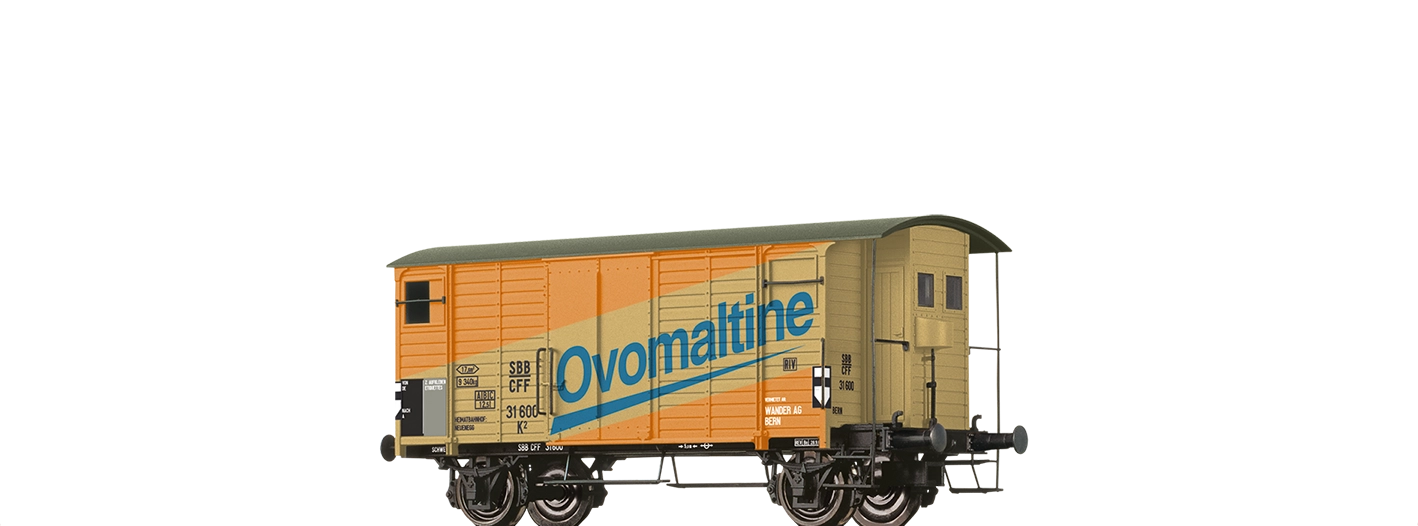
Prototype The Swiss began standardising some types of goods wagons at an early stage. They were then also procured by all private railways in order to improve repairs and spare part stock-keeping. They included closed goods wagons with a 4.5 m wheel base and a frame length of 7.10 m. Later, the wheel base was increased to 5 m in order to improve the running characteristics. In this form, high numbers of the wagons that were given the K2 designation were procured by SBB. Model Precise replica of board joints Finely engraved fan grill Precise paintwork and painting NEM-standard short-coupling Metal wheels True to original frame construction
In stock: 1 on the shelf, shipped within 1-3 days

1 x Wooden-mast Light, Pin-Socket (LED) Height 88 mm Simple handling Time-consuming cable connections between the lamp and the socket are not necessary The lamp can be tilted in the socket up to 10° to compensate for uneven terrain Can be separated electrically Compatible to each other Load-carrying parts made from brass Filigree lattice work Multi-part lampheads Intricately handpainted
In stock, shipped within 1-3 days

1 x Platform Light, Pin-Socket (LED) Height 70 mm Simple handling Time-consuming cable connections between the lamp and the socket are not necessary The lamp can be tilted in the socket up to 10° to compensate for uneven terrain Can be separated electrically Compatible to each other Load-carrying parts made from brass Filigree lattice work Multi-part lampheads Intricately handpainted
In stock: 5 on the shelf, shipped within 1-3 days

1 x Street Light, Pin-Socket (LED) Height 58 mm Simple handling Time-consuming cable connections between the lamp and the socket are not necessary The lamp can be tilted in the socket up to 10° to compensate for uneven terrain Can be separated electrically Compatible to each other Load-carrying parts made from brass Filigree lattice work Multi-part lampheads Intricately handpainted
In stock: 5 on the shelf, shipped within 1-3 days

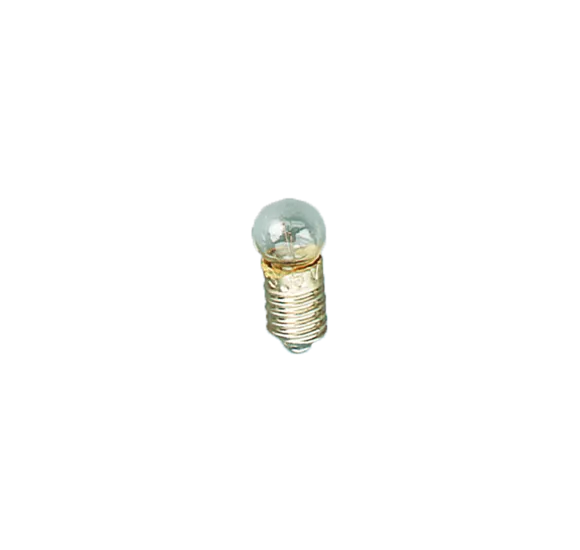
1 x Telephone Box Swisscom Height 33 mm With lighting Spare bulb 3268
In stock: 1 on the shelf, shipped within 1-3 days
The Brawa families
Rolling stock
 210 itemsLocomotivesLocomotives in H0 and N, from the DB AG TRAXX BR 147 to the DR BR 132.See the items
 56 itemsRailcars and multiple unitsTWINDEXX Vario double-deck trains in N, DRG VT 137 diesel railcar in H0.See the items
 360 itemsPassenger coachesDB express coaches, SBB coaches and complete trains in H0 and N.See the items
 448 itemsFreight wagonsCovered wagons, container wagons and luggage vans, including the SBB K2 "Ovomaltine".See the items
Scenery and cable cars
 117 itemsLighting and scenery accessoriesWooden-mast lights, park lanterns and LED wall lights, clocks and telephone boxes.See the items
 12 itemsCable carsNebelhorn, Hahnenkamm, Kanzelwand, Titlis and chairlift, in H0 and N.See the items
Bulbs and wiring
All Brawa items

Prototype The Württemberg version of this Gm car was built from 1907. Altogether 1,813 units were produced at different waggon factories until 1911. The characteristic of the Württemberg cars was the subdivision of the side panels into 8 segments and the steel waggon door. The undercarriages had an additional fish-bellied girder. These Württemberg cars only existed without a handbrake. After the First World War, numerous cars of this construction type came to the DRG where they were classified in the Hannover class district. Model Tip bearing wheelsets Precise paintwork and painting Metal axle Many separately mounted parts Precise replica of board joints Metal axles Individually mounted brake systems
On order, shipped within 10-15 days

Prototype The Württemberg version of this Gm car was built from 1907. Altogether 1,813 units were produced at different waggon factories until 1911. The characteristic of the Württemberg cars was the subdivision of the side panels into 8 segments and the steel waggon door. The undercarriages had an additional fish-bellied girder. These Württemberg cars only existed without a handbrake. After the First World War, numerous cars of this construction type came to the DRG where they were classified in the Hannover class district. Model Tip bearing wheelsets Precise paintwork and painting Metal axle Many separately mounted parts Precise replica of board joints Metal axles Individually mounted brake systems
On order, shipped within 10-15 days

Prototype The Württemberg version of this Gm car was built from 1907. Altogether 1,813 units were produced at different waggon factories until 1911. The characteristic of the Württemberg cars was the subdivision of the side panels into 8 segments and the steel waggon door. The undercarriages had an additional fish-bellied girder. These Württemberg cars only existed without a handbrake. After the First World War, numerous cars of this construction type came to the DRG where they were classified in the Hannover class district. Model Tip bearing wheelsets Precise paintwork and painting Metal axle Many separately mounted parts Precise replica of board joints Metal axles Individually mounted brake systems
On order, shipped within 10-15 days

Prototype The Württemberg version of this Gm car was built from 1907. Altogether 1,813 units were produced at different waggon factories until 1911. The characteristic of the Württemberg cars was the subdivision of the side panels into 8 segments and the steel waggon door. The undercarriages had an additional fish-bellied girder. These Württemberg cars only existed without a handbrake. After the First World War, numerous cars of this construction type came to the DRG where they were classified in the Hannover class district. Model Tip bearing wheelsets Precise paintwork and painting Metal axle Many separately mounted parts Precise replica of board joints Metal axles Individually mounted brake systems
On order, shipped within 10-15 days

Prototype The Württemberg version of this Gm car was built from 1907. Altogether 1,813 units were produced at different waggon factories until 1911. The characteristic of the Württemberg cars was the subdivision of the side panels into 8 segments and the steel waggon door. The undercarriages had an additional fish-bellied girder. These Württemberg cars only existed without a handbrake. After the First World War, numerous cars of this construction type came to the DRG where they were classified in the Hannover class district. Model Tip bearing wheelsets Precise paintwork and painting Metal axle Many separately mounted parts Precise replica of board joints Metal axles Individually mounted brake systems
On order, shipped within 10-15 days

Prototype The Swiss began standardising some types of goods wagons at an early stage. They were then also procured by all private railways in order to improve repairs and spare part stock-keeping. They included closed goods wagons with a 4.5 m wheel base and a frame length of 7.10 m. Later, the wheel base was increased to 5 m in order to improve the running characteristics. In this form, high numbers of the wagons that were given the K2 designation were procured by SBB. Model Tip bearing wheelsets Precise paintwork and painting Metal axle Precise replica of board joints True to original frame construction Metal axles
On order, shipped within 10-15 days

Prototype The Swiss began standardising some types of goods wagons at an early stage. They were then also procured by all private railways in order to improve repairs and spare part stock-keeping. They included closed goods wagons with a 4.5 m wheel base and a frame length of 7.10 m. Later, the wheel base was increased to 5 m in order to improve the running characteristics. In this form, high numbers of the wagons that were given the K2 designation were procured by SBB. Model Tip bearing wheelsets Precise paintwork and painting Metal axle Precise replica of board joints True to original frame construction Metal axles
On order, shipped within 10-15 days

Prototype The Swiss began standardising some types of goods wagons at an early stage. They were then also procured by all private railways in order to improve repairs and spare part stock-keeping. They included closed goods wagons with a 4.5 m wheel base and a frame length of 7.10 m. Later, the wheel base was increased to 5 m in order to improve the running characteristics. In this form, high numbers of the wagons that were given the K2 designation were procured by SBB. Model Metal wheelsets Precise paintwork and painting Metal axle Precise replica of board joints True to original frame construction Metal axles
On order, shipped within 10-15 days

Prototype The introduction of welding technology from 1933 onwards increasingly made the Deutsche Reichsbahn (DR) switch to joining the components of their wagons by welding instead of riveting. One of the main advantages of welding technology was the weight saving which could then be used for increasing the cargo weight. In order to respond to the demand for higher speeds in part-load traffic as well, the DR developed the "Gs Oppeln", starting in 1936. Due to its wheel base of 6000mm, its maximum permissible speed could be fixed at 90 km/h. In addition to the missing junction plates that were made superfluous by the welding technology, this wagon type mainly differed in the pointed truss frame required due to the long wheel base. The increasing need for goods wagons due to the war led to the mass production of the "Gs Oppeln" from 1938 onwards. As a result, about 28,000 wagons without and 6,100 wagons with handbrake were built in the following years. Many of the wagons were equipped with a steam heating or even an electric heating system and could therefore be used as part-load wagons in semi-fast and express trains without any problems. After the end of World War II, the wagons were distributed all over Europe and could be found, for example, in the service of the railway administrations of Austria, Czechoslovakia, Poland, or Belgium. The reorganisation of the vehicle numbers of the young Deutsche Bundesbahn in the early fifties of the last century led to the change of "Gs Oppeln" into "Gms 30". Some of the wagons even came into the EUROP wagon pool, thus serving on an international basis. With the emergence of the first newly built goods wagons at the end of the fifties, a decision was made against an expensive general overhaul of the wagons. When the UIC numbering system was introduced, the existing wagons were re-numbered into "Glms 200", and some of them survived until 1979. Model Metal axle bearing Bogie with three-point support True to original frame construction Individually mounted axle box cover Brake blocks in wheel plane Individually mounted handrails Individually mounted steps Individually mounted axle brake rod Individually mounted brake systems Perforated car body supports
On order, shipped within 10-15 days

Prototype The introduction of welding technology from 1933 onwards increasingly made the Deutsche Reichsbahn (DR) switch to joining the components of their wagons by welding instead of riveting. One of the main advantages of welding technology was the weight saving which could then be used for increasing the cargo weight. In order to respond to the demand for higher speeds in part-load traffic as well, the DR developed the "Gs Oppeln", starting in 1936. Due to its wheel base of 6000mm, its maximum permissible speed could be fixed at 90 km/h. In addition to the missing junction plates that were made superfluous by the welding technology, this wagon type mainly differed in the pointed truss frame required due to the long wheel base. The increasing need for goods wagons due to the war led to the mass production of the "Gs Oppeln" from 1938 onwards. As a result, about 28,000 wagons without and 6,100 wagons with handbrake were built in the following years. Many of the wagons were equipped with a steam heating or even an electric heating system and could therefore be used as part-load wagons in semi-fast and express trains without any problems. After the end of World War II, the wagons were distributed all over Europe and could be found, for example, in the service of the railway administrations of Austria, Czechoslovakia, Poland, or Belgium. The reorganisation of the vehicle numbers of the young Deutsche Bundesbahn in the early fifties of the last century led to the change of "Gs Oppeln" into "Gms 30". Some of the wagons even came into the EUROP wagon pool, thus serving on an international basis. With the emergence of the first newly built goods wagons at the end of the fifties, a decision was made against an expensive general overhaul of the wagons. When the UIC numbering system was introduced, the existing wagons were re-numbered into "Glms 200", and some of them survived until 1979. Model Metal axle bearing Bogie with three-point support True to original frame construction Individually mounted axle box cover Brake blocks in wheel plane Individually mounted handrails Individually mounted steps Individually mounted axle brake rod Individually mounted brake systems Perforated car body supports
On order, shipped within 10-15 days

Prototype The introduction of welding technology from 1933 onwards increasingly made the Deutsche Reichsbahn (DR) switch to joining the components of their wagons by welding instead of riveting. One of the main advantages of welding technology was the weight saving which could then be used for increasing the cargo weight. In order to respond to the demand for higher speeds in part-load traffic as well, the DR developed the "Gs Oppeln", starting in 1936. Due to its wheel base of 6000mm, its maximum permissible speed could be fixed at 90 km/h. In addition to the missing junction plates that were made superfluous by the welding technology, this wagon type mainly differed in the pointed truss frame required due to the long wheel base. The increasing need for goods wagons due to the war led to the mass production of the "Gs Oppeln" from 1938 onwards. As a result, about 28,000 wagons without and 6,100 wagons with handbrake were built in the following years. Many of the wagons were equipped with a steam heating or even an electric heating system and could therefore be used as part-load wagons in semi-fast and express trains without any problems. After the end of World War II, the wagons were distributed all over Europe and could be found, for example, in the service of the railway administrations of Austria, Czechoslovakia, Poland, or Belgium. The reorganisation of the vehicle numbers of the young Deutsche Bundesbahn in the early fifties of the last century led to the change of "Gs Oppeln" into "Gms 30". Some of the wagons even came into the EUROP wagon pool, thus serving on an international basis. With the emergence of the first newly built goods wagons at the end of the fifties, a decision was made against an expensive general overhaul of the wagons. When the UIC numbering system was introduced, the existing wagons were re-numbered into "Glms 200", and some of them survived until 1979. Model Metal axle bearing Bogie with three-point support True to original frame construction Individually mounted axle box cover Brake blocks in wheel plane Individually mounted handrails Individually mounted steps Individually mounted axle brake rod Individually mounted brake systems Perforated car body supports
On order, shipped within 10-15 days

Prototype Although its payload was lower than that of the newer cars of Classes Gm and Glm, Bavaria was not able to dispense with the older G-cars. In particular when transporting lighter package freight, e.g. products of the large glass industry in the Bavarian forest, the limited load-bearing capacity did not play a role. Therefore the older cars also had red-brown livery after 1912 and were assigned to the newly created “Regensburg” grouping. All cars with a payload of less than 15 tonnes were included in this group. Model Metal wheels Tip bearing wheelsets Precise replica of board joints Fine replica of the wheel bearing True to original brake unit Individually mounted handrails Individually mounted signal holder
On order, shipped within 10-15 days

Prototype Although its payload was lower than that of the newer cars of Classes Gm and Glm, Bavaria was not able to dispense with the older G-cars. In particular when transporting lighter package freight, e.g. products of the large glass industry in the Bavarian forest, the limited load-bearing capacity did not play a role. Therefore the older cars also had red-brown livery after 1912 and were assigned to the newly created “Regensburg” grouping. All cars with a payload of less than 15 tonnes were included in this group. Model Metal wheels Tip bearing wheelsets Precise replica of board joints Fine replica of the wheel bearing True to original brake unit Individually mounted handrails Individually mounted signal holder
On order, shipped within 10-15 days

Prototype Although its payload was lower than that of the newer cars of Classes Gm and Glm, Bavaria was not able to dispense with the older G-cars. In particular when transporting lighter package freight, e.g. products of the large glass industry in the Bavarian forest, the limited load-bearing capacity did not play a role. Therefore the older cars also had red-brown livery after 1912 and were assigned to the newly created “Regensburg” grouping. All cars with a payload of less than 15 tonnes were included in this group. Model Metal wheels Tip bearing wheelsets Precise replica of board joints Fine replica of the wheel bearing True to original brake unit Individually mounted handrails Individually mounted signal holder
On order, shipped within 10-15 days

Prototype Although its payload was lower than that of the newer cars of Classes Gm and Glm, Bavaria was not able to dispense with the older G-cars. In particular when transporting lighter package freight, e.g. products of the large glass industry in the Bavarian forest, the limited load-bearing capacity did not play a role. Therefore the older cars also had red-brown livery after 1912 and were assigned to the newly created “Regensburg” grouping. All cars with a payload of less than 15 tonnes were included in this group. Model Metal wheels Tip bearing wheelsets Precise replica of board joints Fine replica of the wheel bearing True to original brake unit Individually mounted handrails Individually mounted signal holder
On order, shipped within 10-15 days

Prototype Although its payload was lower than that of the newer cars of Classes Gm and Glm, Bavaria was not able to dispense with the older G-cars. In particular when transporting lighter package freight, e.g. products of the large glass industry in the Bavarian forest, the limited load-bearing capacity did not play a role. Therefore the older cars also had red-brown livery after 1912 and were assigned to the newly created “Regensburg” grouping. All cars with a payload of less than 15 tonnes were included in this group. Model Metal wheels Tip bearing wheelsets Precise replica of board joints Fine replica of the wheel bearing True to original brake unit Individually mounted handrails Individually mounted signal holder
On order, shipped within 10-15 days

Prototype Although its payload was lower than that of the newer cars of Classes Gm and Glm, Bavaria was not able to dispense with the older G-cars. In particular when transporting lighter package freight, e.g. products of the large glass industry in the Bavarian forest, the limited load-bearing capacity did not play a role. Therefore the older cars also had red-brown livery after 1912 and were assigned to the newly created “Regensburg” grouping. All cars with a payload of less than 15 tonnes were included in this group. Model Metal wheels Tip bearing wheelsets Precise replica of board joints Fine replica of the wheel bearing True to original brake unit Individually mounted handrails Individually mounted signal holder
On order, shipped within 10-15 days

Prototype The "megafret" container car was developed for the transportation of high cube containers. These containers have corner heights of 2.80 and sometimes 3.20 m. Transfesa's slide-wall containers are 45 feet long. The "megafret" wagons are loaded with standard containers and can hold up to four 20-foot containers. The container cars can travel at speeds of up to 140 km/h and the unit has a load capacity of 87 t. The wagons are used on all European railways, including the UK. Model Multi-part brake system Finely engraved bogies Perforated frame True to scale drawbar Individually mounted brake lines with steel profiles Individually mounted aggregates between the chassis Pipes made of painted steel wire
On order, shipped within 10-15 days

Prototype The "megafret" container car was developed for the transportation of high cube containers. These containers have corner heights of 2.80 and sometimes 3.20 m. Transfesa's slide-wall containers are 45 feet long. The "megafret" wagons are loaded with standard containers and can hold up to four 20-foot containers. The container cars can travel at speeds of up to 140 km/h and the unit has a load capacity of 87 t. The wagons are used on all European railways, including the UK. Model Multi-part brake system Finely engraved bogies Perforated frame True to scale drawbar Individually mounted brake lines with steel profiles Individually mounted aggregates between the chassis Pipes made of painted steel wire
On order, shipped within 10-15 days

Prototype Up to the twenties of the previous century, goods trains of all German railway administrations were operated with manual brakes. In addition to the locomotive personnel, the crew of the train therefore included a chief train conductor as the highest authority, a master packer, train conductor and shunter as well as several brakeman. These persons were responsible for braking the train, for the shunting work during stops en route, and the exchange and processing of freight documents of the transported goods. For this purpose, a special accompanying wagon was carried along behind the locomotive that served as a rolling working and recreation place. Only the brakeman had to stay in one of the brakeman's cabins during the trip. Completing the own development, the KPEV (Royal Prussian Railway Administration) procured luggage wagons ("Pwg") according to master drawing pr IIa 13a for the first time in 1913/14. After the end of World War I, this design was selected as replacement of the old or missing accompanying wagons of the most German Länder railway operators. So, over 7,000 "Pwg" were built according to the 2nd revised edition of the master drawing until 1929 and spread not only in the former KPEV region, but also in Baden, Bavaria, Wuerttemberg, and Saxony. Starting at the end of the thirties, the DRB removed the through-going running boards and handlebars, allegedly due to an attempted robbery of a train. Additional structural alterations even before the outbreak of the war included reinforcements of the wagon body frame and the removal of the window in the storage space door. Model Metal axle holders Bogie with three-point support Individually mounted axle box cover Brake blocks in wheel plane Individually mounted axle brake rod Individually mounted brake systems Perforated car body supports
On order, shipped within 10-15 days

Prototype Up to the twenties of the previous century, goods trains of all German railway administrations were operated with manual brakes. In addition to the locomotive personnel, the crew of the train therefore included a chief train conductor as the highest authority, a master packer, train conductor and shunter as well as several brakeman. These persons were responsible for braking the train, for the shunting work during stops en route, and the exchange and processing of freight documents of the transported goods. For this purpose, a special accompanying wagon was carried along behind the locomotive that served as a rolling working and recreation place. Only the brakeman had to stay in one of the brakeman's cabins during the trip. Completing the own development, the KPEV (Royal Prussian Railway Administration) procured luggage wagons ("Pwg") according to master drawing pr IIa 13a for the first time in 1913/14. After the end of World War I, this design was selected as replacement of the old or missing accompanying wagons of the most German Länder railway operators. So, over 7,000 "Pwg" were built according to the 2nd revised edition of the master drawing until 1929 and spread not only in the former KPEV region, but also in Baden, Bavaria, Wuerttemberg, and Saxony. Starting at the end of the thirties, the DRB removed the through-going running boards and handlebars, allegedly due to an attempted robbery of a train. Additional structural alterations even before the outbreak of the war included reinforcements of the wagon body frame and the removal of the window in the storage space door. Model Metal axle holders Bogie with three-point support Individually mounted axle box cover Brake blocks in wheel plane Individually mounted axle brake rod Individually mounted brake systems Perforated car body supports
On order, shipped within 10-15 days

Prototype Up to the twenties of the previous century, goods trains of all German railway administrations were operated with manual brakes. In addition to the locomotive personnel, the crew of the train therefore included a chief train conductor as the highest authority, a master packer, train conductor and shunter as well as several brakeman. These persons were responsible for braking the train, for the shunting work during stops en route, and the exchange and processing of freight documents of the transported goods. For this purpose, a special accompanying wagon was carried along behind the locomotive that served as a rolling working and recreation place. Only the brakeman had to stay in one of the brakeman's cabins during the trip. Completing the own development, the KPEV (Royal Prussian Railway Administration) procured luggage wagons ("Pwg") according to master drawing pr IIa 13a for the first time in 1913/14. After the end of World War I, this design was selected as replacement of the old or missing accompanying wagons of the most German Länder railway operators. So, over 7,000 "Pwg" were built according to the 2nd revised edition of the master drawing until 1929 and spread not only in the former KPEV region, but also in Baden, Bavaria, Wuerttemberg, and Saxony. Starting at the end of the thirties, the DRB removed the through-going running boards and handlebars, allegedly due to an attempted robbery of a train. Additional structural alterations even before the outbreak of the war included reinforcements of the wagon body frame and the removal of the window in the storage space door. Model Metal axle holders Bogie with three-point support Individually mounted axle box cover Brake blocks in wheel plane Individually mounted axle brake rod Individually mounted brake systems Perforated car body supports
On order, shipped within 10-15 days

Prototype Up to the twenties of the previous century, goods trains of all German railway administrations were operated with manual brakes. In addition to the locomotive personnel, the crew of the train therefore included a chief train conductor as the highest authority, a master packer, train conductor and shunter as well as several brakeman. These persons were responsible for braking the train, for the shunting work during stops en route, and the exchange and processing of freight documents of the transported goods. For this purpose, a special accompanying wagon was carried along behind the locomotive that served as a rolling working and recreation place. Only the brakeman had to stay in one of the brakeman's cabins during the trip. Completing the own development, the KPEV (Royal Prussian Railway Administration) procured luggage wagons ("Pwg") according to master drawing pr IIa 13a for the first time in 1913/14. After the end of World War I, this design was selected as replacement of the old or missing accompanying wagons of the most German Länder railway operators. So, over 7,000 "Pwg" were built according to the 2nd revised edition of the master drawing until 1929 and spread not only in the former KPEV region, but also in Baden, Bavaria, Wuerttemberg, and Saxony. Starting at the end of the thirties, the DRB removed the through-going running boards and handlebars, allegedly due to an attempted robbery of a train. Additional structural alterations even before the outbreak of the war included reinforcements of the wagon body frame and the removal of the window in the storage space door. Model Metal axle holders Bogie with three-point support Individually mounted axle box cover Brake blocks in wheel plane Individually mounted axle brake rod Individually mounted brake systems Perforated car body supports
On order, shipped within 10-15 days

Prototype After 1945 the DB had about a third of the almost 20 000 Om „Königsberg“ in its stock. As one of the very first car classes, 2500 cars were reclassified in 1951 and marked with the ownership mark „DB“ and the new name „Om 21“. These cars are the first ones to be added to the Europ pool founded together with the SNCF. Cars belonging to this pool were allowed to be treated by the participating railways as their own and therefore also used on transportation links within the country, whereas otherwise an external car could only be loaded at most in the direction of the home administration. Due to the changed circumstances in the course of the liberalization of the railway in many European countries, the Europ pool was then dissolved. The open freight cars of the „Königsberg“ class district remaining at the DR were in service unchanged until the mid-1960s. In contrast to the DB, a conversion program was dispensed with and only minimal changes were made during scheduled repairs. The Dresden repair shop, the repair shop „8 May“ Eberswalde and the „7 October“ Zwickau were responsible for the open cars. Later the wooden side walls were often replaced with steel ones, the wheelsets were equipped with roller bearings and the brakeman‘s cab was cancelled. Model True to original front Individually mounted axle box cover Multi-part brake system Wheelsets with inside contours Die-cast zinc car body 3D replica of the buckle plate inside
On order, shipped within 10-15 days