
H0 and N rolling stock, lighting and cable cars
Brawa, model railways made with care
Locomotives, coaches and wagons in H0 and N, plus street lights, cable cars, bulbs and wiring: the world of a family firm from Waiblingen.
- 1375items in the shop
- H0 and Nthe scales in the range
- 1948the year of the founding
What makes Brawa
- A family firm since 1948: founded by Artur Braun in Waiblingen, in southern Germany, Brawa is run today by the third generation of the family.
- Love of detail: individually fitted handrails, sprung buffers, crisp printing: every model starts from measurements and photographs of the original and a study of the construction drawings.
- Sturdy locomotives: most are largely die-cast zinc, for weight and robustness, for DC or AC, with sound and, on steam locomotives, smoke.
- Cable cars and lighting: H0 cable cars are a house speciality, starting with the Nebelhorn cableway in Oberstdorf; lamps and signals follow, with load-bearing parts made of brass or etched sheet.
Our favourites

Prototype Even before World War I, plans were being made in Prussia to electrify several mountain railways in Silesia, including the so-called “Zackenbahn” (named after the Zacken River) between Hirschberg and Polaun. Given the difficult topographical conditions, this new form of traction promised considerable savings and more cost-effective operation. However, the outbreak of World War I prevented the work from being completed quickly, and it was not until 1923 that continuous operation began. Since operating trains pulled by locomotives was very cumbersome due to fluctuating traffic volumes, considerations were made early on to switch to railcars. The suitability of the ET 88, originally procured for suburban transport in Berlin, prompted the DRG to procure additional four-axle electric railcars. In 1926-1927, LHW Breslau and WUMAG in Görlitz, in collaboration with SSW-Werke, delivered a total of 11 railcars that were to become the symbol of electric train transport in Silesia. The distinctive vehicles with their open entrance platforms were christened “Rübezahl” by the local population, a name that actually refers to a moody mountain spirit from the Giant Mountains. The railcars, which were initially painted green and designated “Breslau 511-521,” were always used in pairs with up to eight light standard branch line cars as trailers. Due to low demand, a single railcar operated between Josephinenhütte and Grünthal. The greatest rush of passengers was on weekends when the weather was nice and during the winter sports season. Up to three railcars with twelve trailers then operated as a train. At the beginning of the 1930s, the railcars were given the new designation elt 1011-1019 and a two-tone paint scheme. In 1941, the four-axle railcars were given their final numbers and became ET 89 01-11. With the exception of ET 89 11, which had to be taken out of service in 1943 due to an accident, all of them survived the war and the end of electric train transport in Silesia. Four railcars were transferred to PKP, but were not used there. The exact whereabouts of three others are unknown. ET 89 01, 04, and 07 ended up in the western occupation zones and thus became part of the DB fleet, which was founded in 1949. Only ET 89 04 was refurbished and served at the Munich Central Station depot. Initially still listed as 2nd and 3rd class cars, later photos show it as a pure 3rd class vehicle, which then exclusively carried 2nd class passengers after the class reform in 1956. On September 2, 1959, its final hour arrived – ET 89 04 was the last of its kind to be taken out of service and dismantled shortly thereafter, leaving only a few photos to remind us of these unique railcars. Model Illuminated upper carriage lanterns and tail lights Separately switchable interior lighting Separately switchable third headlight New motor New sound
In stock: 1 on the shelf, shipped within 1-3 days

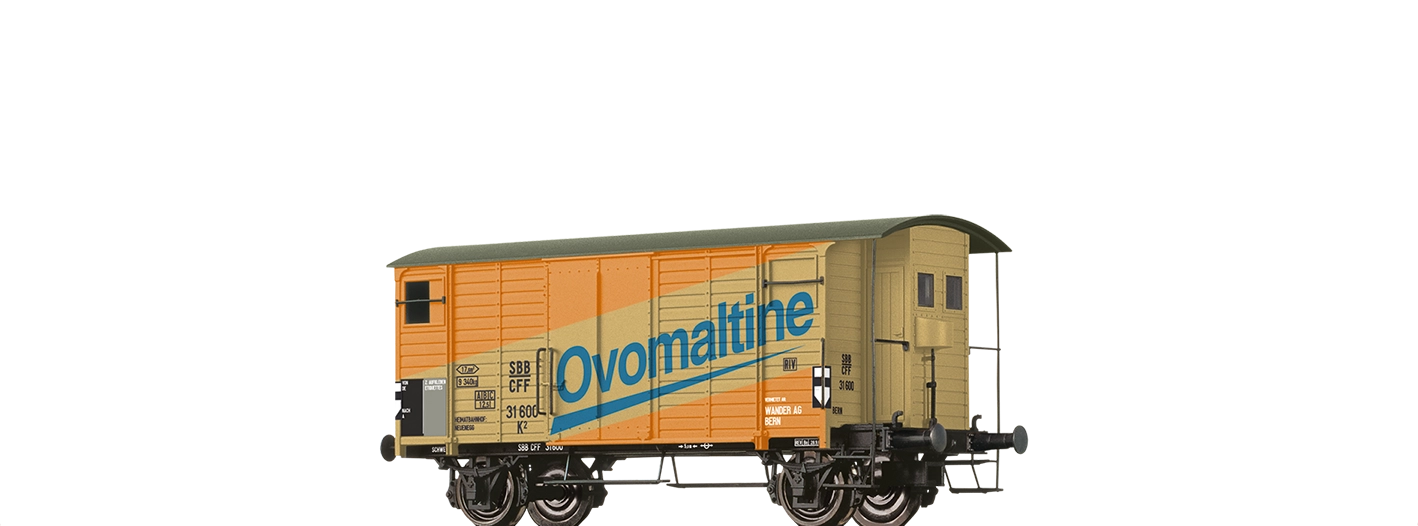
Prototype The Swiss began standardising some types of goods wagons at an early stage. They were then also procured by all private railways in order to improve repairs and spare part stock-keeping. They included closed goods wagons with a 4.5 m wheel base and a frame length of 7.10 m. Later, the wheel base was increased to 5 m in order to improve the running characteristics. In this form, high numbers of the wagons that were given the K2 designation were procured by SBB. Model Precise replica of board joints Finely engraved fan grill Precise paintwork and painting NEM-standard short-coupling Metal wheels True to original frame construction
In stock: 1 on the shelf, shipped within 1-3 days

1 x Wooden-mast Light, Pin-Socket (LED) Height 88 mm Simple handling Time-consuming cable connections between the lamp and the socket are not necessary The lamp can be tilted in the socket up to 10° to compensate for uneven terrain Can be separated electrically Compatible to each other Load-carrying parts made from brass Filigree lattice work Multi-part lampheads Intricately handpainted
In stock, shipped within 1-3 days

1 x Platform Light, Pin-Socket (LED) Height 70 mm Simple handling Time-consuming cable connections between the lamp and the socket are not necessary The lamp can be tilted in the socket up to 10° to compensate for uneven terrain Can be separated electrically Compatible to each other Load-carrying parts made from brass Filigree lattice work Multi-part lampheads Intricately handpainted
In stock: 5 on the shelf, shipped within 1-3 days

1 x Street Light, Pin-Socket (LED) Height 58 mm Simple handling Time-consuming cable connections between the lamp and the socket are not necessary The lamp can be tilted in the socket up to 10° to compensate for uneven terrain Can be separated electrically Compatible to each other Load-carrying parts made from brass Filigree lattice work Multi-part lampheads Intricately handpainted
In stock: 5 on the shelf, shipped within 1-3 days

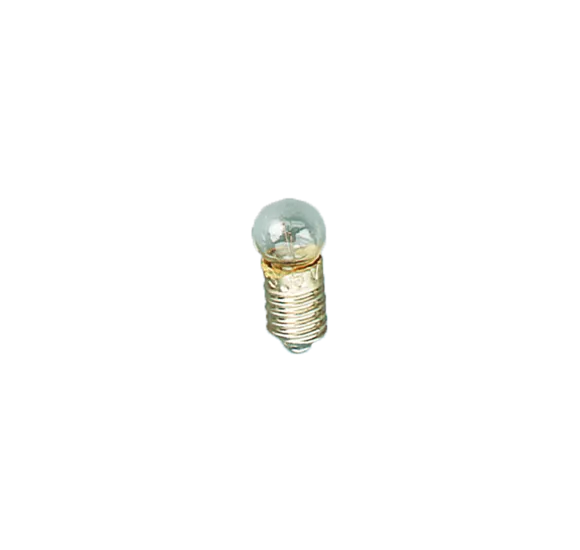
1 x Telephone Box Swisscom Height 33 mm With lighting Spare bulb 3268
In stock: 1 on the shelf, shipped within 1-3 days
The Brawa families
Rolling stock
 210 itemsLocomotivesLocomotives in H0 and N, from the DB AG TRAXX BR 147 to the DR BR 132.See the items
 56 itemsRailcars and multiple unitsTWINDEXX Vario double-deck trains in N, DRG VT 137 diesel railcar in H0.See the items
 360 itemsPassenger coachesDB express coaches, SBB coaches and complete trains in H0 and N.See the items
 448 itemsFreight wagonsCovered wagons, container wagons and luggage vans, including the SBB K2 "Ovomaltine".See the items
Scenery and cable cars
 117 itemsLighting and scenery accessoriesWooden-mast lights, park lanterns and LED wall lights, clocks and telephone boxes.See the items
 12 itemsCable carsNebelhorn, Hahnenkamm, Kanzelwand, Titlis and chairlift, in H0 and N.See the items
Bulbs and wiring
All Brawa items

Prototype After 1945 the DB had about a third of the almost 20 000 Om „Königsberg“ in its stock. As one of the very first car classes, 2500 cars were reclassified in 1951 and marked with the ownership mark „DB“ and the new name „Om 21“. These cars are the first ones to be added to the Europ pool founded together with the SNCF. Cars belonging to this pool were allowed to be treated by the participating railways as their own and therefore also used on transportation links within the country, whereas otherwise an external car could only be loaded at most in the direction of the home administration. Due to the changed circumstances in the course of the liberalization of the railway in many European countries, the Europ pool was then dissolved. The open freight cars of the „Königsberg“ class district remaining at the DR were in service unchanged until the mid-1960s. In contrast to the DB, a conversion program was dispensed with and only minimal changes were made during scheduled repairs. The Dresden repair shop, the repair shop „8 May“ Eberswalde and the „7 October“ Zwickau were responsible for the open cars. Later the wooden side walls were often replaced with steel ones, the wheelsets were equipped with roller bearings and the brakeman‘s cab was cancelled. Model True to original front Individually mounted axle box cover Multi-part brake system Wheelsets with inside contours Die-cast zinc car body 3D replica of the buckle plate inside
On order, shipped within 10-15 days

Metal axle bearing Multi-part brake system Brake blocks in wheel plane Individually mounted axle box cover Free standing ladders Individually mounted railing Individually mounted signs
On order, shipped within 10-15 days

Metal axle bearing Multi-part brake system Brake blocks in wheel plane Individually mounted axle box cover Free standing ladders Individually mounted railing Individually mounted signs
On order, shipped within 10-15 days

Metal axle bearing Multi-part brake system Brake blocks in wheel plane Individually mounted axle box cover Free standing ladders Individually mounted railing Individually mounted signs
On order, shipped within 10-15 days

Metal axle bearing Multi-part brake system Brake blocks in wheel plane Individually mounted axle box cover Free standing ladders Individually mounted railing Individually mounted signs
On order, shipped within 10-15 days

Metal axle bearing Multi-part brake system Brake blocks in wheel plane Individually mounted axle box cover Free standing ladders Individually mounted railing Individually mounted signs
On order, shipped within 10-15 days

Metal axle bearing Multi-part brake system Brake blocks in wheel plane Individually mounted axle box cover Free standing ladders Individually mounted railing Individually mounted signs
On order, shipped within 10-15 days

Prototype In the 1930s, road transport began to become a clear competitor of railway goods transport. In addition, the very slow freight trains stood in the way of increasing the travelling speed of express trains. Therefore, several European railway administrations attempted to increase the average speed of their freight trains. This also required investments in a fleet of cars which could cope with higher speeds in terms of running and braking properties. The Italian State Railways (FS) therefore bought cars of a riveted all metal construction, which stood out due to their wheel base of 6.10 m with very short overhangs. The DRG pursued a similar policy in Germany and developed the Ghs “Oppeln”, which had a wheel base of 6.10 m. A characteristic feature of covered Italian cars was the peak roof which was used apart from a few exceptions. Less conspicuous but just as typical was the use of I-sections for the sole bar. The wheelsets were run in plain bearings and were supported by one, two or even three spring assemblies depending on the class. One of the main tasks of these vehicles was transporting fruit and vegetables all over Europe. Therefore most of the cars had closable ventilation openings in the side and front walls near the floor. Of these, over 17,000 were put into service between 1937 and 1946 with and without a brakesman’s cab as Class F. They often ran as unit trains over the Brenner and Gotthard mountain passes to the North Sea ports. A further 4400 cars, which only differed by one side ventilation flap, were produced between 1942 and 1946. In the 1950s, a total of 3700 cars of both F-types were used in the joint EUROP car fleet. This allowed the member railways to treat the cars of others as their own. They only had to return to their home country for maintenance. Up to the 1980s and therefore for over half a century, a cross-alpine freight train without a peak roof car was almost inconceivable, even at the end of the 1990s the odd example was sighted in many a German shunting yard. An identical running gear design was used as the basis for the ice-cooled car of Class Hg. It also had the characteristic roof and a two-leaf hold door on each side and two openings for filling with dry ice. 1,490 of the Hg were produced from 1938, and after the Second World War, more than 1,000 were built, which had an innovative roller bearing. The refrigerated cars were mainly used over the Alps – many photos of that time show rows of them in the port of Hamburg. However, its hour was already over in the 1970s – the FS bought large numbers of the UIC-Standard I. Model Fine replica of the wheel bearing Free standing steps True to original car bottom Wheelsets with inside contours Kurzkupplungskinematik nach NEM Precise paintwork and painting Finely engraved rivets True to original double wheelchocks
On order, shipped within 10-15 days

Prototype In order to meet the continually growing transport requirements in the emerging Federal Republic, the Deutsche Bundesbahn was also eager to replace the many different types of pre-war cars as quickly as possible. Open freight cars for transporting coal were required in large numbers, for example. For this reason, the DB together with the Uerdingen wagon factory developed a two-axle open car with 5.40 m wheelbase up to 1952. A total of 14,919 of the Omm52 were built up to 1962 and delivered to the Bundesbahn. The cars had a frame of welded hollow box sections with welded on head pieces. The running gear was already designed according to UIC directives with a suspension with double suspension rings. Initially the cars were delivered with a Hildebrandt-Knorr freight train brake, later series then with the more modern Knorr standard brake. One part of the car had a handbrake, with the brakeman’s platform being screwed onto one side of the sole bar and the cars therefore had an asymmetric running gear with different overhangs. The first deliveries of vehicles with a handbrake still had a metal brakeman’s cab. However, some of the cars were already delivered from the factory only as a piped vehicle and did not have a brake system. The body of the cars was also welded and had side doors and movable drop ends at the front which allowed unloading via dumpers. On the other hand, cars with a handbrake had a fixed front wall on the handbrake side. Almost all Omm52 cars were included in the EUROP fleet and therefore freely available to the member railways. Model Axle brake frame with brake blocks in wheel plane Wheelsets with inside contours Individually mounted note holder Metal floor Individually mounted wheelchocks
On order, shipped within 10-15 days

Prototype By the middle of the 1960s, DB procured numerous special wagons with a sliding roof and sliding walls. However, examinations proved that, in many cases, it was possible to forego the opening roof and that an optimized access from the side was sufficient for the majority of cargoes. Consequently, the Hbis 299 which was still initially called the Klmmgs was built from 1966 onwards. To a large extent, the design corresponded to the previously built Tbis 869 sliding roof wagons; the accessibility to the corner was primarily improved. The centre column only had a width of 320 mm; this width amounted to 1000 mm on the sliding roof wagons. The wagons proved themselves in operation and were accepted by the loaders. 2,950 units had already been built by 1970 and the maximum quantity of 8,444 units was reached in 1975. From 1974 onwards, the wagons were equipped with spark arrestor plate ex works; a percentage of the older wagons were retrofitted with this component. From 1984 onwards, they obtained the national secondary genre letters –ww. Approximately half of the built wagons were equipped with the “Daberkow” transport protection equipment system.They became Hbis-t from 1979 onwards and became Hbils from 1984 onwards. However, all of the transport protection equipment was remoted from the mid-1980s. In return, 754 wagons obtained reinforced, lockable separating walls in 1991 and, from that point on, were given the designation Hbills-x. In 1994, DB AG assumed 8,403 BA 299 wagons of all types. In 2000, 2,500 wagons were still being operated by “Railion”, the Hbis-ww accounts for the largest share with approx. 2,700 wagons. Eight years later, just over 1,000 Hbis-ww and 90 Hbillsx were still being kept for goods traffic. In association with newer sliding wall carriages, they are now particularly striking thanks to their almost delicate appearance. The original color was unpainted aluminium and the undercarriage was black. This lead to the development of all shades of contamination conditions during operation; address fields are bright or dark shadowed and even both in some cases in the event of a new lettering. To some extent, rented wagons contained the advertising lettering of the adjuster. Model Brake blocks in wheel plane Bogie with three-point support Individually mounted axle brake rod Individually mounted brake systems Metal axle holders Perforated car body supports True to original construction differences
On order, shipped within 10-15 days

Prototype For a long time, tank wagons were unsuitable for the transport of aggressive liquids such as acids. Although boilers equipped with a rubber cladding were available as early as the 1920s, acid wagons were still generally used in order to transport such goods. In doing so, the wagon construction companies used the undercarriage of the standard layout wagon with a wheel base of 4.00 m or 4.50 m and arranged ten or twelve earthenware containers, each with a filling capacity of between 1000 and 1200 L. The containers were held in place using wood and rubber attachments and the box supports were reinforced using diagonal braces. The inclined floor which improved the ability of spilled cargo to flow away was partially cast using a bitumen compound or was protected with a lead sheet. A wooden walkway can be found between the containers. The containers are sealed using rubber or wooden stoppers. A tall bulkhead protects the personnel on the braking platform which is mandatory on the acid wagons. Many small and large chemical companies used such wagons as private wagons at their respective railway directorate. In the FRG, Degussa donated its last acid wagon to the Bochum-Dahlhausen Railway Museum in 1985. Acid wagons were still used at the DR until 1990 and several clubs still own retained wagons such as those in Aschersleben, Magdeburg and Stassfurt. Model Individually mounted signs Bogie with three-point support Precise replica of board joints Wheelsets with inside contours Multi-part brake system Brake blocks in wheel plane Individually mounted axle brake rod Metal axle holders
On order, shipped within 10-15 days

Prototype Work wagons have always been indispensable for the railway company.They were used, for example, on every working site, how ever small, to transport construction materials such as crushed stone or tools. However, as no money could be earned with these so-called X-wagons by the transport of goods for third parties, the intent from the beginning was to find cheap solutions for the procurement of work wagons. A solution that offered itself for this purpose was to refurbish wagons of older types by modification and to adapt them to the new requirements. Due to the continuously changing demand and the decommissioning of worn wagons, the number of the X-wagons strongly fluctuated time and again between around 48,500 (1920), 25,000 (1930), 41,500 (1943) and 15,000 (1953).The Xr-35 type selected by BRAWA is based on Gms-30 type wagons that lost their wagon bodies in the early 50s, or already before due to damage suffered during the war. The remaining undercarriages were equipped with new, stable side panels, thus adapting the wagons to the changed task areas. Model Perforated car body supports Individually mounted brake systems Metal axle holders Individually mounted axle box cover Individually mounted steps
On order, shipped within 10-15 days