
H0 and N rolling stock, lighting and cable cars
Brawa, model railways made with care
Locomotives, coaches and wagons in H0 and N, plus street lights, cable cars, bulbs and wiring: the world of a family firm from Waiblingen.
- 1375items in the shop
- H0 and Nthe scales in the range
- 1948the year of the founding
What makes Brawa
- A family firm since 1948: founded by Artur Braun in Waiblingen, in southern Germany, Brawa is run today by the third generation of the family.
- Love of detail: individually fitted handrails, sprung buffers, crisp printing: every model starts from measurements and photographs of the original and a study of the construction drawings.
- Sturdy locomotives: most are largely die-cast zinc, for weight and robustness, for DC or AC, with sound and, on steam locomotives, smoke.
- Cable cars and lighting: H0 cable cars are a house speciality, starting with the Nebelhorn cableway in Oberstdorf; lamps and signals follow, with load-bearing parts made of brass or etched sheet.
Our favourites

Prototype Even before World War I, plans were being made in Prussia to electrify several mountain railways in Silesia, including the so-called “Zackenbahn” (named after the Zacken River) between Hirschberg and Polaun. Given the difficult topographical conditions, this new form of traction promised considerable savings and more cost-effective operation. However, the outbreak of World War I prevented the work from being completed quickly, and it was not until 1923 that continuous operation began. Since operating trains pulled by locomotives was very cumbersome due to fluctuating traffic volumes, considerations were made early on to switch to railcars. The suitability of the ET 88, originally procured for suburban transport in Berlin, prompted the DRG to procure additional four-axle electric railcars. In 1926-1927, LHW Breslau and WUMAG in Görlitz, in collaboration with SSW-Werke, delivered a total of 11 railcars that were to become the symbol of electric train transport in Silesia. The distinctive vehicles with their open entrance platforms were christened “Rübezahl” by the local population, a name that actually refers to a moody mountain spirit from the Giant Mountains. The railcars, which were initially painted green and designated “Breslau 511-521,” were always used in pairs with up to eight light standard branch line cars as trailers. Due to low demand, a single railcar operated between Josephinenhütte and Grünthal. The greatest rush of passengers was on weekends when the weather was nice and during the winter sports season. Up to three railcars with twelve trailers then operated as a train. At the beginning of the 1930s, the railcars were given the new designation elt 1011-1019 and a two-tone paint scheme. In 1941, the four-axle railcars were given their final numbers and became ET 89 01-11. With the exception of ET 89 11, which had to be taken out of service in 1943 due to an accident, all of them survived the war and the end of electric train transport in Silesia. Four railcars were transferred to PKP, but were not used there. The exact whereabouts of three others are unknown. ET 89 01, 04, and 07 ended up in the western occupation zones and thus became part of the DB fleet, which was founded in 1949. Only ET 89 04 was refurbished and served at the Munich Central Station depot. Initially still listed as 2nd and 3rd class cars, later photos show it as a pure 3rd class vehicle, which then exclusively carried 2nd class passengers after the class reform in 1956. On September 2, 1959, its final hour arrived – ET 89 04 was the last of its kind to be taken out of service and dismantled shortly thereafter, leaving only a few photos to remind us of these unique railcars. Model Illuminated upper carriage lanterns and tail lights Separately switchable interior lighting Separately switchable third headlight New motor New sound
In stock: 1 on the shelf, shipped within 1-3 days

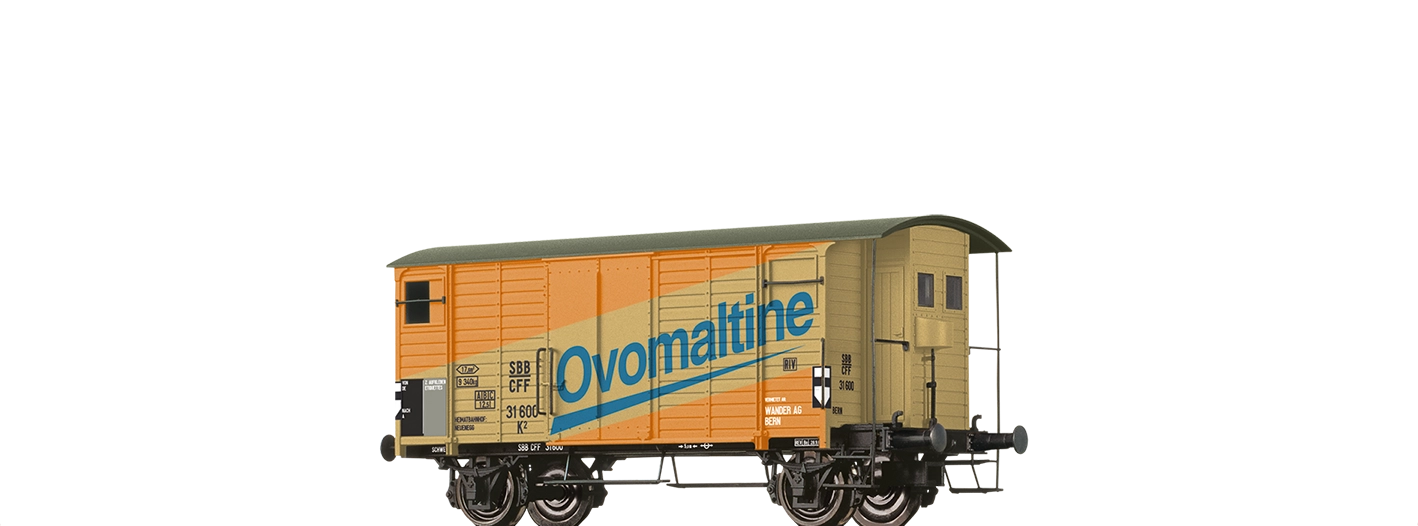
Prototype The Swiss began standardising some types of goods wagons at an early stage. They were then also procured by all private railways in order to improve repairs and spare part stock-keeping. They included closed goods wagons with a 4.5 m wheel base and a frame length of 7.10 m. Later, the wheel base was increased to 5 m in order to improve the running characteristics. In this form, high numbers of the wagons that were given the K2 designation were procured by SBB. Model Precise replica of board joints Finely engraved fan grill Precise paintwork and painting NEM-standard short-coupling Metal wheels True to original frame construction
In stock: 1 on the shelf, shipped within 1-3 days

1 x Wooden-mast Light, Pin-Socket (LED) Height 88 mm Simple handling Time-consuming cable connections between the lamp and the socket are not necessary The lamp can be tilted in the socket up to 10° to compensate for uneven terrain Can be separated electrically Compatible to each other Load-carrying parts made from brass Filigree lattice work Multi-part lampheads Intricately handpainted
In stock, shipped within 1-3 days

1 x Platform Light, Pin-Socket (LED) Height 70 mm Simple handling Time-consuming cable connections between the lamp and the socket are not necessary The lamp can be tilted in the socket up to 10° to compensate for uneven terrain Can be separated electrically Compatible to each other Load-carrying parts made from brass Filigree lattice work Multi-part lampheads Intricately handpainted
In stock: 5 on the shelf, shipped within 1-3 days

1 x Street Light, Pin-Socket (LED) Height 58 mm Simple handling Time-consuming cable connections between the lamp and the socket are not necessary The lamp can be tilted in the socket up to 10° to compensate for uneven terrain Can be separated electrically Compatible to each other Load-carrying parts made from brass Filigree lattice work Multi-part lampheads Intricately handpainted
In stock: 5 on the shelf, shipped within 1-3 days

1 x Telephone Box Swisscom Height 33 mm With lighting Spare bulb 3268
In stock: 1 on the shelf, shipped within 1-3 days
The Brawa families
Rolling stock
 210 itemsLocomotivesLocomotives in H0 and N, from the DB AG TRAXX BR 147 to the DR BR 132.See the items
 56 itemsRailcars and multiple unitsTWINDEXX Vario double-deck trains in N, DRG VT 137 diesel railcar in H0.See the items
 360 itemsPassenger coachesDB express coaches, SBB coaches and complete trains in H0 and N.See the items
 448 itemsFreight wagonsCovered wagons, container wagons and luggage vans, including the SBB K2 "Ovomaltine".See the items
Scenery and cable cars
 117 itemsLighting and scenery accessoriesWooden-mast lights, park lanterns and LED wall lights, clocks and telephone boxes.See the items
 12 itemsCable carsNebelhorn, Hahnenkamm, Kanzelwand, Titlis and chairlift, in H0 and N.See the items
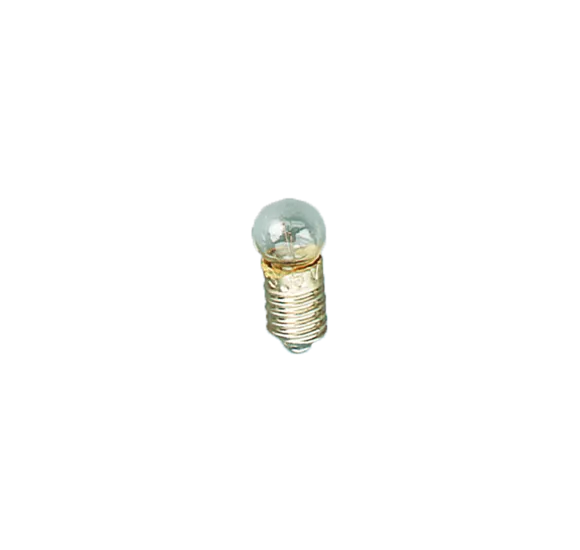
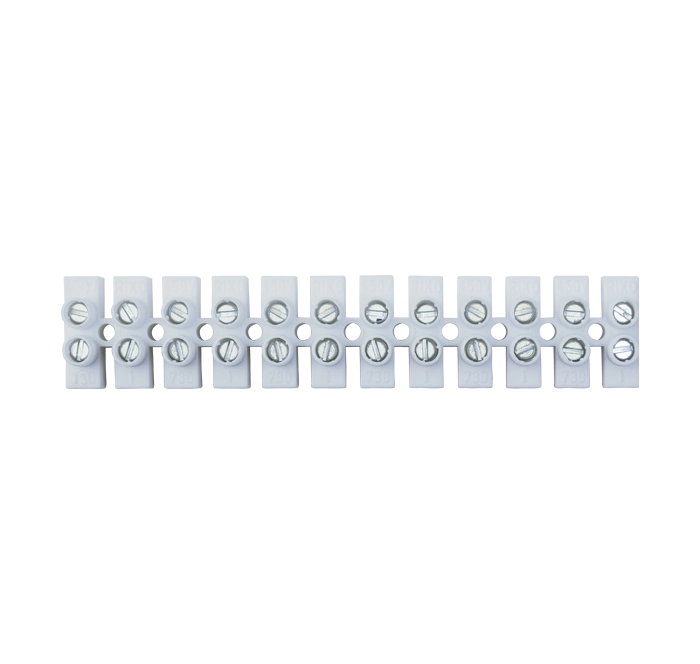
Bulbs and wiring
All Brawa items

Prototype Tariff conditions on the one hand and technical conditions on the other resulted in all State railway administrations developing box cars with almost identical dimensions and payloads. These cars had a 4.5 m wheelbase, a length over buffers of 9.3 m for unbraked cars, a payload of 15 t, later 17 t and a floor area of approx. 21 square metres. This type of freight construction became the most important and most built box car; it originally had the type identifier Gm. The most common of these State railway cars, which numbered 47,533, were built according to the Prussian style sheet IId8. After the founding of the Deutscher Staatsbahn Wagen Verband (German state railway car federation) DWV in 1909, the federation car construction type A2 was developed from this. From 1911 a phenomenal total of 121,770 units were built, making it the most heavily produced box car. It dominated the image of the German goods trains until the early days of the third era. These cars were scattered all over Europe by two world wars, there were no European railway administrations where this type of car was not used at least temporarily. Model True to original frame construction Precise replica of board joints Metal wheels and axles Multi-part brake system Individually mounted signal holder Brake blocks in wheel plane Perforated car body supports Precise paintwork and painting Individually mounted axle box cover
On order, shipped within 10-15 days

Prototype Freight cars have always been required on the railways, now as in the past. The Deutsche Reichsbahn (DR) was able to provide a short-term remedy in the 1950s through retrofitting and modernisation, but it was clear that other solutions would have to be found in the long-term. As a result, in 1965 the Leipzig RAW “unit” designed a Glmms car which complied substantially with the standard characteristics of the UIC leaflet. The lessons learned from the test locomotives were incorporated in the series wagon produced from 1968, which was now known as Glmms 14.05 (later Gbs 1500). The design, with its distinctive corrugated side panels, came into being as a fully welded structure. The side panels were moved down onto the lower edge of the external bodysolebar and welded to the box profiles. This allowed for simplified side body supports. In order to prevent damage to the sheet metal walls during loading, the wagons were lined internally with wood. The floor consisted of standard pine planks and was suitable for loading with a forklift. Based on the Gbs 1500 design, of which over 1700 units were manufactured, a number of different versions were produced, including insulated boxcars, express goods wagons and vestibule cars. Since production capacity was almost exhausted at domestic facilities, wagons were also constructed in neighbouring countries and even Spain. Due to their RIV, MC and OPW transport suitability, the wagons could be used with relative freedom outside the DDR and were therefore often seen in Bundesbahn trains even before the fall of the Iron Curtain. However, until DB AG was founded, there were still as many as 7,000 wagons in use. Model Metal wheels Individually mounted signal holder Individually mounted axle box cover NEM-standard short-coupling Metal axle bearing Multi-part brake system Brake shoes in wheel plane True to original car bottom
On order, shipped within 10-15 days

1 x Historic Street Light (Bulb) Height 58 mm Spare bulb 3293 Load-carrying parts made from brass Filigree lattice work Multi-part lampheads Intricately handpainted
On order, shipped within 10-15 days

Prototype 30m³ lightweight tank wagon in Uerdinger design – thanks to general technical advances in lightweight construction and welding technology, the management at the National Railway (Reichsbahn) decided to dispense with the actual vehicle frame when designing new tank wagons. Instead, the tensile and impact forces would, as far as possible, be absorbed by the boiler. Through the extensive use of welding technology, the goal was to reduce the raw-material requirements and manufacturing costs while at the same time obtaining more robust vehicles. For this reason, the wagon factory in Uerdingen received an order in 1938 to develop a lightweight tank car with a cargo volume of 30m³. As early as 1939, the three prototypes were handed over to two private goods-wagon rental companies as well as the state’s economic research association (Wirtschaftliche Forschungsgesellschaft (Wifo)) for testing. Following a small intermediate series in 1940, series production of the 30m³ Uerdinger-type lightweight tank wagon began in 1941. The largest customer was the German air force (Luftwaffe) with approx. 2,200 units, followed by the Wifo and many smaller companies, which resulted in a total of around 3,700 cars being built. In the post-war period, the wagons acquired by the Wifo and Luftwaffe were redistributed to other wagon operators in both German states. In the following decades, the wagons were primarily used by larger companies in the mineral oil industry, and also by smaller private companies as well as DB and DR themselves. Some of the wagons also remained abroad, where they were operated by new owners. In 2016 one of these wagons was still in use in internal interfactory traffic at Haltermann in Hamburg. Model Bogie with three-point support Individually mounted axle box cover Individually mounted wheelchocks Individually mounted brake systems Finely engraved bogies Brake blocks in wheel plane Individually mounted axle brake rod Free standing handle bars
On order, shipped within 10-15 days

Prototype To promote the renewal of rolling stock and the standardisation of goods wagons among European state railways, the UIC (Union Internationale de Chemins de Fer) designed two variants of an open goods wagon at the beginning of the 1950s: the UIC Type I and UIC Type II. The UIC Type II closely adhered to the dimensions of 10.0 metres in length with a 5.4-metre wheelbase, drawing strong inspiration from pre-war German designs. The entire frame and wagon body were constructed using welded techniques. Upon completing the detailed design, the Federal Railway began upgrading its O-rolling stock at the Kaiserslautern workshop, using the UIC Type II as a basis. From 1954, 10,589 wagons of the Omm 54 types were produced in Kaiserslautern in just two years. Although officially considered conversions based on usable parts from older wagons, these wagons were largely built from new materials. An exception was the brake components, for which Kkg brakes from donor wagons were utilised. In the subsequent construction batches – designated as Omm 55 – these brakes were also dispensed with and new KE brakes were installed, resulting in the procurement of over 17,300 units from 1955 onwards. Through numerous detailed improvements during production as well as later design changes, the vehicles were maintained throughout their lifecycle and were not completely retired until 1994. In addition to the Federal Railway, other state railways also procured wagons based on the UIC Type II specifications for their fleets. These were deployed by the DR Ost (East German Deutsche Reichsbahn), SNCF, SNCB, FS, MAV, ÖBB (Austrian Federal Railways), SBB, CSD, DSB and others, each featuring country-specific details or components. Model Lots of design differences Variants with handbrake Lots of extra details Wheels profiled on both sides Car floor of metal Different versions of the brake systems Three-point bearing for safe operation Achshalter aus Metall Side doors with inside contours
On order, shipped within 10-15 days