
H0 and N rolling stock, lighting and cable cars
Brawa, model railways made with care
Locomotives, coaches and wagons in H0 and N, plus street lights, cable cars, bulbs and wiring: the world of a family firm from Waiblingen.
- 1375items in the shop
- H0 and Nthe scales in the range
- 1948the year of the founding
What makes Brawa
- A family firm since 1948: founded by Artur Braun in Waiblingen, in southern Germany, Brawa is run today by the third generation of the family.
- Love of detail: individually fitted handrails, sprung buffers, crisp printing: every model starts from measurements and photographs of the original and a study of the construction drawings.
- Sturdy locomotives: most are largely die-cast zinc, for weight and robustness, for DC or AC, with sound and, on steam locomotives, smoke.
- Cable cars and lighting: H0 cable cars are a house speciality, starting with the Nebelhorn cableway in Oberstdorf; lamps and signals follow, with load-bearing parts made of brass or etched sheet.
Our favourites

Prototype Even before World War I, plans were being made in Prussia to electrify several mountain railways in Silesia, including the so-called “Zackenbahn” (named after the Zacken River) between Hirschberg and Polaun. Given the difficult topographical conditions, this new form of traction promised considerable savings and more cost-effective operation. However, the outbreak of World War I prevented the work from being completed quickly, and it was not until 1923 that continuous operation began. Since operating trains pulled by locomotives was very cumbersome due to fluctuating traffic volumes, considerations were made early on to switch to railcars. The suitability of the ET 88, originally procured for suburban transport in Berlin, prompted the DRG to procure additional four-axle electric railcars. In 1926-1927, LHW Breslau and WUMAG in Görlitz, in collaboration with SSW-Werke, delivered a total of 11 railcars that were to become the symbol of electric train transport in Silesia. The distinctive vehicles with their open entrance platforms were christened “Rübezahl” by the local population, a name that actually refers to a moody mountain spirit from the Giant Mountains. The railcars, which were initially painted green and designated “Breslau 511-521,” were always used in pairs with up to eight light standard branch line cars as trailers. Due to low demand, a single railcar operated between Josephinenhütte and Grünthal. The greatest rush of passengers was on weekends when the weather was nice and during the winter sports season. Up to three railcars with twelve trailers then operated as a train. At the beginning of the 1930s, the railcars were given the new designation elt 1011-1019 and a two-tone paint scheme. In 1941, the four-axle railcars were given their final numbers and became ET 89 01-11. With the exception of ET 89 11, which had to be taken out of service in 1943 due to an accident, all of them survived the war and the end of electric train transport in Silesia. Four railcars were transferred to PKP, but were not used there. The exact whereabouts of three others are unknown. ET 89 01, 04, and 07 ended up in the western occupation zones and thus became part of the DB fleet, which was founded in 1949. Only ET 89 04 was refurbished and served at the Munich Central Station depot. Initially still listed as 2nd and 3rd class cars, later photos show it as a pure 3rd class vehicle, which then exclusively carried 2nd class passengers after the class reform in 1956. On September 2, 1959, its final hour arrived – ET 89 04 was the last of its kind to be taken out of service and dismantled shortly thereafter, leaving only a few photos to remind us of these unique railcars. Model Illuminated upper carriage lanterns and tail lights Separately switchable interior lighting Separately switchable third headlight New motor New sound
In stock: 1 on the shelf, shipped within 1-3 days

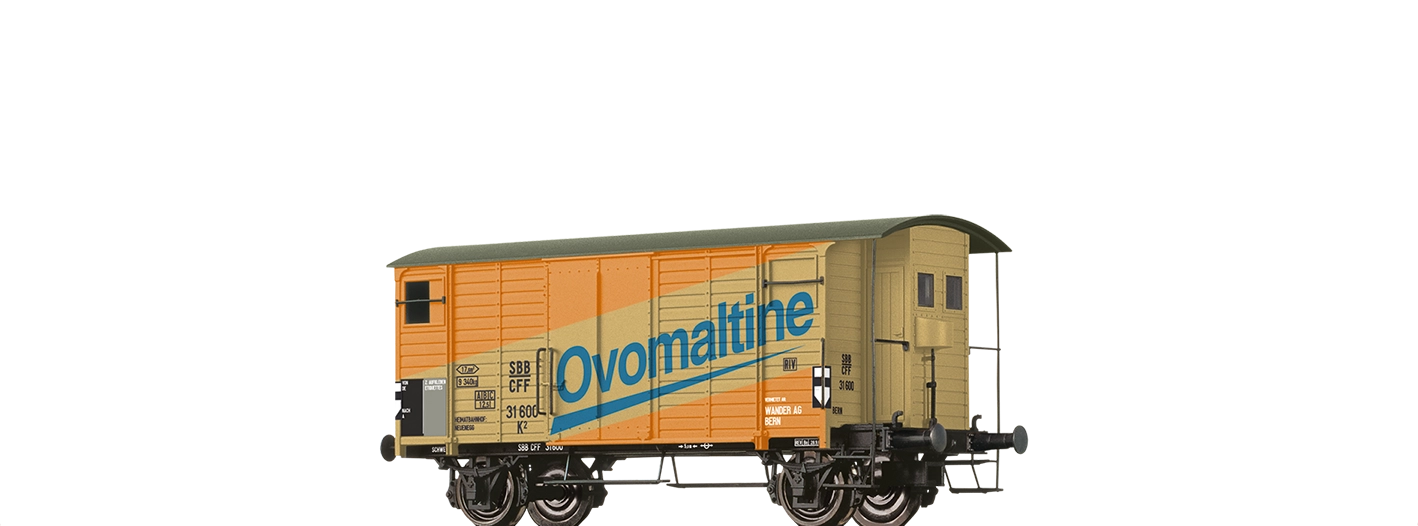
Prototype The Swiss began standardising some types of goods wagons at an early stage. They were then also procured by all private railways in order to improve repairs and spare part stock-keeping. They included closed goods wagons with a 4.5 m wheel base and a frame length of 7.10 m. Later, the wheel base was increased to 5 m in order to improve the running characteristics. In this form, high numbers of the wagons that were given the K2 designation were procured by SBB. Model Precise replica of board joints Finely engraved fan grill Precise paintwork and painting NEM-standard short-coupling Metal wheels True to original frame construction
In stock: 1 on the shelf, shipped within 1-3 days

1 x Wooden-mast Light, Pin-Socket (LED) Height 88 mm Simple handling Time-consuming cable connections between the lamp and the socket are not necessary The lamp can be tilted in the socket up to 10° to compensate for uneven terrain Can be separated electrically Compatible to each other Load-carrying parts made from brass Filigree lattice work Multi-part lampheads Intricately handpainted
In stock, shipped within 1-3 days

1 x Platform Light, Pin-Socket (LED) Height 70 mm Simple handling Time-consuming cable connections between the lamp and the socket are not necessary The lamp can be tilted in the socket up to 10° to compensate for uneven terrain Can be separated electrically Compatible to each other Load-carrying parts made from brass Filigree lattice work Multi-part lampheads Intricately handpainted
In stock: 5 on the shelf, shipped within 1-3 days

1 x Street Light, Pin-Socket (LED) Height 58 mm Simple handling Time-consuming cable connections between the lamp and the socket are not necessary The lamp can be tilted in the socket up to 10° to compensate for uneven terrain Can be separated electrically Compatible to each other Load-carrying parts made from brass Filigree lattice work Multi-part lampheads Intricately handpainted
In stock: 5 on the shelf, shipped within 1-3 days

1 x Telephone Box Swisscom Height 33 mm With lighting Spare bulb 3268
In stock: 1 on the shelf, shipped within 1-3 days
The Brawa families
Rolling stock
 210 itemsLocomotivesLocomotives in H0 and N, from the DB AG TRAXX BR 147 to the DR BR 132.See the items
 56 itemsRailcars and multiple unitsTWINDEXX Vario double-deck trains in N, DRG VT 137 diesel railcar in H0.See the items
 360 itemsPassenger coachesDB express coaches, SBB coaches and complete trains in H0 and N.See the items
 448 itemsFreight wagonsCovered wagons, container wagons and luggage vans, including the SBB K2 "Ovomaltine".See the items
Scenery and cable cars
 117 itemsLighting and scenery accessoriesWooden-mast lights, park lanterns and LED wall lights, clocks and telephone boxes.See the items
 12 itemsCable carsNebelhorn, Hahnenkamm, Kanzelwand, Titlis and chairlift, in H0 and N.See the items
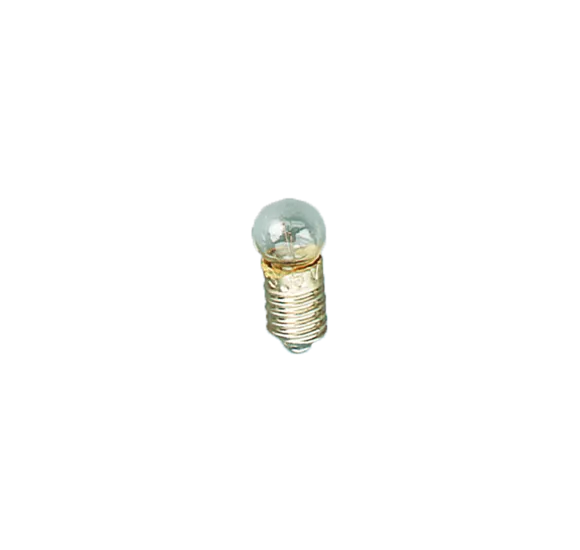
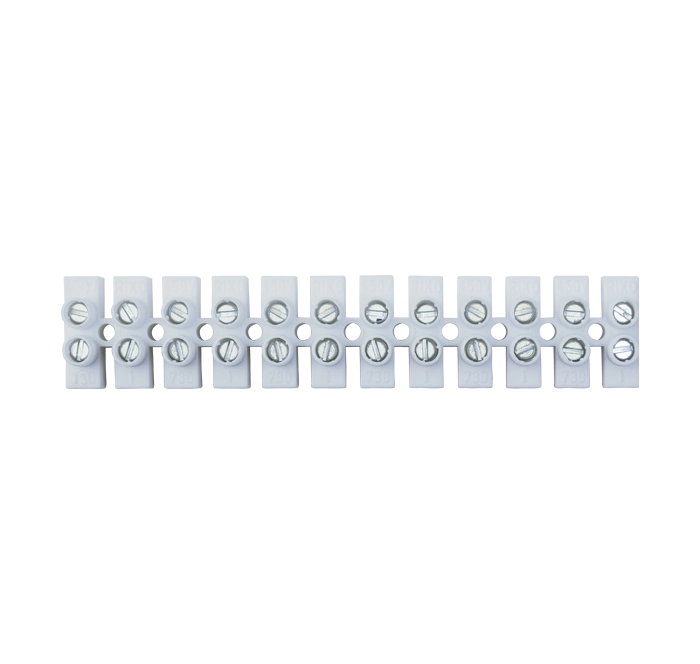
Bulbs and wiring
All Brawa items

Prototype For the transport of moisture-sensitive goods, such as lime, the railways introduced so-called “Lidded Freight Cars” in various designs from a very early stage. In the second half of the 1920s, the development of this car type resulted in the K Elberfeld 80 001 ff., which met the requirements for the “Austauschbauart” (a design based on standardised components) that were valid at that time, and was standardised accordingly. The freight car had a length of 8.1 m (without handbrake) and 8.8 m (with handbrake), as well as the short 4 m wheel base that was typical for this period and had a maximum load of 17.5 t. In order to withstand this weight, the side panels and hinge lid were strengthened with prominent crossed beads. While the original paint was RAL 8012, with the undercarriage and offset fittings in RAL 9005, this quickly changed to light grey streaks when loaded with lime. The 991 freigt cars delivered by 1933 were also the last cars to be built in series. Although the lidded freight cars could be loaded mechanically, they could only be unloaded manually. As a result, the development of selfunloading cars for the transport of similar goods was already underway in the days of the Reichsbahn, and there were no significant new developments after the K25. Nevertheless, the vehicles classified by the Bundesbahn (Federal Railway) as K25 remained in regular service until the end of the 1960s and, in isolated cases, for even longer as service vehicles. Model Metal axle holders interchangeable type Individually mounted brake systems True to original construction differences Finely engraved rivets True to scale construction
On order, shipped within 10-15 days

Prototype Together with Waggon Union, Deutsche Bundesbahn (DB) developed a new twin-axle container wagon for powdered goods with two standing containers. Westwagon delivered the first 10 wagons to DB for testing in 1953. As they still had a Hik-brake system, these were designated as Kd 54. In addition, they featured a double-hook drive, as did the 150 wagons that followed from Talbot and Westwaggon. Since this led to problems associated with the unique undercarriage construction, all subsequent deliveries were equipped with running gear with single hooks. After only 50 carriages, the container volume was increased to 2 x 13.5 m³. These carriages proved themselves with aplomb – by 1965, a total of 1,232 Kds 54 had been purchased. For lighter powdered goods, 1293 Kds 56 units with 2 x 17.5 m³ containers were built in parallel. The extra volume of 4 m³ resulted in larger containers and wagons that were correspondingly taller. To secure the parked wagons, some of the Kds 54/56 were equipped with a handbrake that could be operated from the platform. Unlike DB’s other newly constructed freight cars, whose hand-brake platforms were bolted to the undercarriage, they were directly integrated on these vehicles. In this way, the length over buffers of wagons equipped in such a manner remained unchanged and only the dead weight was increased. Compared with the total number of more than 2,500 wagons built, Kds 54/56 wagons equipped with a handbrake were comparatively rare. With the introduction of the 12-digit UIC number, the Kds 54 wagons were redesignated as Ucs 908, and the Kds 56 as Ucs 909. For many years, both types formed the backbone of the Deutsche Bahn’s powder wagon stock. The first reductions in stock occurred in 1967 when 86 wagons were sold. Further sales to EVA and VTG followed in later years. In the 1990s, DB AG relocated most of its wagons to its subsidiary MEG. The remaining DB AG wagons were mostly rented out or used, for example, for the internal transport of traction sand for tractive units. Other than cement, the wagons have also been used to transport several other powdered goods over the years. These include: stone dust, silica sand, kieserite, gypsum, sodium sulphate, Thomas sulphate, sugar, salt and aluminium hydroxide. The wagons were then generally home-based at a railway station. Model Open view between the containers Individually mounted container cover and valves Brake blocks in wheel plane Individually mounted steps Individually mounted axle brake rod True to original brake unit NEM-standard short-coupling
On order, shipped within 10-15 days

Prototype Before the war, standardised large containers were already beginning to be transported right to the customer with rail and road vehicles. The outbreak of the Second World War stopped the further spread of the system, however. In 1949, the Deutsche Bundesbahn (DB) returned to the "pa" container system (pa: French abbreviation for "porteur am nager") and decided to introduce it on a large scale. While the containers were newly constructed, the DB fell back on underframes of various pre-war wagons that were available in ample numbers, but had suffered war damage to the superstructures. During the conversion work, undercarriages from Omm 34, which were classified as BT(hs) 30, were used in a common number range with BT wagons repurposed from other donor wagons. After the refurbishing of a total of 273 BT 30, the exclusively new construction of container waggons started in 1952. Shortly after being renumbered in Lb(r)s 577, the last refurbished BT 30 waggons were taken out of service in 1971. There were numerous open and closed containers for the greatest variety of cargoes, and moreover, there were special containers for liquids, foodstuffs such as beer, and for the transport of frozen goods. From the end of the 60s, increasingly crowded out by the emerging containers, transport with the "pa" containers ceased at the end of the 90s. Model With 3 containers Brake shoes in wheel plane Three-point support Model with transition platform or hand-brake platform Perforated coach body supports Wheelsets in toe bearing True to original frame construction Individually mounted axle brake frame and axle box cover Perforated frame Extra mounted brake system, handrails and steps
On order, lead time to be confirmed

Prototype Before the war, standardised large containers were already beginning to be transported right to the customer with rail and road vehicles. The outbreak of the Second World War stopped the further spread of the system, however. In 1949, the Deutsche Bundesbahn (DB) returned to the "pa" container system (pa: French abbreviation for "porteur am nager") and decided to introduce it on a large scale. While the containers were newly constructed, the DB fell back on underframes of various pre-war wagons that were available in ample numbers, but had suffered war damage to the superstructures. During the conversion work, undercarriages from Omm 34, which were classified as BT(hs) 30, were used in a common number range with BT wagons repurposed from other donor wagons. After the refurbishing of a total of 273 BT 30, the exclusively new construction of container waggons started in 1952. Shortly after being renumbered in Lb(r)s 577, the last refurbished BT 30 waggons were taken out of service in 1971. There were numerous open and closed containers for the greatest variety of cargoes, and moreover, there were special containers for liquids, foodstuffs such as beer, and for the transport of frozen goods. From the end of the 60s, increasingly crowded out by the emerging containers, transport with the "pa" containers ceased at the end of the 90s. Model With 3 containers Brake shoes in wheel plane Three-point support Model with transition platform or hand-brake platform Perforated coach body supports Wheelsets in toe bearing True to original frame construction Individually mounted axle brake frame and axle box cover Perforated frame Extra mounted brake system, handrails and steps
On order, shipped within 10-15 days

Prototype Before the war, standardised large containers were already beginning to be transported right to the customer with rail and road vehicles. The outbreak of the Second World War stopped the further spread of the system, however. In 1949, the Deutsche Bundesbahn (DB) returned to the "pa" container system (pa: French abbreviation for "porteur am nager") and decided to introduce it on a large scale. While the containers were newly constructed, the DB fell back on underframes of various pre-war wagons that were available in ample numbers, but had suffered war damage to the superstructures. During the conversion work, undercarriages from Omm 34, which were classified as BT(hs) 30, were used in a common number range with BT wagons repurposed from other donor wagons. After the refurbishing of a total of 273 BT 30, the exclusively new construction of container waggons started in 1952. Shortly after being renumbered in Lb(r)s 577, the last refurbished BT 30 waggons were taken out of service in 1971. There were numerous open and closed containers for the greatest variety of cargoes, and moreover, there were special containers for liquids, foodstuffs such as beer, and for the transport of frozen goods. From the end of the 60s, increasingly crowded out by the emerging containers, transport with the "pa" containers ceased at the end of the 90s. Model With 3 containers Brake shoes in wheel plane Three-point support Model with transition platform or hand-brake platform Perforated coach body supports Wheelsets in toe bearing True to original frame construction Individually mounted axle brake frame and axle box cover Perforated frame Extra mounted brake system, handrails and steps
On order, lead time to be confirmed

Prototype Before the war, standardised large containers were already beginning to be transported right to the customer with rail and road vehicles. The outbreak of the Second World War stopped the further spread of the system, however. In 1949, the Deutsche Bundesbahn (DB) returned to the "pa" container system (pa: French abbreviation for "porteur am nager") and decided to introduce it on a large scale. While the containers were newly constructed, the DB fell back on underframes of various pre-war wagons that were available in ample numbers, but had suffered war damage to the superstructures. During the conversion work, undercarriages from Omm 34, which were classified as BT(hs) 30, were used in a common number range with BT wagons repurposed from other donor wagons. After the refurbishing of a total of 273 BT 30, the exclusively new construction of container waggons started in 1952. Shortly after being renumbered in Lb(r)s 577, the last refurbished BT 30 waggons were taken out of service in 1971. There were numerous open and closed containers for the greatest variety of cargoes, and moreover, there were special containers for liquids, foodstuffs such as beer, and for the transport of frozen goods. From the end of the 60s, increasingly crowded out by the emerging containers, transport with the "pa" containers ceased at the end of the 90s. Model With 3 containers Brake shoes in wheel plane Three-point support Model with transition platform or hand-brake platform Perforated coach body supports Wheelsets in toe bearing True to original frame construction Individually mounted axle brake frame and axle box cover Perforated frame Extra mounted brake system, handrails and steps
On order, shipped within 10-15 days

Prototype Before the war, standardised large containers were already beginning to be transported right to the customer with rail and road vehicles. The outbreak of the Second World War stopped the further spread of the system, however. In 1949, the Deutsche Bundesbahn (DB) returned to the "pa" container system (pa: French abbreviation for "porteur am nager") and decided to introduce it on a large scale. While the containers were newly constructed, the DB fell back on underframes of various pre-war wagons that were available in ample numbers, but had suffered war damage to the superstructures. During the conversion work, undercarriages from Omm 34, which were classified as BT(hs) 30, were used in a common number range with BT wagons repurposed from other donor wagons. After the refurbishing of a total of 273 BT 30, the exclusively new construction of container waggons started in 1952. Shortly after being renumbered in Lb(r)s 577, the last refurbished BT 30 waggons were taken out of service in 1971. There were numerous open and closed containers for the greatest variety of cargoes, and moreover, there were special containers for liquids, foodstuffs such as beer, and for the transport of frozen goods. From the end of the 60s, increasingly crowded out by the emerging containers, transport with the "pa" containers ceased at the end of the 90s. Model With 3 containers Brake shoes in wheel plane Three-point support Model with transition platform or hand-brake platform Perforated coach body supports Wheelsets in toe bearing True to original frame construction Individually mounted axle brake frame and axle box cover Perforated frame Extra mounted brake system, handrails and steps
On order, shipped within 10-15 days

Prototype For the transport of moisture-sensitive goods, such as lime, the railways introduced so-called “Lidded Freight Cars” in various designs from a very early stage. In the second half of the 1920s, the development of this car type resulted in the K Elberfeld 80 001 ff., which met the requirements for the “Austauschbauart” (a design based on standardised components) that were valid at that time, and was standardised accordingly. The freight car had a length of 8.1 m (without handbrake) and 8.8 m (with handbrake), as well as the short 4 m wheel base that was typical for this period and had a maximum load of 17.5 t. In order to withstand this weight, the side panels and hinge lid were strengthened with prominent crossed beads. While the original paint was RAL 8012, with the undercarriage and offset fittings in RAL 9005, this quickly changed to light grey streaks when loaded with lime. The 991 freigt cars delivered by 1933 were also the last cars to be built in series. Although the lidded freight cars could be loaded mechanically, they could only be unloaded manually. As a result, the development of selfunloading cars for the transport of similar goods was already underway in the days of the Reichsbahn, and there were no significant new developments after the K25. Nevertheless, the vehicles classified by the Bundesbahn (Federal Railway) as K25 remained in regular service until the end of the 1960s and, in isolated cases, for even longer as service vehicles. Model Metal axle holders interchangeable type Individually mounted brake systems True to original construction differences Finely engraved rivets True to scale construction
On order, shipped within 10-15 days

Prototype The introduction of welding technology from 1933 onwards increasingly made the Deutsche Reichsbahn (DR) switch to joining the components of their wagons by welding instead of riveting. One of the main advantages of welding technology was the weight saving which could then be used for increasing the cargo weight. In order to respond to the demand for higher speeds in part-load traffic as well, the DR developed the "Gs Oppeln", starting in 1936. Due to its wheel base of 6000mm, its maximum permissible speed could be fixed at 90 km/h. In addition to the missing junction plates that were made superfluous by the welding technology, this wagon type mainly differed in the pointed truss frame required due to the long wheel base. The increasing need for goods wagons due to the war led to the mass production of the "Gs Oppeln" from 1938 onwards. As a result, about 28,000 wagons without and 6,100 wagons with handbrake were built in the following years. Many of the wagons were equipped with a steam heating or even an electric heating system and could therefore be used as part-load wagons in semi-fast and express trains without any problems. After the end of World War II, the wagons were distributed all over Europe and could be found, for example, in the service of the railway administrations of Austria, Czechoslovakia, Poland, or Belgium. The reorganisation of the vehicle numbers of the young Deutsche Bundesbahn in the early fifties of the last century led to the change of "Gs Oppeln" into "Gms 30". Some of the wagons even came into the EUROP wagon pool, thus serving on an international basis. With the emergence of the first newly built goods wagons at the end of the fifties, a decision was made against an expensive general overhaul of the wagons. When the UIC numbering system was introduced, the existing wagons were re-numbered into "Glms 200", and some of them survived until 1979. Model Metal axle bearing Bogie with three-point support True to original frame construction Individually mounted axle box cover Brake blocks in wheel plane Individually mounted handrails Individually mounted steps Individually mounted axle brake rod Individually mounted brake systems Perforated car body supports
On order, shipped within 10-15 days

Prototype The railway has always been a means of transporting large and heavy loads. It was therefore a logical step for the K.E.P.V., after various predecessor designs, to devote itself to the development of rail carriages with larger payloads from around 1910. In accordance with the needs of the time, a rail carriage type was developed that was designed for a loading length of 18 m and a maximum load capacity of 35 t. In various construction lots between 1912 and 1928, the K.P.E.V. – and later the DRG – ordered a total of around 2,650 SSlm (Ce 168) rail carriages based on the Ce 168 master drawing. The filigree strut bracing and carriage floor made of perforated sheet metal were distinctive features of the rail carriages of this era. While most of these carriages were only equipped with handbrakes upon delivery, the units delivered to the DRB were factory fitted with Kunze-Knorr goods-train air brakes. These brakes were retrofitted to many carriages of older manufacture over the years. The vehicle fleet has fluctuated over the years. After the First World War, the total stock was decimated as a result of reparations to France and Belgium, as well as Poland. In the early 1950s, both German state railways still had a combined inventory of approximately 1,000 SSlm 16 / SSlu vehicles. Due to further decommissioning, the number of serviceable carriages fell steadily until the last wagons of this type were withdrawn from service in the 1970s. Model Brake blocks in wheel plane NEM-standard short-coupling Die-cast zinc floor Insertable stakes, individually enclosed Delivery without load Extra mounted steps and handrails Metal wheels Finely detailed chassis Extra mounted axle brake rod Individually mounted toe bearing
On order, shipped within 10-15 days