
H0 and N rolling stock, lighting and cable cars
Brawa, model railways made with care
Locomotives, coaches and wagons in H0 and N, plus street lights, cable cars, bulbs and wiring: the world of a family firm from Waiblingen.
- 1375items in the shop
- H0 and Nthe scales in the range
- 1948the year of the founding
What makes Brawa
- A family firm since 1948: founded by Artur Braun in Waiblingen, in southern Germany, Brawa is run today by the third generation of the family.
- Love of detail: individually fitted handrails, sprung buffers, crisp printing: every model starts from measurements and photographs of the original and a study of the construction drawings.
- Sturdy locomotives: most are largely die-cast zinc, for weight and robustness, for DC or AC, with sound and, on steam locomotives, smoke.
- Cable cars and lighting: H0 cable cars are a house speciality, starting with the Nebelhorn cableway in Oberstdorf; lamps and signals follow, with load-bearing parts made of brass or etched sheet.
Our favourites

Prototype Even before World War I, plans were being made in Prussia to electrify several mountain railways in Silesia, including the so-called “Zackenbahn” (named after the Zacken River) between Hirschberg and Polaun. Given the difficult topographical conditions, this new form of traction promised considerable savings and more cost-effective operation. However, the outbreak of World War I prevented the work from being completed quickly, and it was not until 1923 that continuous operation began. Since operating trains pulled by locomotives was very cumbersome due to fluctuating traffic volumes, considerations were made early on to switch to railcars. The suitability of the ET 88, originally procured for suburban transport in Berlin, prompted the DRG to procure additional four-axle electric railcars. In 1926-1927, LHW Breslau and WUMAG in Görlitz, in collaboration with SSW-Werke, delivered a total of 11 railcars that were to become the symbol of electric train transport in Silesia. The distinctive vehicles with their open entrance platforms were christened “Rübezahl” by the local population, a name that actually refers to a moody mountain spirit from the Giant Mountains. The railcars, which were initially painted green and designated “Breslau 511-521,” were always used in pairs with up to eight light standard branch line cars as trailers. Due to low demand, a single railcar operated between Josephinenhütte and Grünthal. The greatest rush of passengers was on weekends when the weather was nice and during the winter sports season. Up to three railcars with twelve trailers then operated as a train. At the beginning of the 1930s, the railcars were given the new designation elt 1011-1019 and a two-tone paint scheme. In 1941, the four-axle railcars were given their final numbers and became ET 89 01-11. With the exception of ET 89 11, which had to be taken out of service in 1943 due to an accident, all of them survived the war and the end of electric train transport in Silesia. Four railcars were transferred to PKP, but were not used there. The exact whereabouts of three others are unknown. ET 89 01, 04, and 07 ended up in the western occupation zones and thus became part of the DB fleet, which was founded in 1949. Only ET 89 04 was refurbished and served at the Munich Central Station depot. Initially still listed as 2nd and 3rd class cars, later photos show it as a pure 3rd class vehicle, which then exclusively carried 2nd class passengers after the class reform in 1956. On September 2, 1959, its final hour arrived – ET 89 04 was the last of its kind to be taken out of service and dismantled shortly thereafter, leaving only a few photos to remind us of these unique railcars. Model Illuminated upper carriage lanterns and tail lights Separately switchable interior lighting Separately switchable third headlight New motor New sound
In stock: 1 on the shelf, shipped within 1-3 days

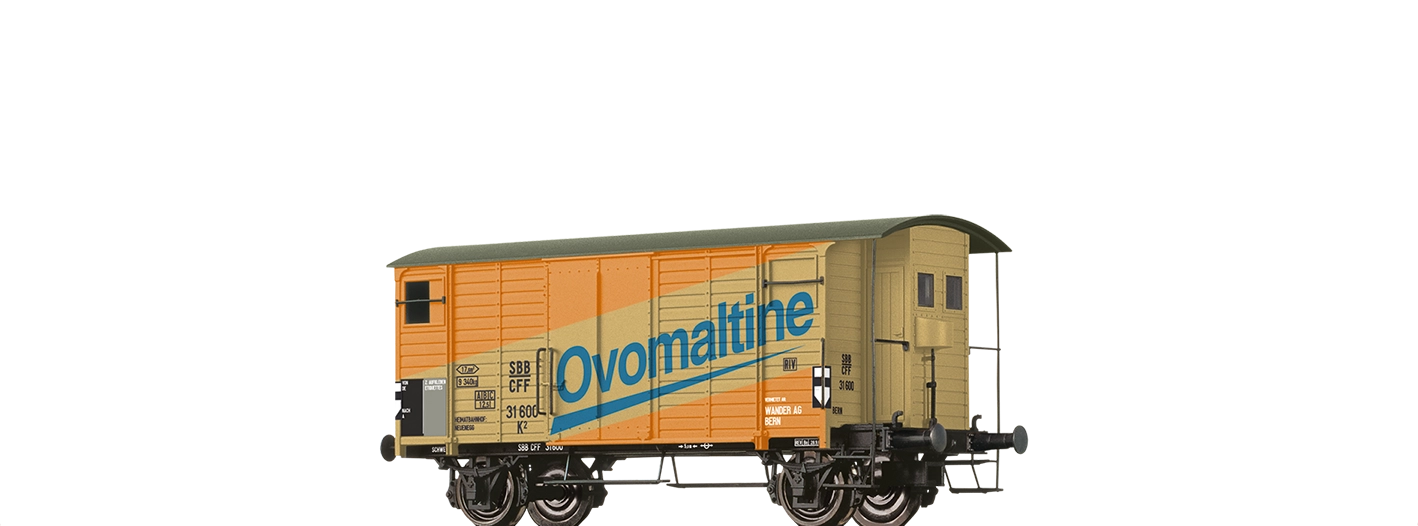
Prototype The Swiss began standardising some types of goods wagons at an early stage. They were then also procured by all private railways in order to improve repairs and spare part stock-keeping. They included closed goods wagons with a 4.5 m wheel base and a frame length of 7.10 m. Later, the wheel base was increased to 5 m in order to improve the running characteristics. In this form, high numbers of the wagons that were given the K2 designation were procured by SBB. Model Precise replica of board joints Finely engraved fan grill Precise paintwork and painting NEM-standard short-coupling Metal wheels True to original frame construction
In stock: 1 on the shelf, shipped within 1-3 days

1 x Wooden-mast Light, Pin-Socket (LED) Height 88 mm Simple handling Time-consuming cable connections between the lamp and the socket are not necessary The lamp can be tilted in the socket up to 10° to compensate for uneven terrain Can be separated electrically Compatible to each other Load-carrying parts made from brass Filigree lattice work Multi-part lampheads Intricately handpainted
In stock, shipped within 1-3 days

1 x Platform Light, Pin-Socket (LED) Height 70 mm Simple handling Time-consuming cable connections between the lamp and the socket are not necessary The lamp can be tilted in the socket up to 10° to compensate for uneven terrain Can be separated electrically Compatible to each other Load-carrying parts made from brass Filigree lattice work Multi-part lampheads Intricately handpainted
In stock: 5 on the shelf, shipped within 1-3 days

1 x Street Light, Pin-Socket (LED) Height 58 mm Simple handling Time-consuming cable connections between the lamp and the socket are not necessary The lamp can be tilted in the socket up to 10° to compensate for uneven terrain Can be separated electrically Compatible to each other Load-carrying parts made from brass Filigree lattice work Multi-part lampheads Intricately handpainted
In stock: 5 on the shelf, shipped within 1-3 days

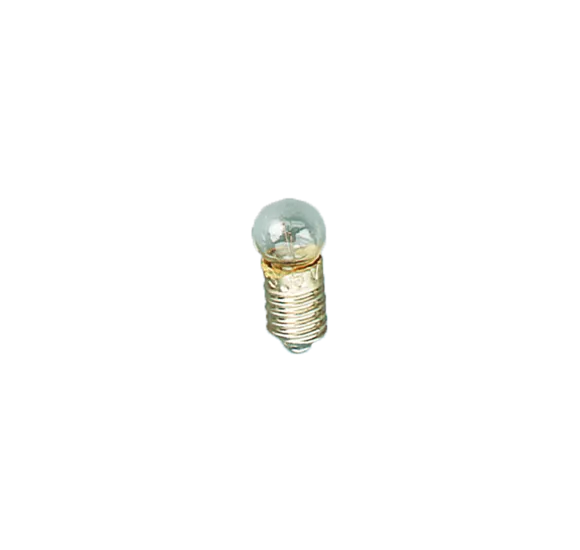
1 x Telephone Box Swisscom Height 33 mm With lighting Spare bulb 3268
In stock: 1 on the shelf, shipped within 1-3 days
The Brawa families
Rolling stock
 210 itemsLocomotivesLocomotives in H0 and N, from the DB AG TRAXX BR 147 to the DR BR 132.See the items
 56 itemsRailcars and multiple unitsTWINDEXX Vario double-deck trains in N, DRG VT 137 diesel railcar in H0.See the items
 360 itemsPassenger coachesDB express coaches, SBB coaches and complete trains in H0 and N.See the items
 448 itemsFreight wagonsCovered wagons, container wagons and luggage vans, including the SBB K2 "Ovomaltine".See the items
Scenery and cable cars
 117 itemsLighting and scenery accessoriesWooden-mast lights, park lanterns and LED wall lights, clocks and telephone boxes.See the items
 12 itemsCable carsNebelhorn, Hahnenkamm, Kanzelwand, Titlis and chairlift, in H0 and N.See the items
Bulbs and wiring
All Brawa items

Prototype The railway has always been a means of transporting large and heavy loads. It was therefore a logical step for the K.E.P.V., after various predecessor designs, to devote itself to the development of rail carriages with larger payloads from around 1910. In accordance with the needs of the time, a rail carriage type was developed that was designed for a loading length of 18 m and a maximum load capacity of 35 t. In various construction lots between 1912 and 1928, the K.P.E.V. – and later the DRG – ordered a total of around 2,650 SSlm (Ce 168) rail carriages based on the Ce 168 master drawing. The filigree strut bracing and carriage floor made of perforated sheet metal were distinctive features of the rail carriages of this era. While most of these carriages were only equipped with handbrakes upon delivery, the units delivered to the DRB were factory fitted with Kunze-Knorr goods-train air brakes. These brakes were retrofitted to many carriages of older manufacture over the years. The vehicle fleet has fluctuated over the years. After the First World War, the total stock was decimated as a result of reparations to France and Belgium, as well as Poland. In the early 1950s, both German state railways still had a combined inventory of approximately 1,000 SSlm 16 / SSlu vehicles. Due to further decommissioning, the number of serviceable carriages fell steadily until the last wagons of this type were withdrawn from service in the 1970s. Model Brake blocks in wheel plane NEM-standard short-coupling Die-cast zinc floor Insertable stakes, individually enclosed Delivery without load Extra mounted steps and handrails Metal wheels Finely detailed chassis Extra mounted axle brake rod Individually mounted toe bearing
On order, shipped within 10-15 days

Prototype Innofreight, as the name suggests, is fully committed to innovation in rail freight transport. The company claims that its self-developed InnoWaggons allow freight transport on the railways to be organised more efficiently than ever before. Innofreight achieves this efficiency by offering its InnoWaggons in three different lengths: 2x30 ft, 2x40 ft and 2x45 ft. Each vehicle consists of two short-coupled carrying wagons. The InnoWaggons can be fitted with a variety of different superstructures and transport racks by means of standardised folding container spigots. The wagons can thus be individually equipped and loaded for each customer and, if required, even for each transport assignment. This is certainly a very far-sighted innovation, especially given the increasingly complex approval procedures for rail vehicles. Model Replica of all three InnoWaggons double carriages Replica of the latest generation Y25 bogie Extra mounted brake-switch Fine engravings NEM-standard short-coupling True-to-original replica of the car bottom Wheelsets with inside contours Bogie with three-point support Without loading, for free arrangement
On order, shipped within 10-15 days

Prototype On their way to Switzerland and onwards to Italy countless luxury passengers from Great Britain and The Netherlands used CIWL couchette cars of CIWL through France. DRG was very interested in “redirecting” this wealthy clientele to their routes. For this reason it introduced a luxury day train with the name “Rheingold Express” in 1928 between Hoek van Holland/Amsterdam and Basel SBB. From 1929 the train service was extended in the summer to Lucerne and Zurich. The extent of the competitive pressure can be seen in the fact that CIWL reacted to the DRG offensive as early as 1928 with its own day train “Edelweiss” via Brussels Luxembourg, Strasbourg. When designing the train, DRG took reference to the similar CIWL day trains. The interior included open-plan cars and in some cases partially divided compartments, in first cases even with freestanding benches. Each car had a different decor made of different precious woods or cloth-covered walls and ceilings. The exterior of the train was a dark violet – ebony coloured special paint. Thus 26 cars were produced in four different versions (each in 1st and 2nd class with and without galley), as well as three luggage wagons. A train generally consists of five carriages – one carriage each with and without kitchen in first and second class (one galley served two cars) as well as a luggage wagon. Since at that time the luggage wagon still had to run as a protective wagon behind the locomotive, when changing direction in Mannheim, an additional luggage wagon was needed. For this, DRG repainted two Prussian and Baden-Wurttemberg cars according to the Rheingold colour scheme. In the Netherlands the traction was transferred to the 3700 and 3900 series. On the German section, for many years the BR 184-5 of the Mainz railway depot ran as far as Mannheim. From 1936 the new Deutzerfelder 01 pull the Rheingold Express. Offenburger 183 transport the train on the southern section, having already been replaced by the BR 01 in 1930. From Basel, Ae 4/7 bring the train into the interior of Switzerland in the summer. When the war started in 1939, the luxury train was stopped without a replacement. Model Boiler, driver's cab and tender made of high-quality, impact-resistant plastic Perforated underframe and spoked wheels in die-cast zinc Smoke generator and sound decoder, either built in or as a retrofit option Illuminated driver's cab True-to epoch lighting, multipart lamp housing Standard shaft rear with link guide Close coupling between locomotive and tender Replicated back boilerplate Fine paintwork and painting Lines and extra mounted parts in minimum material thickness Extra mounted steps 850 mm leading wheels Valve gear holder in welded design Tender 2'2' T32 Passenger Coaches (Digital Version): Entry lighting Roof and table lighting Operating and kitchen sound
On order, lead time to be confirmed

Prototype The East-German National Railway (Deutsche Reichsbahn) was constantlystriving to expand and upgrade its vehicle fleet. The Gm(h)s Bremen can thus be seen as the successor to the Gms Oppeln design. Representing the state of the art, the Gm(h)s Bremen wagons were manufactured from 1943 onwards in a welded design and had an extremely long wheelbase of seven metres to ensure the required smooth running. In addition, 260 mm-high solebars were used for the first time, which were lighter and reduced costs by around 25% compared to the predecessor design, the Gms Oppeln. The exact number of wagons delivered by the end of the war is unknown. Based on the existing inventories, however, it can be assumed that at least 7,230 units were acquired by various state railways. In 1949, with growing transport volumes creating an urgent need to replace the large numbers of goods wagons lost during the war, the head office of the Reichsbahn in the British/US zone placed new orders that prompted the resumption of production of the Gm(h)s 35. In terms of the design, there were only minor changes compared to the original version. Without doubt, the most striking of these were the new vertical strut on the loading door and the omission of the front diagonals. The Deutsche Bundesbahn’s (DB) inventory was thus expanded by an additional 5,925 Gm(h)s wagons by the end of 1950. In the Soviet zone, the Deutsche Reichsbahn resumed production at the end of 1945 and classified these wagons as Gmhs 11. The Reichsbahn accumulated a total stock of about 800 wagons of this type, of which a large number were modernised at the Reichsbahn repair shed Magdeburg from 1967 onwards. The upgrades included UIC sliding loading doors and ventilation hatches as well as cladding on the upper third of the side panels. The wagons were also fitted with metal roofs and converted to wheel sets with roller bearings. Model Metal axle bearing Different design of the car bodies True to original frame construction Individually mounted axle box cover Brake blocks in wheel plane Individually mounted handrails, steps and brake systems Individually mounted axle brake rod Perforated car body supports
On order, shipped within 10-15 days