
H0 and N rolling stock, lighting and cable cars
Brawa, model railways made with care
Locomotives, coaches and wagons in H0 and N, plus street lights, cable cars, bulbs and wiring: the world of a family firm from Waiblingen.
- 1375items in the shop
- H0 and Nthe scales in the range
- 1948the year of the founding
What makes Brawa
- A family firm since 1948: founded by Artur Braun in Waiblingen, in southern Germany, Brawa is run today by the third generation of the family.
- Love of detail: individually fitted handrails, sprung buffers, crisp printing: every model starts from measurements and photographs of the original and a study of the construction drawings.
- Sturdy locomotives: most are largely die-cast zinc, for weight and robustness, for DC or AC, with sound and, on steam locomotives, smoke.
- Cable cars and lighting: H0 cable cars are a house speciality, starting with the Nebelhorn cableway in Oberstdorf; lamps and signals follow, with load-bearing parts made of brass or etched sheet.
Our favourites

Prototype Even before World War I, plans were being made in Prussia to electrify several mountain railways in Silesia, including the so-called “Zackenbahn” (named after the Zacken River) between Hirschberg and Polaun. Given the difficult topographical conditions, this new form of traction promised considerable savings and more cost-effective operation. However, the outbreak of World War I prevented the work from being completed quickly, and it was not until 1923 that continuous operation began. Since operating trains pulled by locomotives was very cumbersome due to fluctuating traffic volumes, considerations were made early on to switch to railcars. The suitability of the ET 88, originally procured for suburban transport in Berlin, prompted the DRG to procure additional four-axle electric railcars. In 1926-1927, LHW Breslau and WUMAG in Görlitz, in collaboration with SSW-Werke, delivered a total of 11 railcars that were to become the symbol of electric train transport in Silesia. The distinctive vehicles with their open entrance platforms were christened “Rübezahl” by the local population, a name that actually refers to a moody mountain spirit from the Giant Mountains. The railcars, which were initially painted green and designated “Breslau 511-521,” were always used in pairs with up to eight light standard branch line cars as trailers. Due to low demand, a single railcar operated between Josephinenhütte and Grünthal. The greatest rush of passengers was on weekends when the weather was nice and during the winter sports season. Up to three railcars with twelve trailers then operated as a train. At the beginning of the 1930s, the railcars were given the new designation elt 1011-1019 and a two-tone paint scheme. In 1941, the four-axle railcars were given their final numbers and became ET 89 01-11. With the exception of ET 89 11, which had to be taken out of service in 1943 due to an accident, all of them survived the war and the end of electric train transport in Silesia. Four railcars were transferred to PKP, but were not used there. The exact whereabouts of three others are unknown. ET 89 01, 04, and 07 ended up in the western occupation zones and thus became part of the DB fleet, which was founded in 1949. Only ET 89 04 was refurbished and served at the Munich Central Station depot. Initially still listed as 2nd and 3rd class cars, later photos show it as a pure 3rd class vehicle, which then exclusively carried 2nd class passengers after the class reform in 1956. On September 2, 1959, its final hour arrived – ET 89 04 was the last of its kind to be taken out of service and dismantled shortly thereafter, leaving only a few photos to remind us of these unique railcars. Model Illuminated upper carriage lanterns and tail lights Separately switchable interior lighting Separately switchable third headlight New motor New sound
In stock: 1 on the shelf, shipped within 1-3 days

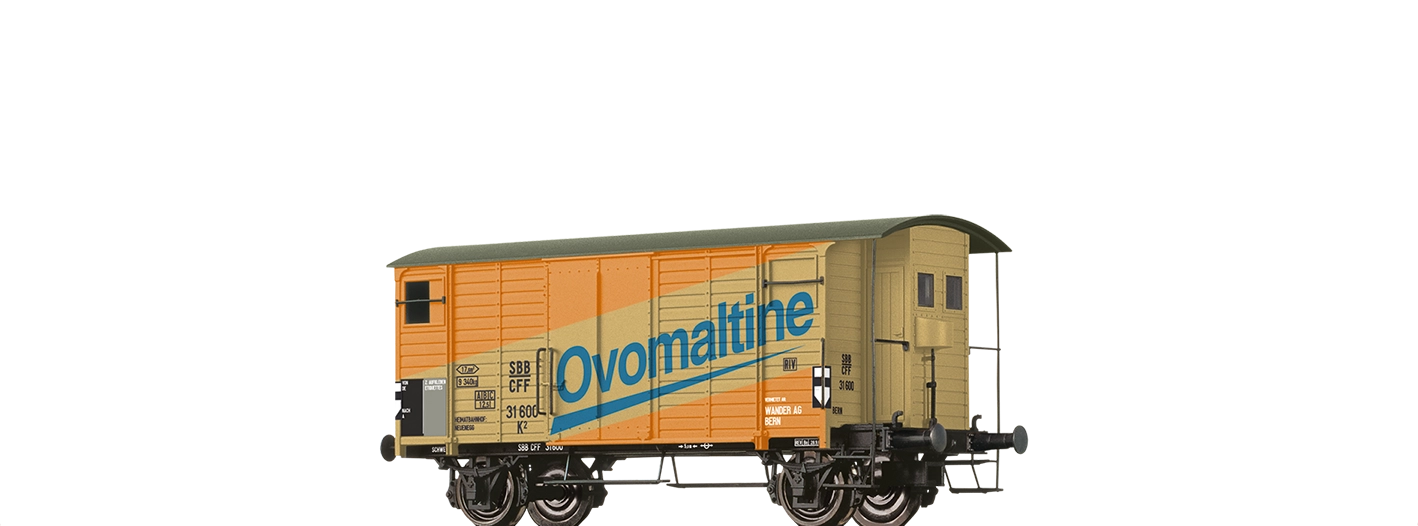
Prototype The Swiss began standardising some types of goods wagons at an early stage. They were then also procured by all private railways in order to improve repairs and spare part stock-keeping. They included closed goods wagons with a 4.5 m wheel base and a frame length of 7.10 m. Later, the wheel base was increased to 5 m in order to improve the running characteristics. In this form, high numbers of the wagons that were given the K2 designation were procured by SBB. Model Precise replica of board joints Finely engraved fan grill Precise paintwork and painting NEM-standard short-coupling Metal wheels True to original frame construction
In stock: 1 on the shelf, shipped within 1-3 days

1 x Wooden-mast Light, Pin-Socket (LED) Height 88 mm Simple handling Time-consuming cable connections between the lamp and the socket are not necessary The lamp can be tilted in the socket up to 10° to compensate for uneven terrain Can be separated electrically Compatible to each other Load-carrying parts made from brass Filigree lattice work Multi-part lampheads Intricately handpainted
In stock, shipped within 1-3 days

1 x Platform Light, Pin-Socket (LED) Height 70 mm Simple handling Time-consuming cable connections between the lamp and the socket are not necessary The lamp can be tilted in the socket up to 10° to compensate for uneven terrain Can be separated electrically Compatible to each other Load-carrying parts made from brass Filigree lattice work Multi-part lampheads Intricately handpainted
In stock: 5 on the shelf, shipped within 1-3 days

1 x Street Light, Pin-Socket (LED) Height 58 mm Simple handling Time-consuming cable connections between the lamp and the socket are not necessary The lamp can be tilted in the socket up to 10° to compensate for uneven terrain Can be separated electrically Compatible to each other Load-carrying parts made from brass Filigree lattice work Multi-part lampheads Intricately handpainted
In stock: 5 on the shelf, shipped within 1-3 days

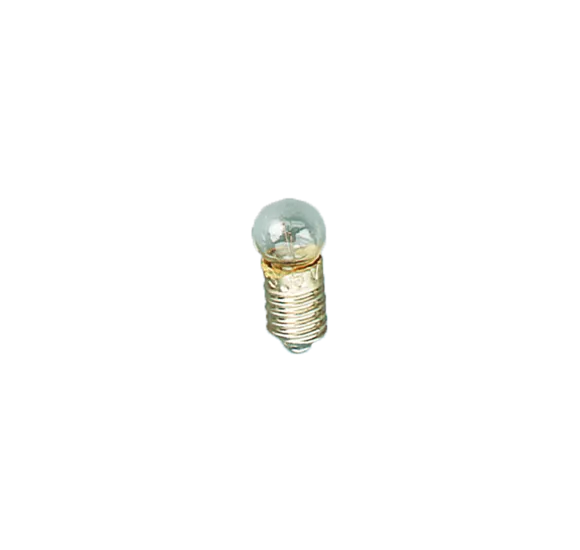
1 x Telephone Box Swisscom Height 33 mm With lighting Spare bulb 3268
In stock: 1 on the shelf, shipped within 1-3 days
The Brawa families
Rolling stock
 210 itemsLocomotivesLocomotives in H0 and N, from the DB AG TRAXX BR 147 to the DR BR 132.See the items
 56 itemsRailcars and multiple unitsTWINDEXX Vario double-deck trains in N, DRG VT 137 diesel railcar in H0.See the items
 360 itemsPassenger coachesDB express coaches, SBB coaches and complete trains in H0 and N.See the items
 448 itemsFreight wagonsCovered wagons, container wagons and luggage vans, including the SBB K2 "Ovomaltine".See the items
Scenery and cable cars
 117 itemsLighting and scenery accessoriesWooden-mast lights, park lanterns and LED wall lights, clocks and telephone boxes.See the items
 12 itemsCable carsNebelhorn, Hahnenkamm, Kanzelwand, Titlis and chairlift, in H0 and N.See the items
Bulbs and wiring
All Brawa items

Prototype Following the models 130 (maximum speed 140 km/h) and 131 (100 km/h), the DB put the 132 model (120 km/h) into service after 1974 with the electric heating system. Thanks to its configuration, the DR had found its optimum machine. This is why the DR acquired 709 locomotives from the factory in Woroschilowgrad. After a few initial teething problems, the technical service finally had a reliable and multifunctional machine. Model Rear signals True to original sound True-to-original speed 5-pole motor All axles driven Standard shaft to NEM 355 Reproduction of cooling van Finely engraved details
On order, shipped within 10-15 days

2 red cars with passenger 2×6281 2 yellow cars with passenger 2×6279 2 blue cars with passenger 2×6282 1 center mast, 190 mm high 6283 1 drive unit, upper station, complete with subframe 6285 1 complete cable guide section, lower station 6289 1 cable, 10 m long 6292 AC connection 8 - 16 V Presentation pack, without building kit. Suitable for NOCH layout 9927. Length can be increased.
On order, shipped within 10-15 days

Mountain station W 120 mm/L 185 mm Valley Station W 110 mm/L 150 mm Does not include balcony railing.
On order, shipped within 10-15 days

Prototype After the annexation of Austria, the E44 locomotives were supposed to be used also on the alpine routes of the „Ostmark“. In order to minimize the brake block wear during downhill ride, the installation of an electric dynamic brake was required. The German National Railway (DRB) ordered such an additional device for the machines of the batch E44 152 - 191 and referred to the subtype as E44W for „Widerstandsbremse“ (dynamic brake). Because of the war, only the models E44W 152 - 183 were delivered between 1943 and 1951. Externally, the machines attracted attention primarily by the roof- mounted vent stacks of the dynamic brakes. After 1945, the German Railway (DB) maintained the dynamic brake only for the 16 Freiburg- based locomotives, which were used on the Höllental railway track, and referred to these as E44.11 from 1962 onwards, and as BR 145 after 1968. On all other machines, the electric brake was removed or, in case of a damage, decommissioned. The machines E44 1170 and 1180 survived; we can only hope that one of them will once again „hum“ past the Hirschsprung (location where a stag is said to have leapt over the Höllental). Model Detailed body Fine engravings and rivets Many extra mounted parts, such as handles, ladders and multi-part cooling coil Reproduction of the driver´s cab Precise replica of the bogies Separately mounted brake cylinder, brake pull rod, sand box and cowcatcher Precise replica of the roof, versions with normal and extended roof Prototypical roof-fittings, with many individually mounted parts Free-standing roof lines Various insulators Different main switch types Finely detailed pantographs True-to-original length of the roof walkways Bogie with three-point support Fine paintwork and painting 3rd front light can be switched on or off also in analog mode Driver's cab with LED lighting and in the sound version also in the machine room NEM-standard short coupling Analog models with Next18 interface Soundversion: all light functions can be switched on and off in digital mode, also machine roof lighting; optimal motor and load control for perfect running characteristics; noiseless 16-bit sound with up to 8 independent channels thanks to latest sound technology and excellent sound characteristics; compatible with all established digital systems (DCC, Motorola, SX1 und SX2); sound decoder on the main circuit board Modell: pantograph type SBS 39; main swith type R 628; with 8 sand boxes, indusi and extended roof; with dynamic brake for the first time in a model (deviating photo)
On order, shipped within 10-15 days

Detailed body Fine engravings and rivets Many extra mounted parts, such as handles, ladders and multi-part cooling coil Reproduction of the driver´s cab Precise replica of the bogies Separately mounted brake cylinder, brake pull rod, sand box and cowcatcher Precise replica of the roof, versions with normal and extended roof Prototypical roof-fittings, with many individually mounted parts Free-standing roof lines Various insulators Different main switch types Finely detailed pantographs True-to-original length of the roof walkways Bogie with three-point support Fine paintwork and painting 3rd front light can be switched on or off also in analog mode Driver's cab with LED lighting and in the sound version also in the machine room NEM-standard short coupling Analog models with Next18 interface Soundversion: all light functions can be switched on and off in digital mode, also machine roof lighting; optimal motor and load control for perfect running characteristics; noiseless 16-bit sound with up to 8 independent channels thanks to latest sound technology and excellent sound characteristics; compatible with all established digital systems (DCC, Motorola, SX1 und SX2); sound decoder on the main circuit board Modell: pantograph type SBS 39; main swith type R 628; with 8 sand boxes, indusi and extended roof; with dynamic brake for the first time in a model (deviating photo)
On order, lead time to be confirmed

Prototype After the annexation of Austria, the E44 locomotives were supposed to be used also on the alpine routes of the „Ostmark“. In order to minimize the brake block wear during downhill ride, the installation of an electric dynamic brake was required. The German National Railway (DRB) ordered such an additional device for the machines of the batch E44 152 - 191 and referred to the subtype as E44W for „Widerstandsbremse“ (dynamic brake). Because of the war, only the models E44W 152 - 183 were delivered between 1943 and 1951. Externally, the machines attracted attention primarily by the roof- mounted vent stacks of the dynamic brakes. After 1945, the German Railway (DB) maintained the dynamic brake only for the 16 Freiburg- based locomotives, which were used on the Höllental railway track, and referred to these as E44.11 from 1962 onwards, and as BR 145 after 1968. On all other machines, the electric brake was removed or, in case of a damage, decommissioned. The machines E44 1170 and 1180 survived; we can only hope that one of them will once again „hum“ past the Hirschsprung (location where a stag is said to have leapt over the Höllental). Model Detailed body Fine engravings and rivets Many extra mounted parts, such as handles, ladders and multi-part cooling coil Reproduction of the driver´s cab Precise replica of the bogies Separately mounted brake cylinder, brake pull rod, sand box and cowcatcher Precise replica of the roof, versions with normal and extended roof Prototypical roof-fittings, with many individually mounted parts Free-standing roof lines Various insulators Different main switch types Finely detailed pantographs True-to-original length of the roof walkways Bogie with three-point support Fine paintwork and painting 3rd front light can be switched on or off also in analog mode Driver's cab with LED lighting and in the sound version also in the machine room NEM-standard short coupling Analog models with Next18 interface Soundversion: all light functions can be switched on and off in digital mode, also machine roof lighting; optimal motor and load control for perfect running characteristics; noiseless 16-bit sound with up to 8 independent channels thanks to latest sound technology and excellent sound characteristics; compatible with all established digital systems (DCC, Motorola, SX1 und SX2); sound decoder on the main circuit board Modell: pantograph type SBS 39; main swith type R 628; with 8 sand boxes, indusi and extended roof; with dynamic brake for the first time in a model (deviating photo)
On order, shipped within 10-15 days

Detailed body Fine engravings and rivets Many extra mounted parts, such as handles, ladders and multi-part cooling coil Reproduction of the driver´s cab Precise replica of the bogies Separately mounted brake cylinder, brake pull rod, sand box and cowcatcher Precise replica of the roof, versions with normal and extended roof Prototypical roof-fittings, with many individually mounted parts Free-standing roof lines Various insulators Different main switch types Finely detailed pantographs True-to-original length of the roof walkways Bogie with three-point support Fine paintwork and painting 3rd front light can be switched on or off also in analog mode Driver's cab with LED lighting and in the sound version also in the machine room NEM-standard short coupling Analog models with Next18 interface Soundversion: all light functions can be switched on and off in digital mode, also machine roof lighting; optimal motor and load control for perfect running characteristics; noiseless 16-bit sound with up to 8 independent channels thanks to latest sound technology and excellent sound characteristics; compatible with all established digital systems (DCC, Motorola, SX1 und SX2); sound decoder on the main circuit board Modell: pantograph type SBS 39; main swith type R 628; with 4 sand boxes
On order, shipped within 10-15 days

Prototype At the end of the 1920s, it became clear that Deutsche Reichsbahn Gesellschaft (DRG) would have to acquire new electric locomotives, among other things, to accelerate its goods traffic. The need to increase maximum speeds to at least 80 km/h could not be met with the most recently purchased E77 and E75 series since the standard drive technology by means of bars and additional trailing wheelsets did not allow for higher speeds. The good experiences from abroad and with the two Bavarian EG 1 with the Bo’Bo’ two-bogie locomotives convinced the DRG to deviate from single-frame construction as well. The arrival of the world economic crisis in 1929, however, put a halt to this plan by interrupting the cost- intensive electrical expansion of the lines, thus eliminating the need for electric locomotives. The locomotive industry in Germany, however, feared falling behind current developments due to this pause in procurement. They therefore began developing a cheaper design at their own costs. Thus a prototype with the designation E44 70 was created at the Siemens-Schuckert Works (SSW) under the general management of Walter Reichel. This prototype later became the E44 001. SSW was able to integrate its experience with electric arc welding from its production of components for electric generators into locomotive manufacturing, which led to significant savings in materials and manufacturing costs. The prototype’s positive test results convinced DRG to further develop the new locomotive type into a universal locomotive. The result was Germany’s first two-bogie electric locomotive produced in series, which can safely be categorised as the prototype for the subsequently developed standard electric locomotive of Deutsche Bundesbahn (DB). Due to the war the delivery of the locomotives, which were registered for 90 km/h, stretched from 1933 into the postwar period, and Henschel only handed over the last one, a E44 187G, to DB on 29 November 1954. The predominant distribution to central and southern Germany led to the fact that approximately 100 locomotives remained in West Germany and around 50 in East Germany after the war. The most conspicuous design changes at DB were the lengthening of the roof shield for accident prevention and the Indusi (inductive train control system) equipment. The last locomotives, however, remained in service until 1985. Of the original 187 locomotives, only 21 still exist today, partially as museum locomotives and as spare parts donors. Model Detailed body Fine engravings and rivets Many extra mounted parts, such as handles, ladders and multi-part cooling coil Reproduction of the driver´s cab Precise replica of the bogies Separately mounted brake cylinder, brake pull rod, sand box and cowcatcher Precise replica of the roof, versions with normal and extended roof Prototypical roof-fittings, with many individually mounted parts Free-standing roof lines Various insulators Different main switch types Finely detailed pantographs True-to-original length of the roof walkways Bogie with three-point support Fine paintwork and painting 3rd front light can be switched on or off also in analog mode Driver's cab with LED lighting and in the sound version also in the machine room NEM-standard short coupling Analog models with Next18 interface Soundversion: all light functions can be switched on and off in digital mode, also machine roof lighting; optimal motor and load control for perfect running characteristics; noiseless 16-bit sound with up to 8 independent channels thanks to latest sound technology and excellent sound characteristics; compatible with all established digital systems (DCC, Motorola, SX1 und SX2); sound decoder on the main circuit board Modell: pantograph type SBS 39; main swith type R 62; with 8 sand boxes; with dynamic brake for the first time in a model (deviating photo)
On order, shipped within 10-15 days

Prototype Engelberg is a quiet spa in Switzerland, not far away from Lucerne. It serves with an attraction that made worldwide sensation: A cableway that the Swiss thought worth taking up in the “Swiss Miniature” park as one of the most significant sights of the country. The 45-minute ride on Titlis is an experience of special kind. From the smooth green ground of valley it foes up into a high alpine glacier world. He who wants to reach the summit station in 3020 m of altitude, enters the first and new spectacular views of glacier gaps, ice breaks, and rock formations. Impressing mountain panoramas and, with appropriate weather, unique long-range visions consecutively change and shorten the 45-minute ride. For model railroaders a phantastic chance to activate their creativity at the design of pretentious mountain worlds. Model Building set for the mountain and valley station 2 illuminated gondolas 1 middle mast 280 mm 1 hauling and bearer cable Electronic operation (gondola speed can be regulated) Mountain station: width 180 mm, length 170 mm Valley station: width 190 mm, length 210 mm Middle Mast: width 75 mm / length 75 mm AC connection 16 V
On order, lead time to be confirmed
Prototype The Nebelhorn mountain is 2224 m high and is the local mountain of the spa town Oberstdorf in the Bavarian region of Allgäu. In 1927, the Nebelhornbahn AG was founded with the objective of developing the peak of the Nebelhorn for tourism. Construction work commenced one year later and in 1930, the Nebelhorn cableway was finished. When it was opened, it was the longest passenger aerial cableway in the world. The lower cableway, upon which the BRAWA model is based, climbs 452 m over a distance of 2.2 km. The central section gradient is 20.9 %. At a maximum speed of 10 m/s, it can transport 630 persons per hour. Model 2 cars, lighted, with motor-driven Rotating base 1 middle mast 280 mm 1 hauling and bearer cable 6241 1 drive for the mountain station Rope guide on the valley side Gift package without building set AC connection 16 V
On order, shipped within 10-15 days

Mountain station: W 167 mm/L 173 mm Valley station: W 135 mm/L 176 mm The mountain and valley station buildings of the lower Nebelhorn cableway not only contain the technology which is required but also reflect the traditional building style for the region.
On order, shipped within 10-15 days

Prototype The 1,712 metre high Hahnenkamm towers above the well-known Austrian winter sports resort of Kitzbühel. Several cable railways lead to the skiing resort, the venue for the annual Hahnenkamm race. The valley station of the Hahnenkamm railway is right in the centre of Kitzbühel, from where the 1658 metre high mountain station can be reached within 15 minutes. The cable car was built in 1929 as a monocable car. It overcomes a height difference of 872 metres over a distance of 2,356 metres. The gondolas accommodate 6 persons and offer a beautiful panoramic view of the Alps. Some of the gondolas bear the name of victorious downhill skiers of the international Hahnenkamm race on the strip. The strip is regarded as one of the most difficult and most dangerous racing courses in the world and has been the venue of the Hahnenkamm race since 1931. The BRAWA model also bears the true-to-original lettering. The H0 gauge Hahnenkamm cable car is a highlight of every model railway. It opens up the mountain world and invites you to go hiking or skiing. Model 8 gondolas 1 lattice mast (height 213 mm) 1 concrete mast (height 193.5 mm) 2 running-in masts (height 106 mm) Drive unit with complete mountain and valley station Cable 10 m long no. 6292 Powerful, low gear ratio, low-noise motor with integrated gearbox Modern gondolas which are used worldwide Construction kit Simple assembly Printing of the gondolas: 6 Matthias Mayer, Austria 72 Armin Bittner, Germany 21 Roland Columbin, Switzerland 94 Daron Rahlves, USA 76 Dedier Defago, Switzerland 24 Peter Fill, Italy 48 Luc Alphand, France 17 Hannes Reichelt, Austria
On order, shipped within 10-15 days

Prototype The 1,712 metre high Hahnenkamm towers above the well-known Austrian winter sports resort of Kitzbühel. Several cable railways lead to the skiing resort, the venue for the annual Hahnenkamm race. The valley station of the Hahnenkamm railway is right in the centre of Kitzbühel, from where the 1658 metre high mountain station can be reached within 15 minutes. The cable car was built in 1929 as a monocable car. It overcomes a height difference of 872 metres over a distance of 2,356 metres. The gondolas accommodate 6 persons and offer a beautiful panoramic view of the Alps. Some of the gondolas bear the name of victorious downhill skiers of the international Hahnenkamm race on the strip. The strip is regarded as one of the most difficult and most dangerous racing courses in the world and has been the venue of the Hahnenkamm race since 1931. The BRAWA model also bears the true-to-original lettering. The H0 gauge Hahnenkamm cable car is a highlight of every model railway. It opens up the mountain world and invites you to go hiking or skiing. Model Building Set for the mountain and valley station (base157 x 200 mm) Construction kit Simple assembly
On order, shipped within 10-15 days

Prototype The 1,712 metre high Hahnenkamm towers above the well-known Austrian winter sports resort of Kitzbühel. Several cable railways lead to the skiing resort, the venue for the annual Hahnenkamm race. The valley station of the Hahnenkamm railway is right in the centre of Kitzbühel, from where the 1658 metre high mountain station can be reached within 15 minutes. The cable car was built in 1929 as a monocable car. It overcomes a height difference of 872 metres over a distance of 2,356 metres. The gondolas accommodate 6 persons and offer a beautiful panoramic view of the Alps. Some of the gondolas bear the name of victorious downhill skiers of the international Hahnenkamm race on the strip. The strip is regarded as one of the most difficult and most dangerous racing courses in the world and has been the venue of the Hahnenkamm race since 1931. The BRAWA model also bears the true-to-original lettering. The H0 gauge Hahnenkamm cable car is a highlight of every model railway. It opens up the mountain world and invites you to go hiking or skiing. Model 2 gondolas Simple assembly Printing of the gondolas: 04 Kjetil Jansrud, Norway 71 Franz Klammer, Austria
On order, shipped within 10-15 days

Prototype Funicular systems from LEITNER ropeways are used throughout the world and fulfil various tasks with sustained success. In the year 1888 the sterzinger mechanic Gabriel Leitner opened a workshop for agricultural machinery and material express courses in its hometown in South Tyrol. In 1908 the first aerial ropeway proximity to Bolzano was finally built. Conditions were different at that time and the ability to get to the top of a mountain so quickly and easily was considered a sensation. As one of the leading global manufacturers of cableway systems, LEITNER ropeways currently produces primarily technically advanced detachable gondola lifts and chairlifts, aerial tramways, funicular ropeways, inclined elevators and fix-gripped ski lifts. LEITNER has supplied over 2,000 kilometres of funiculars in 50 countries. In winter it’s skiers and snowboarders who want to be transported; in summer very different passengers, from hikers to mountain bikers through to paraglider pilots, use the funiculars for transport. The funiculars continue to offer increased comfort and a stimulating travel experience. The new BRAWA chairlift is modelled after a detachable 6-seat lift. The desire to innovate and attention to quality have always ensured that the automatically detachable chairlifts from LEITNER ropeways are state of-the-art and simultaneously set new standards for comfort, design and efficiency. Since the beginning, the successful design of automatically detachable chairlifts has been based on the uncompromising pursuit of quality and the prioritisation of efficiency. All LEITNER chairs, the 4-, 6-, and 8-seater, offer exclusive comfort and can be ordered with optional seat heating and a lockable safety bracket. The LEITNER seat canopies have an attractive and functional design: in particular at windy elevations, at extreme sub-zero temperatures and on long routes, canopy chairs are the ideal mode of transport. The blue hoods provide thereby permanently a blue sky. In addition, a wide seat, a raised seat back and an optimally shaped footrest provide premium sitting comfort. Model 8 modern 6-seat gondolas 4 masts Building set for mountain and valley station Drive unit with complete mountain and valley station Cable 10 m long no. 9292 Powerful, low gear ratio, low-noise motor with integrated gearbox Simple assembly
On order, shipped within 10-15 days

Prototype Funicular systems from LEITNER ropeways are used throughout the world and fulfil various tasks with sustained success. In the year 1888 the sterzinger mechanic Gabriel Leitner opened a workshop for agricultural machinery and material express courses in its hometown in South Tyrol. In 1908 the first aerial ropeway proximity to Bolzano was finally built. Conditions were different at that time and the ability to get to the top of a mountain so quickly and easily was considered a sensation. As one of the leading global manufacturers of cableway systems, LEITNER ropeways currently produces primarily technically advanced detachable gondola lifts and chairlifts, aerial tramways, funicular ropeways, inclined elevators and fix-gripped ski lifts. LEITNER has supplied over 2,000 kilometres of funiculars in 50 countries. In winter it’s skiers and snowboarders who want to be transported; in summer very different passengers, from hikers to mountain bikers through to paraglider pilots, use the funiculars for transport. The funiculars continue to offer increased comfort and a stimulating travel experience. The new BRAWA chairlift is modelled after a detachable 6-seat lift. The desire to innovate and attention to quality have always ensured that the automatically detachable chairlifts from LEITNER ropeways are state of-the-art and simultaneously set new standards for comfort, design and efficiency. Since the beginning, the successful design of automatically detachable chairlifts has been based on the uncompromising pursuit of quality and the prioritisation of efficiency. All LEITNER chairs, the 4-, 6-, and 8-seater, offer exclusive comfort and can be ordered with optional seat heating and a lockable safety bracket. The LEITNER seat canopies have an attractive and functional design: in particular at windy elevations, at extreme sub-zero temperatures and on long routes, canopy chairs are the ideal mode of transport. The blue hoods provide thereby permanently a blue sky. In addition, a wide seat, a raised seat back and an optimally shaped footrest provide premium sitting comfort. Model 2 modern 6-seat gondolas
On order, shipped within 10-15 days

Body with panorama window With interface (digital version with decoder, analog version with soldering points) Free view into the passenger compartment True to original lighting Three-point support Power take-up via wheel loop Conducting coupling Light between wagon units can be switched off (analog and digital) With interior lighting and fittings Digital versions: decoder and loudspeaker in the engine car; with taillights and headlights; trailer true to original only with red taillights
On order, shipped within 10-15 days