
H0 and N rolling stock, lighting and cable cars
Brawa, model railways made with care
Locomotives, coaches and wagons in H0 and N, plus street lights, cable cars, bulbs and wiring: the world of a family firm from Waiblingen.
- 1375items in the shop
- H0 and Nthe scales in the range
- 1948the year of the founding
What makes Brawa
- A family firm since 1948: founded by Artur Braun in Waiblingen, in southern Germany, Brawa is run today by the third generation of the family.
- Love of detail: individually fitted handrails, sprung buffers, crisp printing: every model starts from measurements and photographs of the original and a study of the construction drawings.
- Sturdy locomotives: most are largely die-cast zinc, for weight and robustness, for DC or AC, with sound and, on steam locomotives, smoke.
- Cable cars and lighting: H0 cable cars are a house speciality, starting with the Nebelhorn cableway in Oberstdorf; lamps and signals follow, with load-bearing parts made of brass or etched sheet.
Our favourites

Prototype Even before World War I, plans were being made in Prussia to electrify several mountain railways in Silesia, including the so-called “Zackenbahn” (named after the Zacken River) between Hirschberg and Polaun. Given the difficult topographical conditions, this new form of traction promised considerable savings and more cost-effective operation. However, the outbreak of World War I prevented the work from being completed quickly, and it was not until 1923 that continuous operation began. Since operating trains pulled by locomotives was very cumbersome due to fluctuating traffic volumes, considerations were made early on to switch to railcars. The suitability of the ET 88, originally procured for suburban transport in Berlin, prompted the DRG to procure additional four-axle electric railcars. In 1926-1927, LHW Breslau and WUMAG in Görlitz, in collaboration with SSW-Werke, delivered a total of 11 railcars that were to become the symbol of electric train transport in Silesia. The distinctive vehicles with their open entrance platforms were christened “Rübezahl” by the local population, a name that actually refers to a moody mountain spirit from the Giant Mountains. The railcars, which were initially painted green and designated “Breslau 511-521,” were always used in pairs with up to eight light standard branch line cars as trailers. Due to low demand, a single railcar operated between Josephinenhütte and Grünthal. The greatest rush of passengers was on weekends when the weather was nice and during the winter sports season. Up to three railcars with twelve trailers then operated as a train. At the beginning of the 1930s, the railcars were given the new designation elt 1011-1019 and a two-tone paint scheme. In 1941, the four-axle railcars were given their final numbers and became ET 89 01-11. With the exception of ET 89 11, which had to be taken out of service in 1943 due to an accident, all of them survived the war and the end of electric train transport in Silesia. Four railcars were transferred to PKP, but were not used there. The exact whereabouts of three others are unknown. ET 89 01, 04, and 07 ended up in the western occupation zones and thus became part of the DB fleet, which was founded in 1949. Only ET 89 04 was refurbished and served at the Munich Central Station depot. Initially still listed as 2nd and 3rd class cars, later photos show it as a pure 3rd class vehicle, which then exclusively carried 2nd class passengers after the class reform in 1956. On September 2, 1959, its final hour arrived – ET 89 04 was the last of its kind to be taken out of service and dismantled shortly thereafter, leaving only a few photos to remind us of these unique railcars. Model Illuminated upper carriage lanterns and tail lights Separately switchable interior lighting Separately switchable third headlight New motor New sound
In stock: 1 on the shelf, shipped within 1-3 days

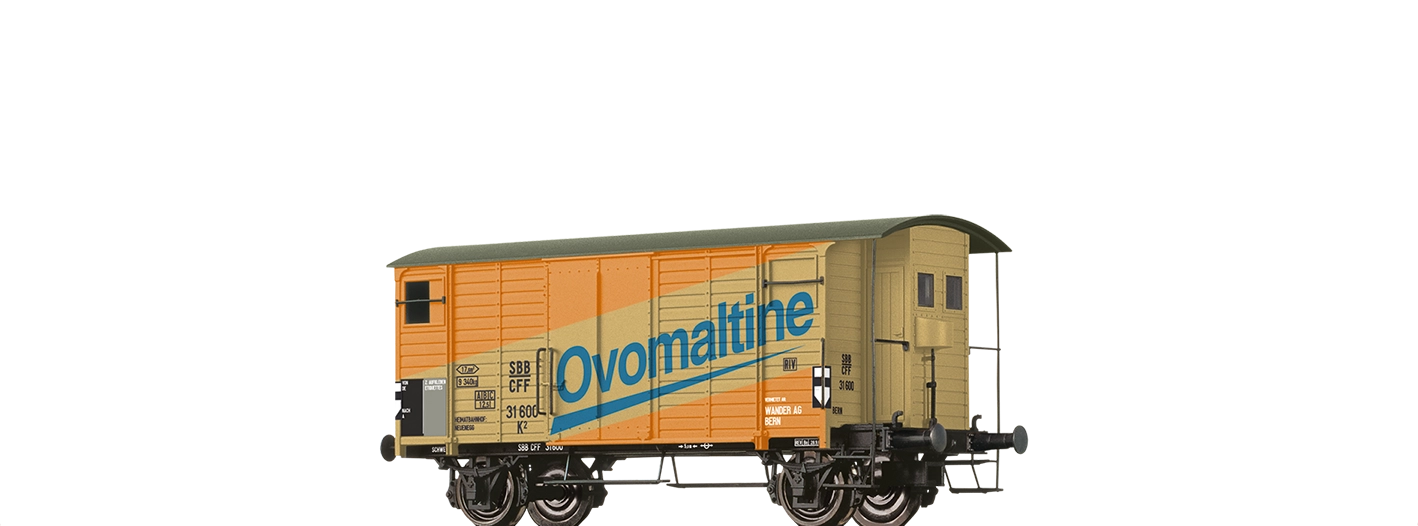
Prototype The Swiss began standardising some types of goods wagons at an early stage. They were then also procured by all private railways in order to improve repairs and spare part stock-keeping. They included closed goods wagons with a 4.5 m wheel base and a frame length of 7.10 m. Later, the wheel base was increased to 5 m in order to improve the running characteristics. In this form, high numbers of the wagons that were given the K2 designation were procured by SBB. Model Precise replica of board joints Finely engraved fan grill Precise paintwork and painting NEM-standard short-coupling Metal wheels True to original frame construction
In stock: 1 on the shelf, shipped within 1-3 days

1 x Wooden-mast Light, Pin-Socket (LED) Height 88 mm Simple handling Time-consuming cable connections between the lamp and the socket are not necessary The lamp can be tilted in the socket up to 10° to compensate for uneven terrain Can be separated electrically Compatible to each other Load-carrying parts made from brass Filigree lattice work Multi-part lampheads Intricately handpainted
In stock, shipped within 1-3 days

1 x Platform Light, Pin-Socket (LED) Height 70 mm Simple handling Time-consuming cable connections between the lamp and the socket are not necessary The lamp can be tilted in the socket up to 10° to compensate for uneven terrain Can be separated electrically Compatible to each other Load-carrying parts made from brass Filigree lattice work Multi-part lampheads Intricately handpainted
In stock: 5 on the shelf, shipped within 1-3 days

1 x Street Light, Pin-Socket (LED) Height 58 mm Simple handling Time-consuming cable connections between the lamp and the socket are not necessary The lamp can be tilted in the socket up to 10° to compensate for uneven terrain Can be separated electrically Compatible to each other Load-carrying parts made from brass Filigree lattice work Multi-part lampheads Intricately handpainted
In stock: 5 on the shelf, shipped within 1-3 days

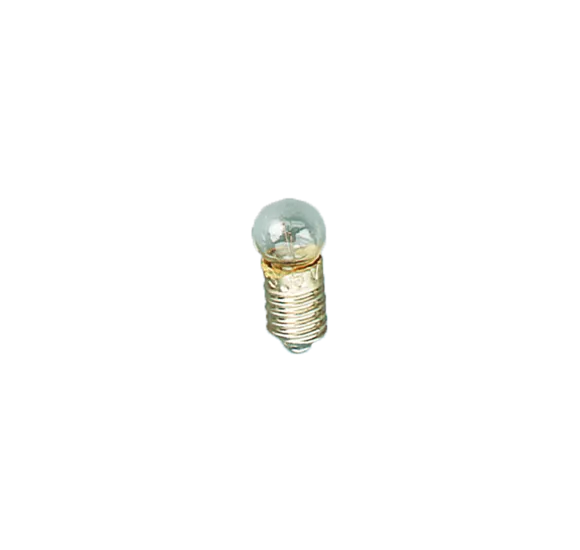
1 x Telephone Box Swisscom Height 33 mm With lighting Spare bulb 3268
In stock: 1 on the shelf, shipped within 1-3 days
The Brawa families
Rolling stock
 210 itemsLocomotivesLocomotives in H0 and N, from the DB AG TRAXX BR 147 to the DR BR 132.See the items
 56 itemsRailcars and multiple unitsTWINDEXX Vario double-deck trains in N, DRG VT 137 diesel railcar in H0.See the items
 360 itemsPassenger coachesDB express coaches, SBB coaches and complete trains in H0 and N.See the items
 448 itemsFreight wagonsCovered wagons, container wagons and luggage vans, including the SBB K2 "Ovomaltine".See the items
Scenery and cable cars
 117 itemsLighting and scenery accessoriesWooden-mast lights, park lanterns and LED wall lights, clocks and telephone boxes.See the items
 12 itemsCable carsNebelhorn, Hahnenkamm, Kanzelwand, Titlis and chairlift, in H0 and N.See the items
Bulbs and wiring
All Brawa items

Prototype By 1977, the Halberstadt RAW (Reichsbahn repair shop) had produced over 3000 fouraxle Reko cars for the DR. Their body length was due to a concession to the RAWs structural conditions. By that time, these cars were out of date for commuter and local transport, and no longer suitable for premium service. Since the railcar industry in the DDR was fully occupied with export orders, Halberstadt RAW was the only shop available for the construction of the new car. Because the facilities there had been expanded by this time, the new vehicle could now fully exploit the UIC measure of 26.4 m. There was a prototype as early as 1973, and a second followed in 1975. Both were tested extensively in daily operations. The name „Langer Halberstädter“ was coined rather quickly in common parlance, making a connection with the famous sausages produced there. While the cars were still in construction, a request came from DR to make the car suitable for „premium international assignments“, which naturally led to changes in the design. A car was built with two entrances and three passenger compartments with a central corridor. At first glance, the Bmhe seems like a copy of the DB Silberling, but it was in fact a new version of the Bghwe car, with many new components. This is especially evident in the unladen weight, which is fairly high at 39 tons and not compatible with the „world class“ level so often aspired to in the DDR. The cars proved themselves in operation, and the passengers perceived them to be definite steps forward. In accordance with the requirements from the order, they were originally used almost exclusively in high-speed trains for national and international transport. They also achieved objectives in Czechoslovakia, Poland and West Germany. The cars that were delivered from 1982 onwards featured the new green and ivory-colored paint for express cars. Model Excellent running qualities with 3-point suspension Interior fittings in multicolour painting Free standing anti-roll support on bogie Coloring corresponding to the original Precisely inserted slidingwindows and printed window frames throughout Replicated airheating system in the car floor Precise replica of the „Görlitz V“ bogies NEM-standard short-coupling Passageway between coaches with separately mounted rubber beading
On order, shipped within 10-15 days

Prototype As the EWI stood the test of time in an excellent manner, only a fEWItems had to be enhanced in its follow-up development towards EWII. In order to enable a low-floor design, the EWII received new bogies with a wheelbase of 2,500 mm and a wheel rolling circle diameter of only 800 mm. As the window line was accordingly lower as well, the coaches could clearly be identified in a train combination with EWI. The now double-glazed windows were also made of a single-piece and could be rolled down. While the first class coaches otherwise fully corresponded to their EWI counterparts, the second class coaches were one metre longer due to enlarged seat spacing. The seats had red leatherette upholstery in the smoking compartments and a green one in the non-smoking compartments; the walls were cladded with green imitation wood. From 1965 to 1976, a total of 798 coaches were produced, including baggage and mail cars that did not exist in the EW-I rang. Model Printed window frames Excellent running qualities with 3-point suspension Interior fittings in multicolour painting NEM-standard short-coupling
On order, shipped within 10-15 days

Presentation pack without building kit 1 center mast, 77 mm high 6212 1 drive unit, upper station 6214 1 cable guide, lower station 6217 2 cars, blue 2×6562 2 cars, red 2×6561 1 pull cable, 10 m long 6292 Can be extended DC connection 8 - 16 V Replacement motor with mounting from year of manufacture 9/92: Item no. 9713 Replica of the Schauinsland funicular near Freiburg, Germany.
On order, lead time to be confirmed

Building set for the mountain and valley station Mountain station W 150 mm/L 130 mm Valley station W 150 mm/L 130 mm Suitable for NOCH ready-made layouts 8163, 8199, 9910 DC connection 8 - 16 V Can be extended Replacement motor with mounting from year of manufacture 9/92: Item no. 9713 Replica of the Schauinsland funicular near Freiburg, Germany.
On order, shipped within 10-15 days

Prototype The International Union of Railways (Union internationale des chemins de fer, UIC) founded its own research and development institute (ORE) in 1949, thus laying the foundation for internationally standardised construction principles for goods wagons. The European railway administrations soon developed their own vehicles on the basis of the ORE’s designs and principles for a two-axle standard goods wagon. In accordance with the fundamental idea put forward by the UIC, these were used within the territories of the member administrations to transport goods and freight. The German Federal Railway (Deutsche Bundesbahn) took the first steps via an initial procurement of around 3,500 wagons (as per the preliminary designs) and, with the Gmm(e)hs 56, successfully put the first 2,662 genuine UIC standard wagons into service as early as 1957. Externally, the standardised design was indicated by the inscription RIV St UIC. Other railway administrations, including the SNCF, FS, ÖBB, NS, DSB, MAV, P.K.P., CFL, SBB, acted in a similar way and produced their own versions of the UIC standard wagons. The wagons are all very similar due to this fact, however they also include some country-specific design differences. Since DB had a very high demand for new wagons and there was also a modernisation backlog for older wagon classes, they did not solely rely on brand new UIC St wagons. The wagon types Gmms 44, Gmm(eh)s 60, Gmms 40 and 216 were gradually created via several conversion programmes in which individual parts from older wagons were reused. With over 100,000 units built, these wagon types became synonymous with goods traffic in Europe and were used in almost every goods train from the 1960s to the 1990s. Model Fine paintwork and painting NEM-standard short-coupling
On order, shipped within 10-15 days

Prototype In the 1970s, the works of the GDR coach building industry produced almost exclusively for export. The DR therefore had to look elsewhere to replace the ageing fleet of vehicles and have more vehicles available for the increased transport requirements. This was partly solved by producing new cars in own repair shops but this technology was not suitable for special cars. At the beginning of the 1970s, the foreign trade ministry succeeded in concluding comprehensive compensation business with France, as a result of which the DR received approx. 20,000 new freight cars of various classes. Among these, 1,250 four-axle mineral oil tank cars were delivered from 1975 onwards, which were classified under the documentation number 8105 and Class Uahs. Their number group began with 727 0000. The car had a welded undercarriage made of St 52-3 without middle longitudinal supports with bogies of type Y25Cs and a divided draw gear. The five-section tank made of 7mm steel plate (9mm in the floor area) has a volume of 85150 litres and therefore allows complete exploitation of the maximum permissible wheelset load at that time of 20t. The compressed air brake of type KE-GP with brake rod actuators and mechanical load braking was complemented by a handbrake operated from a platform and complied with the latest technical standards of that time. The cars were used above all in block trains mainly to transport fuels such as petrol and diesel. Model Fine replica of the Y-25 bogies Precise paintwork and painting NEM-standard short-coupling True to original brake unit
On order, shipped within 10-15 days

Prototype With the beginning of World War II and the sharp increase in transportation tasks, the DRG suffered from a striking wagon shortage. The only possible remedy was the construction of new wagon types in order to increase the load capacity and loading space volume on the one hand and to reduce the necessary steel consumption drastically on the other hand. Among others, the twoaxle Gmhs Bremen goods wagon was built as part of these efforts. In comparison with the most recent design, the Ghs Oppeln, the wheel base was enlarged by 1 metre, increasing the loading space by 5 m³. Furthermore, almost 2 tonnes of steel were saved per wagon, pushing the net weight down below 10 tonnes. From 1943 to January 1945, a total of 7,230 wagons were built in this way. 3,440 of them were equipped with a handbrake platform protruding over the buffers on one side, increasing the wagon length by only 100 mm. As a result of the war events, the wagons were spread all over Europe so that Gmhs “Bremen” wagons were found in almost all Central-European countries. The wagons were exchanged between the different railways only in part, and not at all between the countries of the later Eastern bloc and Western Europe. Model Precise paintwork and painting Finely engraved fan grill True to original brake unit on the car bottom NEM-standard short-coupling
On order, shipped within 10-15 days

Prototype Tariff conditions on the one hand and technical conditions on the other resulted in all State railway administrations developing box cars with almost identical dimensions and payloads. These cars had a 4.5 m wheelbase, a length over buffers of 9.3 m for unbraked cars, a payload of 15 t, later 17 t and a floor area of approx. 21 square metres. This type of freight construction became the most important and most built box car; it originally had the type identifier Gm. The most common of these State railway cars, which numbered 47,533, were built according to the Prussian style sheet IId8. After the founding of the Deutscher Staatsbahn Wagen Verband (German state railway car federation) DWV in 1909, the federation car construction type A2 was developed from this. From 1911 a phenomenal total of 121,770 units were built, making it the most heavily produced box car. It dominated the image of the German goods trains until the early days of the third era. These cars were scattered all over Europe by two world wars, there were no European railway administrations where this type of car was not used at least temporarily. Model True to original frame construction Precise replica of board joints Metal wheels and axles Multi-part brake system Individually mounted signal holder Brake blocks in wheel plane Perforated car body supports Precise paintwork and painting Individually mounted axle box cover
On order, shipped within 10-15 days