
H0 and N rolling stock, lighting and cable cars
Brawa, model railways made with care
Locomotives, coaches and wagons in H0 and N, plus street lights, cable cars, bulbs and wiring: the world of a family firm from Waiblingen.
- 1375items in the shop
- H0 and Nthe scales in the range
- 1948the year of the founding
What makes Brawa
- A family firm since 1948: founded by Artur Braun in Waiblingen, in southern Germany, Brawa is run today by the third generation of the family.
- Love of detail: individually fitted handrails, sprung buffers, crisp printing: every model starts from measurements and photographs of the original and a study of the construction drawings.
- Sturdy locomotives: most are largely die-cast zinc, for weight and robustness, for DC or AC, with sound and, on steam locomotives, smoke.
- Cable cars and lighting: H0 cable cars are a house speciality, starting with the Nebelhorn cableway in Oberstdorf; lamps and signals follow, with load-bearing parts made of brass or etched sheet.
Our favourites

Prototype Even before World War I, plans were being made in Prussia to electrify several mountain railways in Silesia, including the so-called “Zackenbahn” (named after the Zacken River) between Hirschberg and Polaun. Given the difficult topographical conditions, this new form of traction promised considerable savings and more cost-effective operation. However, the outbreak of World War I prevented the work from being completed quickly, and it was not until 1923 that continuous operation began. Since operating trains pulled by locomotives was very cumbersome due to fluctuating traffic volumes, considerations were made early on to switch to railcars. The suitability of the ET 88, originally procured for suburban transport in Berlin, prompted the DRG to procure additional four-axle electric railcars. In 1926-1927, LHW Breslau and WUMAG in Görlitz, in collaboration with SSW-Werke, delivered a total of 11 railcars that were to become the symbol of electric train transport in Silesia. The distinctive vehicles with their open entrance platforms were christened “Rübezahl” by the local population, a name that actually refers to a moody mountain spirit from the Giant Mountains. The railcars, which were initially painted green and designated “Breslau 511-521,” were always used in pairs with up to eight light standard branch line cars as trailers. Due to low demand, a single railcar operated between Josephinenhütte and Grünthal. The greatest rush of passengers was on weekends when the weather was nice and during the winter sports season. Up to three railcars with twelve trailers then operated as a train. At the beginning of the 1930s, the railcars were given the new designation elt 1011-1019 and a two-tone paint scheme. In 1941, the four-axle railcars were given their final numbers and became ET 89 01-11. With the exception of ET 89 11, which had to be taken out of service in 1943 due to an accident, all of them survived the war and the end of electric train transport in Silesia. Four railcars were transferred to PKP, but were not used there. The exact whereabouts of three others are unknown. ET 89 01, 04, and 07 ended up in the western occupation zones and thus became part of the DB fleet, which was founded in 1949. Only ET 89 04 was refurbished and served at the Munich Central Station depot. Initially still listed as 2nd and 3rd class cars, later photos show it as a pure 3rd class vehicle, which then exclusively carried 2nd class passengers after the class reform in 1956. On September 2, 1959, its final hour arrived – ET 89 04 was the last of its kind to be taken out of service and dismantled shortly thereafter, leaving only a few photos to remind us of these unique railcars. Model Illuminated upper carriage lanterns and tail lights Separately switchable interior lighting Separately switchable third headlight New motor New sound
In stock: 1 on the shelf, shipped within 1-3 days

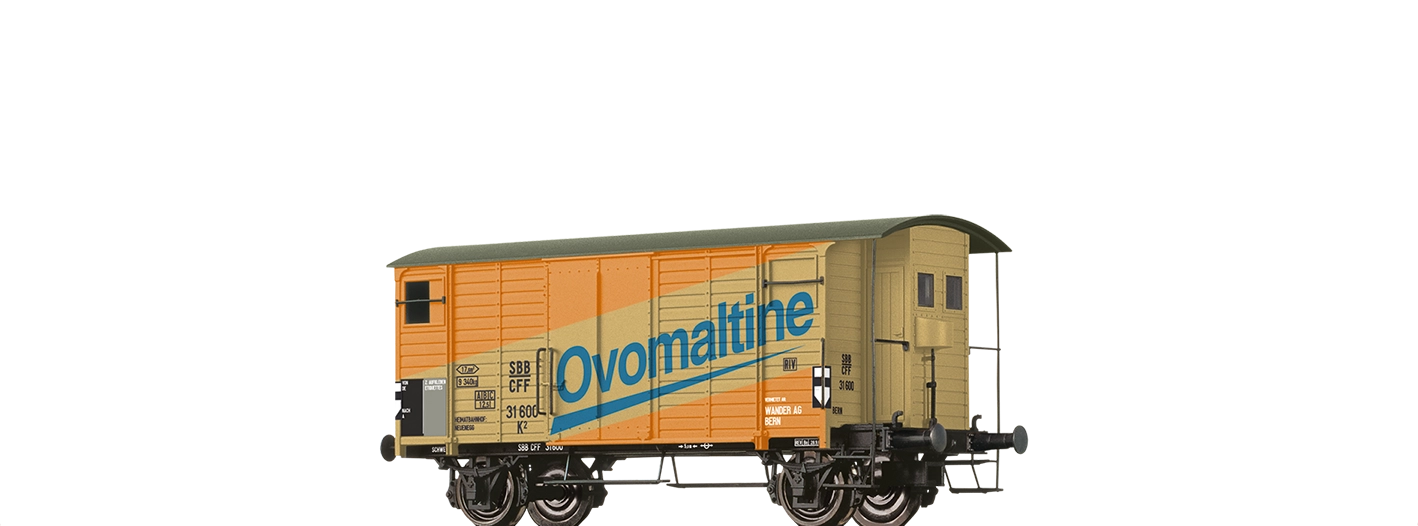
Prototype The Swiss began standardising some types of goods wagons at an early stage. They were then also procured by all private railways in order to improve repairs and spare part stock-keeping. They included closed goods wagons with a 4.5 m wheel base and a frame length of 7.10 m. Later, the wheel base was increased to 5 m in order to improve the running characteristics. In this form, high numbers of the wagons that were given the K2 designation were procured by SBB. Model Precise replica of board joints Finely engraved fan grill Precise paintwork and painting NEM-standard short-coupling Metal wheels True to original frame construction
In stock: 1 on the shelf, shipped within 1-3 days

1 x Wooden-mast Light, Pin-Socket (LED) Height 88 mm Simple handling Time-consuming cable connections between the lamp and the socket are not necessary The lamp can be tilted in the socket up to 10° to compensate for uneven terrain Can be separated electrically Compatible to each other Load-carrying parts made from brass Filigree lattice work Multi-part lampheads Intricately handpainted
In stock, shipped within 1-3 days

1 x Platform Light, Pin-Socket (LED) Height 70 mm Simple handling Time-consuming cable connections between the lamp and the socket are not necessary The lamp can be tilted in the socket up to 10° to compensate for uneven terrain Can be separated electrically Compatible to each other Load-carrying parts made from brass Filigree lattice work Multi-part lampheads Intricately handpainted
In stock: 5 on the shelf, shipped within 1-3 days

1 x Street Light, Pin-Socket (LED) Height 58 mm Simple handling Time-consuming cable connections between the lamp and the socket are not necessary The lamp can be tilted in the socket up to 10° to compensate for uneven terrain Can be separated electrically Compatible to each other Load-carrying parts made from brass Filigree lattice work Multi-part lampheads Intricately handpainted
In stock: 5 on the shelf, shipped within 1-3 days

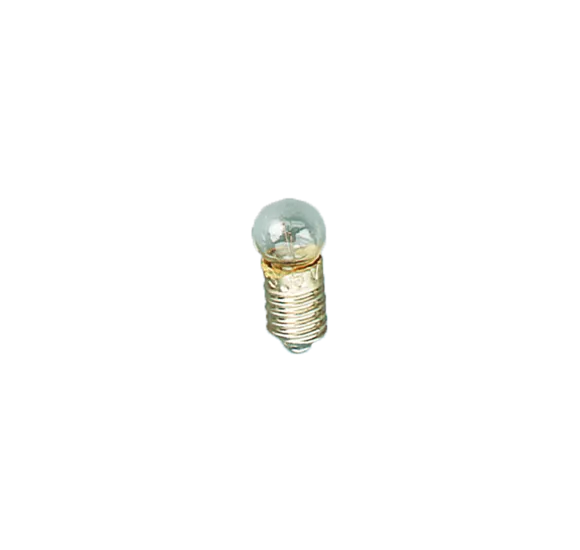
1 x Telephone Box Swisscom Height 33 mm With lighting Spare bulb 3268
In stock: 1 on the shelf, shipped within 1-3 days
The Brawa families
Rolling stock
 210 itemsLocomotivesLocomotives in H0 and N, from the DB AG TRAXX BR 147 to the DR BR 132.See the items
 56 itemsRailcars and multiple unitsTWINDEXX Vario double-deck trains in N, DRG VT 137 diesel railcar in H0.See the items
 360 itemsPassenger coachesDB express coaches, SBB coaches and complete trains in H0 and N.See the items
 448 itemsFreight wagonsCovered wagons, container wagons and luggage vans, including the SBB K2 "Ovomaltine".See the items
Scenery and cable cars
 117 itemsLighting and scenery accessoriesWooden-mast lights, park lanterns and LED wall lights, clocks and telephone boxes.See the items
 12 itemsCable carsNebelhorn, Hahnenkamm, Kanzelwand, Titlis and chairlift, in H0 and N.See the items
Bulbs and wiring
All Brawa items

Prototype At the end of 2010, Bombardier Transportation obtained an order for 27 five-part Bombardier TWINDEXX Vario double-decker push-pull trains belonging to the 2010 generation. The block trains with comfortable equipment for long-distance traffic consist of three 2nd class middle wagons, one 1st class middle wagon and one 2nd class control car respectively. The TWINDEXX Vario is a further development of the tried-and-trusted double-decker platform from Görlitz. Each train has 468 seats, 70 of which are in 1st class as well as 9 bicycle parking spaces. The top speed of the trains is 160 km/h. The equipment of the double-decker trains for use in long-distance traffic will correspond to the level of comfort found in ICE trains. Model Exactly scale 1:160 True-to-original length over buffer Structure made of high-quality, impact-resistant plastic Metal bottom plate Printed window frames In-plane assembled windows Illuminated destination indicator (digital) Lighting with warm white LEDs Long-distance headlights (digital) True-to-scale details Perfectly replicated three-dimensional front Finely engraved details Fine paintwork and painting Illuminated driver's cab With interior fittings, incl. driver's cab NEM-standard close coupling Light change white/red, in the direction of travel For digital operation, decoder are required for each individual vehicle - Middle Car: Order no. 0019695.01; Control Car: Order no. 0019695.02 (Operating the vehicle without decoder in digital mode can result in damage to the electronics)
On order, shipped within 10-15 days

Prototype At the end of 2010, Bombardier Transportation obtained an order for 27 five-part Bombardier TWINDEXX Vario double-decker push-pull trains belonging to the 2010 generation. The block trains with comfortable equipment for long-distance traffic consist of three 2nd class middle wagons, one 1st class middle wagon and one 2nd class control car respectively. The TWINDEXX Vario is a further development of the tried-and-trusted double-decker platform from Görlitz. Each train has 468 seats, 70 of which are in 1st class as well as 9 bicycle parking spaces. The top speed of the trains is 160 km/h. The equipment of the double-decker trains for use in long-distance traffic will correspond to the level of comfort found in ICE trains. Model Exactly scale 1:160 True-to-original length over buffer Structure made of high-quality, impact-resistant plastic Metal bottom plate Printed window frames In-plane assembled windows Illuminated destination indicator (digital) Lighting with warm white LEDs True-to-scale details Finely engraved details Fine paintwork and painting NEM-standard close coupling For digital operation, decoder (order no. 0019695.01) are required for each individual vehicle (Operating the vehicle without decoder in digital mode can result in damage to the electronics)
On order, shipped within 10-15 days

Prototype For many years now, double-decker trains have successfully formed the backbone of regional traffic. Double-decker trains are the ideal solution, especially on routes with low platform lengths and a high volume of passengers. The tried-and-tested single-wagon concept of the TWINDEXX Vario double-decker fleet is now being supplemented with an electrical railcar. Bombardier Transportation will supply 16 Bombardier TWINDEXX Vario railcars with regional train equipment to Deutsche Bahn AG. The new four-part railcars from the "Do 2010" generation consist of 2 railcars and 2 middle wagons respectively. With the newly-developed driven TWINDEXX Vario railcar, it is now possible to utilise the trains as pure double-decker multiple unit trains. As a result, it is also possible to use this vehicle as an electric multiple unit train alongside the classic push-pull operation with an electric or diesel locomotive. This railcar can be combined with middle wagons and control cars depending upon the application and desired capacity. The central buffer coupling enables operation with double traction and, as a result, the implementation of a wing-train concept. The trains with a combined upper and lower entrance are comfortably equipped with generous seat spacing and plenty of storage space. Furthermore, the double-decker individual wagons permit the extension and shortening of the block train and, consequently, an adjustment to fluctuating demand or future development. As a result, they can be utilised for the most diverse of operational applications in both regional and long-distance traffic. Model Exact scale 1:160 Illuminated passenger compartment Structure made of high-quality, impact-resistant plastic Metal bottom plate Lighting with white LEDs Illuminated destination indicator (analog permanently on, digitally switchable) Long-distance headlights (can only be used digitally with decoder) Perfectly replicated three-dimensional front Illuminated driver's cab (only with decoder) With interior fittings, incl. driver's cab NEM-standard close coupling Light change white/red, in the direction of travel
On order, shipped within 10-15 days

Prototype “IC 2” is the name for the DB Fernverkehr AG TWINDEXX Vario® trains introduced following the timetable change on 13 December 2015. Back in 2010, Bombardier Transportation received the first order for 27 five-part double-deck trains in combination with the BR 146.5 locomotives from a previously-concluded framework contract with DB AG for a total of 800 double-deck trains. An order was placed for a further 17 trains in March 2015. The TWINDEXX Vario® is a further development of the tried-and-trusted double-deck platform from Görlitz. The top speed of the trains is 160 km/h. The IC 2 gradually replaced all previous IC trains in the new long-distance traffic concept from DB Fernverkehr AG. After the timetable change, the first routes for these trains were Leipzig – Norddeich Mole, Dresden – Cologne and Koblenz – Norddeich Mole. Model Exactly scale 1:160 True-to-original length over buffer Structure made of high-quality, impact-resistant plastic Metal bottom plate Printed window frames In-plane assembled windows Illuminated destination indicator (digital) Lighting with warm white LEDs Long-distance headlights (digital) True-to-scale details Perfectly replicated three-dimensional front Finely engraved details Fine paintwork and painting Illuminated driver's cab With interior fittings, incl. driver's cab NEM-standard close coupling Light change white/red, in the direction of travel For digital operation, decoder are required for each individual vehicle - Middle Car: Order no. 0019695.01; Control Car: Order no. 0019695.02 (Operating the vehicle without decoder in digital mode can result in damage to the electronics)
On order, shipped within 10-15 days

Prototype “IC 2” is the name for the DB Fernverkehr AG TWINDEXX Vario® trains introduced following the timetable change on 13 December 2015. Back in 2010, Bombardier Transportation received the first order for 27 five-part double-deck trains in combination with the BR 146.5 locomotives from a previously-concluded framework contract with DB AG for a total of 800 double-deck trains. An order was placed for a further 17 trains in March 2015. The TWINDEXX Vario® is a further development of the tried-and-trusted double-deck platform from Görlitz. The top speed of the trains is 160 km/h. The IC 2 gradually replaced all previous IC trains in the new long-distance traffic concept from DB Fernverkehr AG. After the timetable change, the first routes for these trains were Leipzig – Norddeich Mole, Dresden – Cologne and Koblenz – Norddeich Mole. Model Exactly scale 1:160 True-to-original length over buffer Structure made of high-quality, impact-resistant plastic Metal bottom plate Printed window frames In-plane assembled windows Illuminated destination indicator (digital) Lighting with warm white LEDs True-to-scale details Finely engraved details Fine paintwork and painting NEM-standard close coupling For digital operation, decoder (order no. 0019695.01) are required for each individual vehicle (Operating the vehicle without decoder in digital mode can result in damage to the electronics)
On order, shipped within 10-15 days

Prototype For many years now, double-decker trains have successfully formed the backbone of regional traffic. Double-decker trains are the ideal solution, especially on routes with low platform lengths and a high volume of passengers. The tried-and-tested single-wagon concept of the TWINDEXX Vario double-decker fleet is now being supplemented with an electrical railcar. Bombardier Transportation will supply 16 Bombardier TWINDEXX Vario railcars with regional train equipment to Deutsche Bahn AG. The new four-part railcars from the "Do 2010" generation consist of 2 railcars and 2 middle wagons respectively. With the newly-developed driven TWINDEXX Vario railcar, it is now possible to utilise the trains as pure double-decker multiple unit trains. As a result, it is also possible to use this vehicle as an electric multiple unit train alongside the classic push-pull operation with an electric or diesel locomotive. This railcar can be combined with middle wagons and control cars depending upon the application and desired capacity. The central buffer coupling enables operation with double traction and, as a result, the implementation of a wing-train concept. The trains with a combined upper and lower entrance are comfortably equipped with generous seat spacing and plenty of storage space. Furthermore, the double-decker individual wagons permit the extension and shortening of the block train and, consequently, an adjustment to fluctuating demand or future development. As a result, they can be utilised for the most diverse of operational applications in both regional and long-distance traffic. Model Exact scale 1:160 Illuminated passenger compartment Structure made of high-quality, impact-resistant plastic Metal bottom plate Lighting with white LEDs Illuminated destination indicator (analog permanently on, digitally switchable) Long-distance headlights (can only be used digitally with decoder) Perfectly replicated three-dimensional front Illuminated driver's cab (only with decoder) With interior fittings, incl. driver's cab NEM-standard close coupling Light change white/red, in the direction of travel
On order, shipped within 10-15 days

Prototype For many years now, double-decker trains have successfully formed the backbone of regional traffic. Double-decker trains are the ideal solution, especially on routes with low platform lengths and a high volume of passengers. The tried-and-tested single-wagon concept of the TWINDEXX Vario double-decker fleet is now being supplemented with an electrical railcar. Bombardier Transportation will supply 16 Bombardier TWINDEXX Vario railcars with regional train equipment to Deutsche Bahn AG. The new four-part railcars from the "Do 2010" generation consist of 2 railcars and 2 middle wagons respectively. With the newly-developed driven TWINDEXX Vario railcar, it is now possible to utilise the trains as pure double-decker multiple unit trains. As a result, it is also possible to use this vehicle as an electric multiple unit train alongside the classic push-pull operation with an electric or diesel locomotive. This railcar can be combined with middle wagons and control cars depending upon the application and desired capacity. The central buffer coupling enables operation with double traction and, as a result, the implementation of a wing-train concept. The trains with a combined upper and lower entrance are comfortably equipped with generous seat spacing and plenty of storage space. Furthermore, the double-decker individual wagons permit the extension and shortening of the block train and, consequently, an adjustment to fluctuating demand or future development. As a result, they can be utilised for the most diverse of operational applications in both regional and long-distance traffic. Model Exact scale 1:160 Illuminated passenger compartment Structure made of high-quality, impact-resistant plastic Metal bottom plate Lighting with white LEDs Illuminated destination indicator (analog permanently on, digitally switchable) Long-distance headlights (can only be used digitally with decoder) Perfectly replicated three-dimensional front Illuminated driver's cab (only with decoder) With interior fittings, incl. driver's cab NEM-standard close coupling Light change white/red, in the direction of travel
On order, lead time to be confirmed

Prototype For many years now, double-decker trains have successfully formed the backbone of regional traffic. Double-decker trains are the ideal solution, especially on routes with low platform lengths and a high volume of passengers. The tried-and-tested single-wagon concept of the TWINDEXX Vario double-decker fleet was supplemented with an electrical railcar. The four-part railcars from the "Do 2010" generation consist of 2 railcars and 2 middle wagons respectively. With the driven TWINDEXX Vario railcar, it is now possible to utilise the trains as pure double-decker multiple unit trains. As a result, it is also possible to use this vehicle as an electric multiple unit train alongside the classic push-pull operation with an electric or diesel locomotive. This railcar can be combined with middle wagons and control cars depending upon the application and desired capacity. The central buffer coupling enables operation with double traction and, as a result, the implementation of a wing-train concept. The trains with a combined upper and lower entrance are comfortably equipped with generous seat spacing and plenty of storage space. Furthermore, the double-decker individual wagons permit the extension and shortening of the block train and, consequently, an adjustment to fluctuating demand or future development. As a result, they can be utilised for the most diverse of operational applications in both regional and long-distance traffic. Model Exact scale 1:160 Illuminated passenger compartment Structure made of high-quality, impact-resistant plastic Metal bottom plate Lighting with white LEDs Illuminated destination indicator (analog permanently on, digitally switchable) Long-distance headlights (can only be used digitally with decoder) Perfectly replicated three-dimensional front Illuminated driver's cab (only with decoder) With interior fittings, incl. driver's cab NEM-standard close coupling Light change white/red, in the direction of travel
On order, shipped within 10-15 days

Prototype Between 1855 and 1892, even private Swiss rail companies, the predecessors of the SBB, purchased 4- axle vestibule cars based on the “American system”. In 1902 when the Swiss state railway was founded, there were still about 300 of these cars which were then taken over. In addition to third class cars, the SBB also took over numerous mixed class cars of the 2nd and 3rd class category as well as luggage cars. Together with the four-axle passenger train coaches, luggage cars of a corresponding design were also purchased. These were also taken over by the SBB on nationalisation but disappeared from the stock much faster than the passenger coaches. However, due to their large storage space, they were extremely suitable as service cars and for stationary use as a store. In contrast to Germany, a four-axle coach of American type remained in Switzerland. The BC4 with the number 4952 was renovated and can be inspected today in the Swiss Transport Museum in Lucerne. Model Printed window frames Precise paintwork and painting NEM-standard short-coupling True to scale windows Tip bearing wheelsets True to scale side frames Completely lacquered wagon body Individually mounted steps
On order, shipped within 10-15 days

Prototype By 1977, the Halberstadt RAW (Reichsbahn repair shop) had produced over 3000 fouraxle Reko cars for the DR. Their body length was due to a concession to the RAWs structural conditions. By that time, these cars were out of date for commuter and local transport, and no longer suitable for premium service. Since the railcar industry in the DDR was fully occupied with export orders, Halberstadt RAW was the only shop available for the construction of the new car. Because the facilities there had been expanded by this time, the new vehicle could now fully exploit the UIC measure of 26.4 m. There was a prototype as early as 1973, and a second followed in 1975. Both were tested extensively in daily operations. The name „Langer Halberstädter“ was coined rather quickly in common parlance, making a connection with the famous sausages produced there. While the cars were still in construction, a request came from DR to make the car suitable for „premium international assignments“, which naturally led to changes in the design. A car was built with two entrances and three passenger compartments with a central corridor. At first glance, the Bmhe seems like a copy of the DB Silberling, but it was in fact a new version of the Bghwe car, with many new components. This is especially evident in the unladen weight, which is fairly high at 39 tons and not compatible with the „world class“ level so often aspired to in the DDR. The cars proved themselves in operation, and the passengers perceived them to be definite steps forward. In accordance with the requirements from the order, they were originally used almost exclusively in high-speed trains for national and international transport. They also achieved objectives in Czechoslovakia, Poland and West Germany. The cars that were delivered from 1982 onwards featured the new green and ivory-colored paint for express cars. Model Excellent running qualities with 3-point suspension Interior fittings in multicolour painting Free standing anti-roll support on bogie Coloring corresponding to the original Precisely inserted slidingwindows and printed window frames throughout Replicated airheating system in the car floor Precise replica of the „Görlitz V“ bogies NEM-standard short-coupling Passageway between coaches with separately mounted rubber beading
On order, shipped within 10-15 days